Wyrdings · 2025/26 · Curatorial proposal · Strange Field, Glasgow · Group exhibition, 6 artists · 2 weeks
Wyrdings
Curatorial Statement:
Wyrd is the Old English root of the word weird. Before it meant strange or uncanny, it meant fate: a future already bound into the present. Wyrdings takes that overlap of past, present and future as its starting point, bringing together six early-career artists whose work unearths the lithic histories beneath our feet, imagines the future fossils we are already creating, and locates us within the reciprocal, entangled systems of the Anthropocene.
The exhibition is structured around two curatorial principles: reciprocity and friction. Reciprocity treats each artwork as part of a wider network of meaning, one that shapes the visitor's experience as much as the visitor shapes it. Friction is the dissonance that follows: works are placed in deliberate tension with one another, prompting visitors to reassess inherited narratives of climate and progress rather than offering easy resolution.
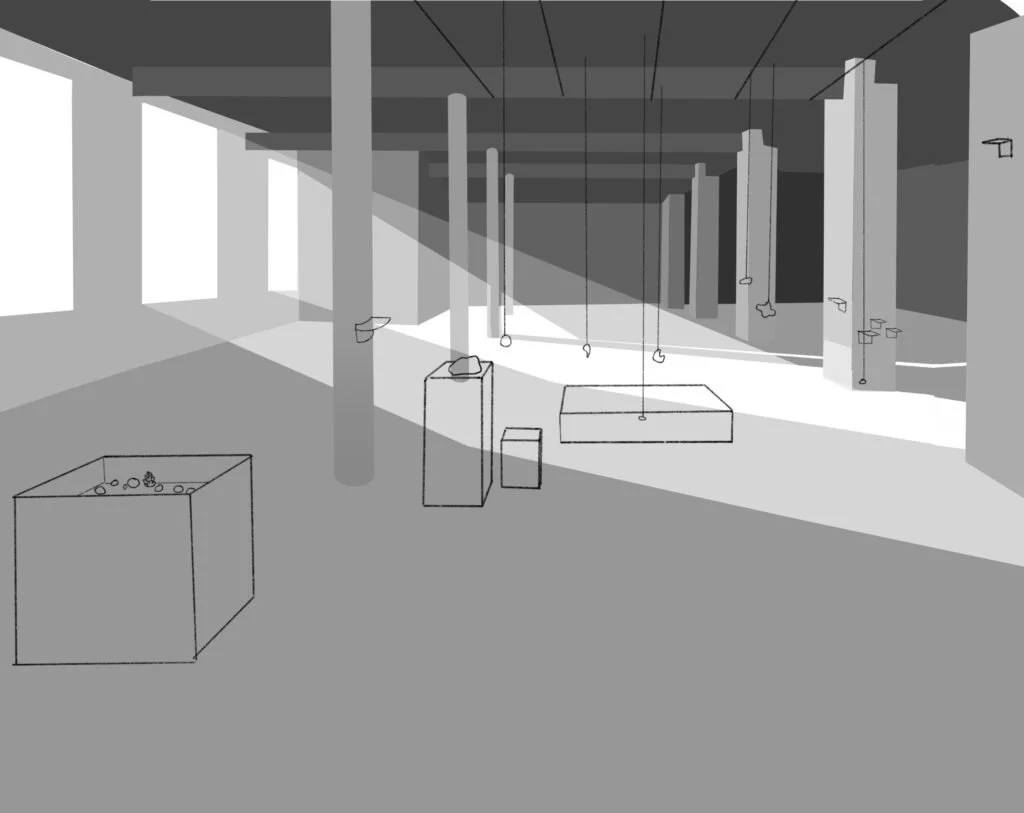
Wyrdings is proposed for Strange Field, an artist-run space in Glasgow's east end. The gallery's industrial architecture, its exposed brick, structural beams, and high warehouse ceilings, becomes part of the exhibition itself: a deliberate friction between the man-made history of the building and the analogue, natural materials of the work inside it. The proposal responds directly to Strange Field's commitment to embedded accessibility and to supporting early-career artists.
Exhibition Map
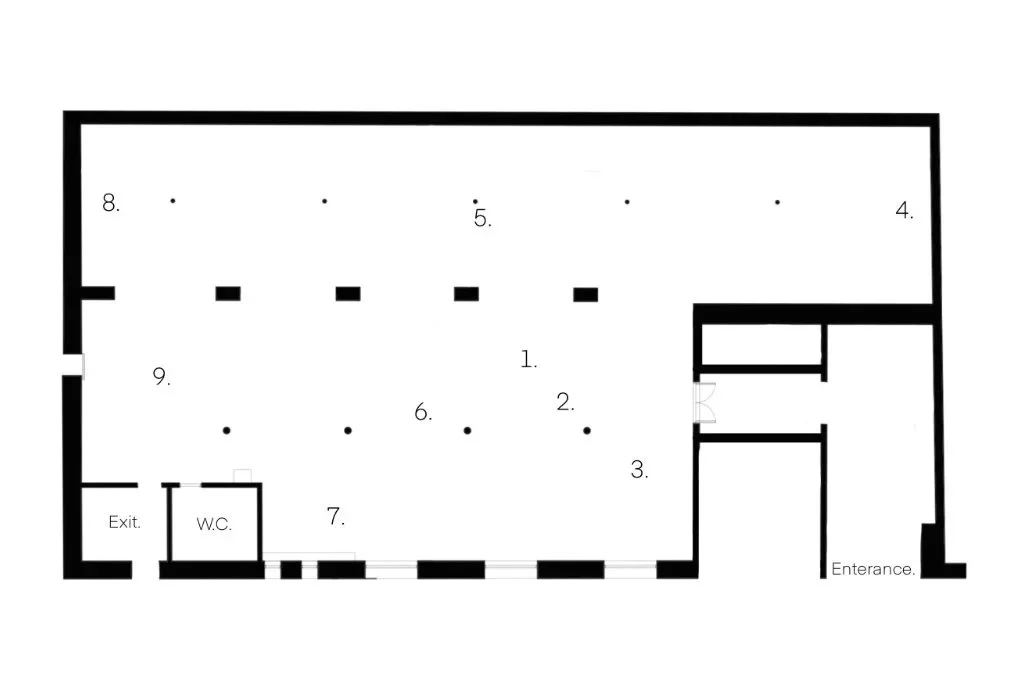
Wyrding is divided into three parts, each dedicated to a different ecological conception of time.
Visitors begin in the past: works by Sian Landau unearth lithic histories and a shared attention to the land, while Charlotte Alexander’s personally attentive stories of deep-time objects ground audiences with a tactile and easily anchored beginning. Moving to the works of Molly Wickett and Aria Duhia, visitors are presented with two alternate visions of our ecological future and are encouraged to imagine the sort of world they wish to live in. Finally, this is crystallised in the present through the work of Paola Bascon and Layla Knox, where the exhibition is grounded in our contemporary approach to nature.
Artist Profiles
Charlotte Alexander:
Careful arrangements from Alexander’s personal archive explore themes of solastalgia and climate anxiety. Lithic objects of deep time,a term referring to scales of history that exceed human understanding, are placed in direct conversation with personal artefacts. Nostalgia is employed to highlight the personal loss that accompanies the destruction of the natural world.
These pieces will be positioned at the beginning of the exhibition. Their self-referential qualities enable complex, hard-to-conceptualise ideas to become more tangible through direct interaction with the art. Throughout the exhibition, these works serve to introduce participants to ecological themes, providing visitors with a tactile experience that enhances engagement.
Finally, the archival pieces will be distributed throughout the space using small bespoke shelves to display lithic items across the exhibition, thereby challenging the time-based structure of the space. This display embraces the concept of deep time, which Alexander incorporates into her work. Anthropocentric notions of time are questioned as the archival material becomes a constant motif throughout the room.
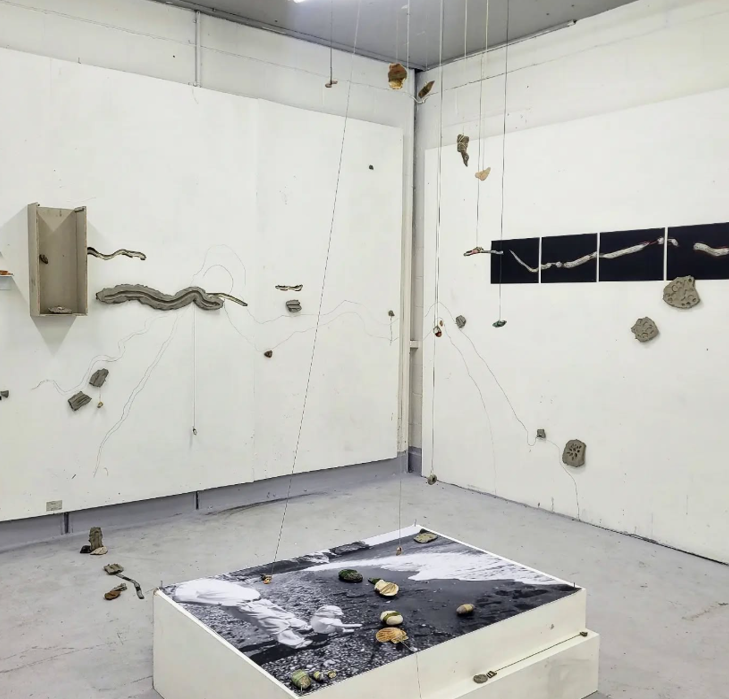
1.Charlotte Alexandar, We can’t go over it (2023), Photograph, Found Object, Oil Pastels
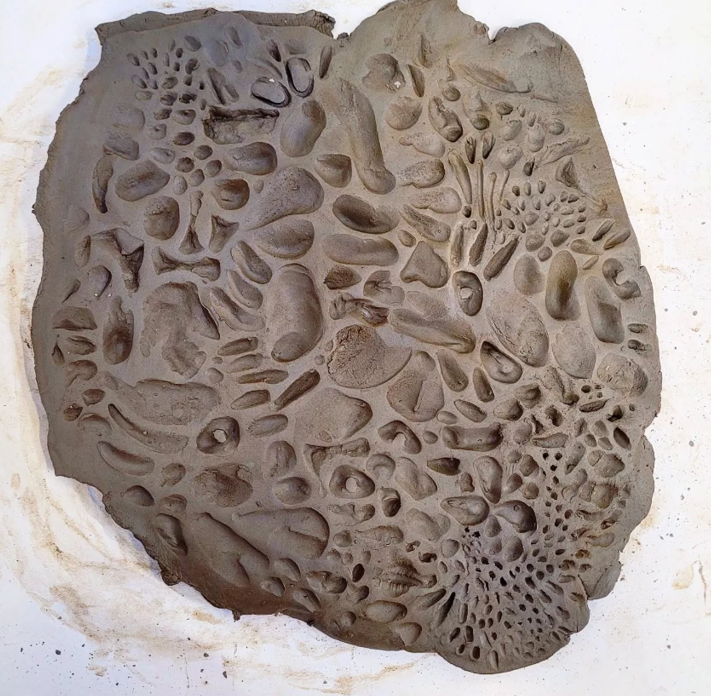
2.Charlotte Alexandar, Untitled[pressed clay piece] (2023), Pressed Clay Ceramic
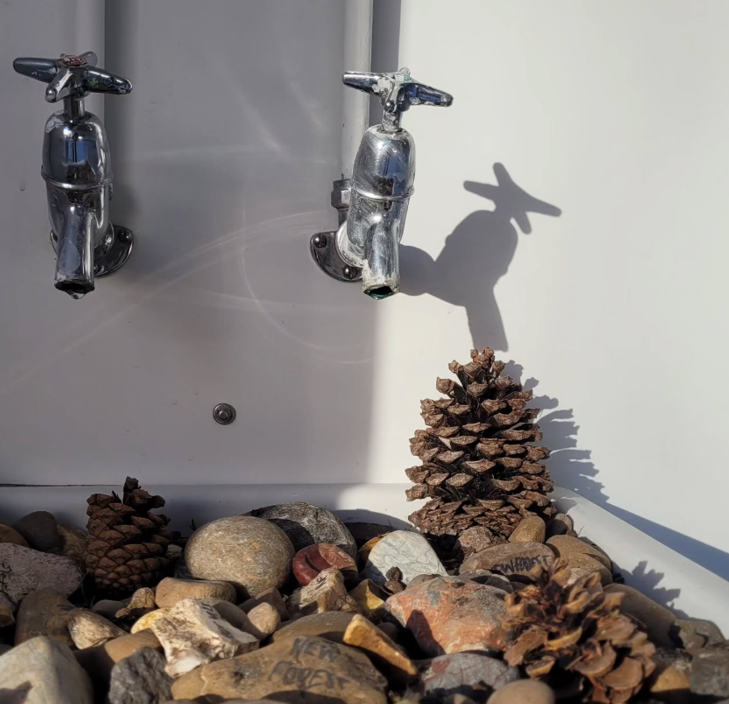
3.Charlotte Alexandar, Untitled[found object piece] (2023), Found Object
Siân Landau:
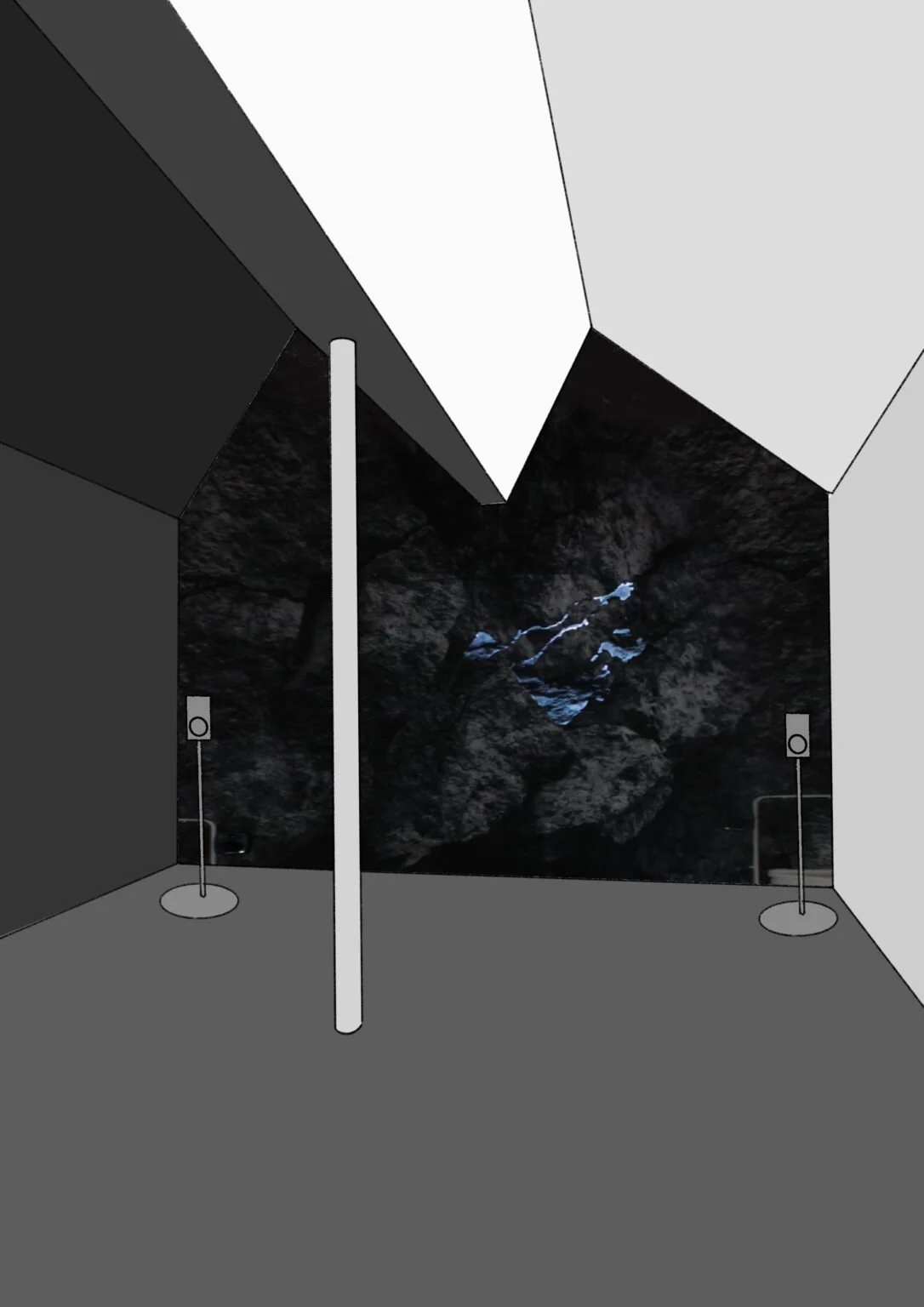
Using a combination of mural, projection, and sound installation, Landau ‘gives voice’ to the land through in situ recordings, creating a sense of personhood in the rocks and stone as light and sound twist over her images. In this process of animating the rock, Landau imagines the land as something with vibrant agency, and thus, resisting apathy.
Within the Strangefield exhibition space, this piece would be located in one of the back corners, the darker atmosphere reenforcing Landau’s theme of ‘eeriness’ as well as gaining the benefit of darkness for the projections. The sound piece should permeate the gallery thorough speakers, reflecting the scale of the land. Additionally to further the theme of ‘resisting apathy’, this should be audible from all points in the gallery, commanding to be heard no matter where the audience stands.
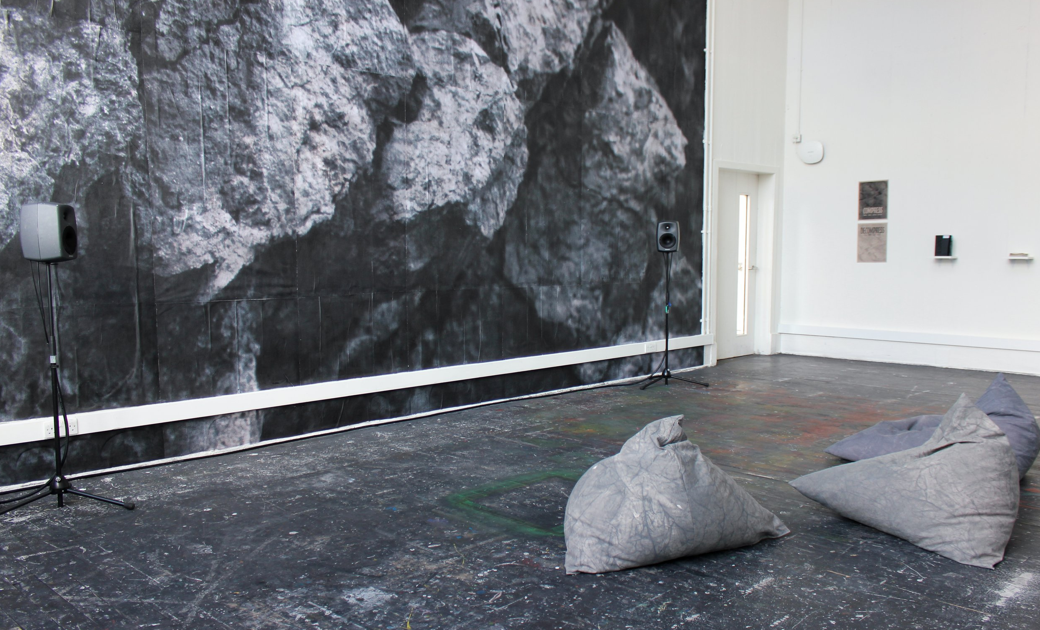
4.Siân Landau, Compress (2024), Wall Mural, Photography, Audio Installation, Projection
Molly Wickett:
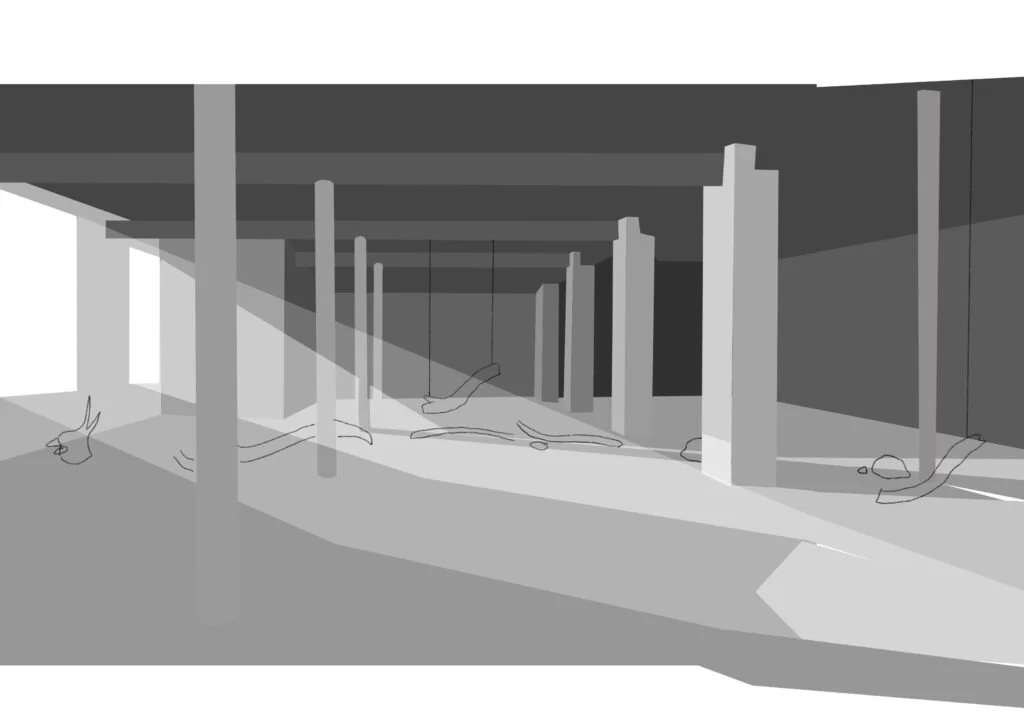
Wickett explores post-apocalyptic ecological futures through a Queer, Disabled, Feminist lens, holding grief and hope in balance. Charred wood and blackened remains suggest a post-Anthropocene world, while fungal growth emerging from the ash offers a fragile promise of new life within the wreckage.
In Another Life! and If I Listen Closely, I Can Hear the Sky Falling Too sit at the point where the gallery's eerie back corner, established by Landau, opens out towards the windows at the front of the space. This transitional position lets Wickett's work hold both grief and hope at once, offering a point of cohesion between the exhibition's conceptual halves. The pieces guide visitors from the darkness of the past section into the future, ensuring the shift in tone feels connected rather than disjointed within the wider gallery experience.
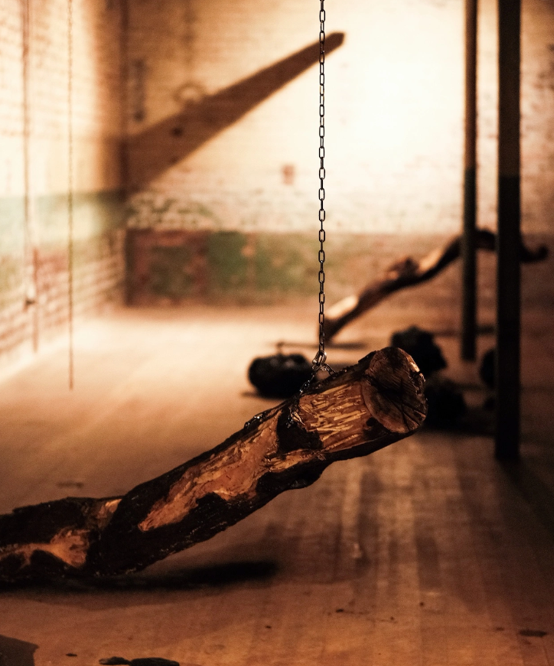
5.Molly Wickett, In Another Life! (2025), Wood Elm ash and chains
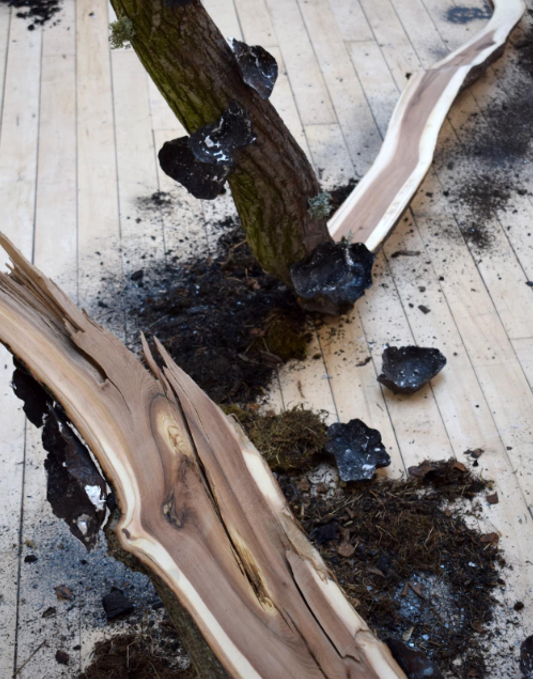
6.If I Listen Closely, I Can Hear the Sky Falling Too (2023), ,Elm, oxidised steel, salt, soil, sand, ash, steel, aluminium, and lichens
Aria Dudhia:
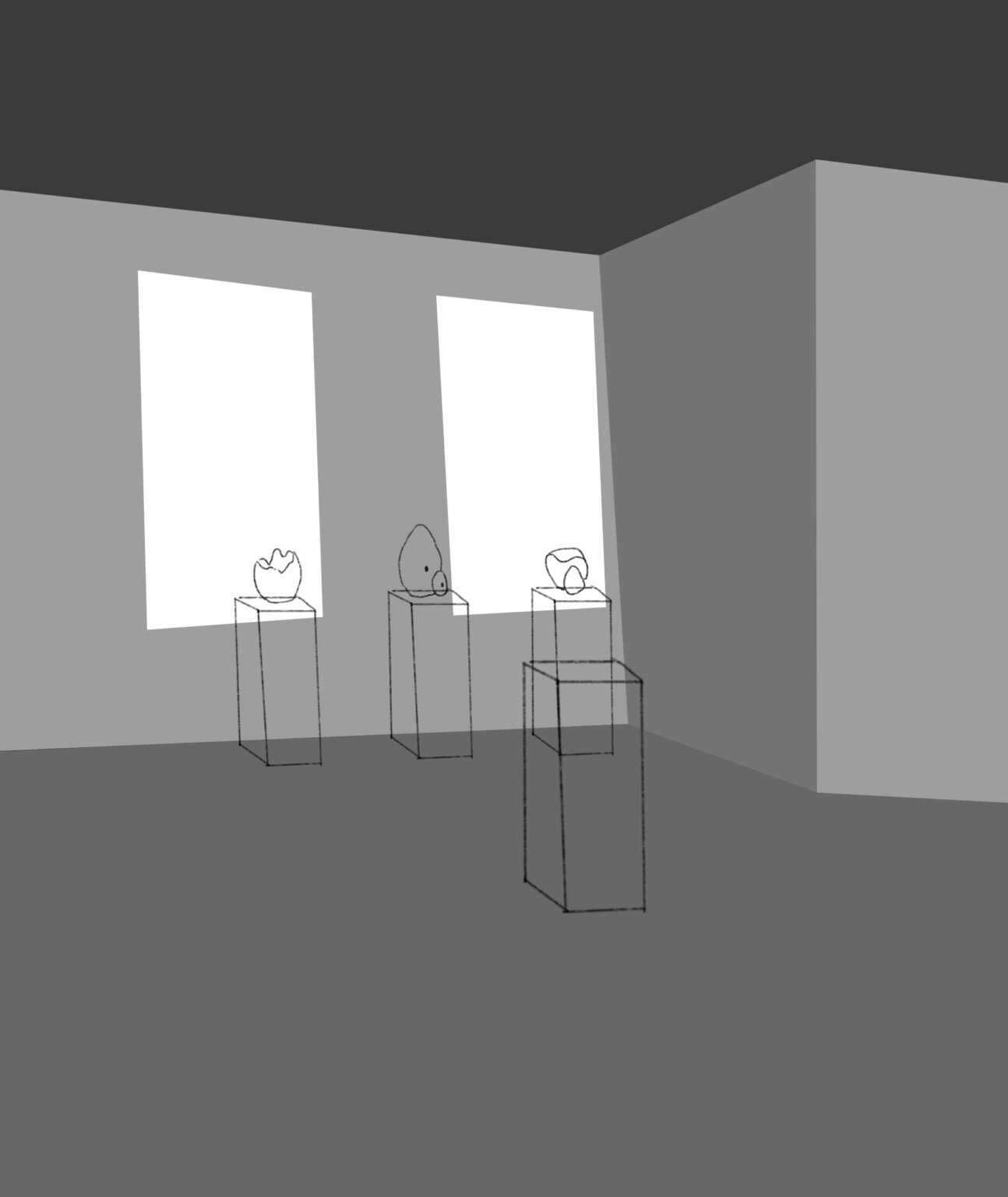
Dudhia's ceramic work is rooted in careful, sustainable making, using excavation tools to carve swirling, winding patterns into organic forms before fracturing some and leaving others intact. Future Fossils presents these sculptures as though unearthed by archaeologists, treating the present as though it were already the deep past, its objects fossilised by the care invested in their making.
Displayed like finds in an archaeological museum, the piece asks visitors to consider what artefacts of care they might leave behind, and how the future will come to remember the present. Dudhia's work offers a hopeful counterpoint within the exhibition's future-facing section, imagining a future capable of tenderness towards what came before it. Positioned alongside Wickett's imaginings of ecological collapse, Future Fossils balances the exhibition's darker speculative currents with a quieter sense of care, continuity and possibility.
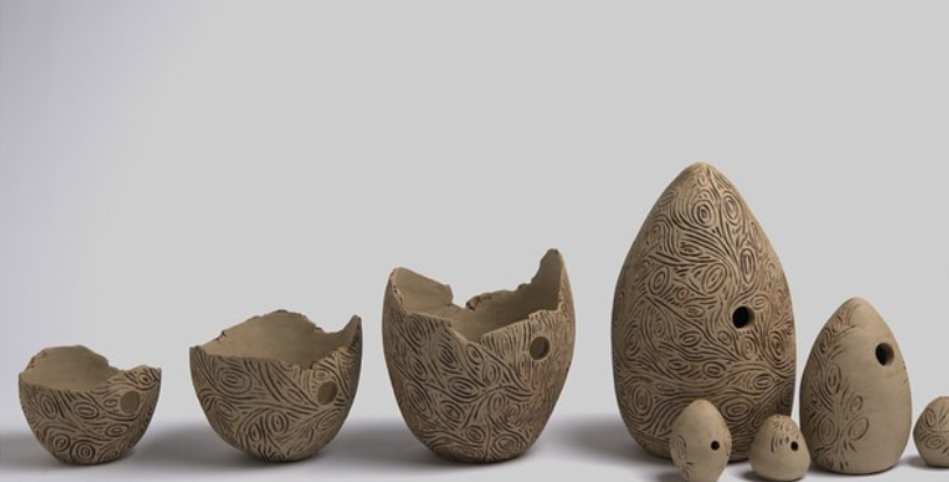
7.Aria Dudhia, Future Fossils (2024), Ceramic
Paola Bascón:
Bascón's practice uses somatic, participatory processes to subvert colonial and extractive narratives, bringing participants into closer relation with ecological forces. Lithic Encounters invites visitors to connect with stones and mountains through touch, guided by sensory instructions interwoven with geological information and folklore, establishing the earth as a non-human person with its own history.
Positioned opposite Landau's Compress, the two pieces mirror one another, both offering personhood to the lithic and using sound to build connection, while also echoing the reverence and care found in Dudhia's Future Fossils. Where Compress fills the gallery with an ambient, collective voice, Lithic Encounters uses headphones to create a more intimate, individual connection to stone. This embodied, present-tense experience grounds the viewer within the space, situating them firmly in the here and now, ahead of the exhibition's move towards direct public engagement.
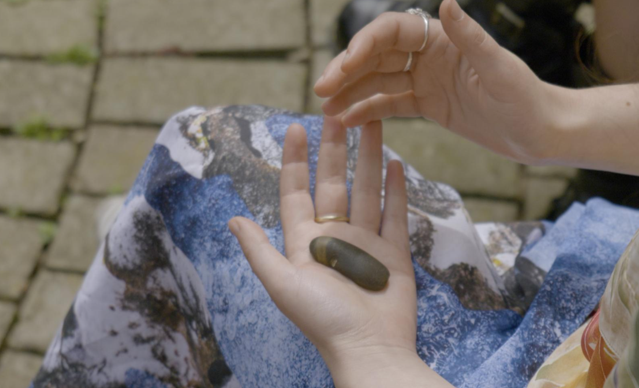
8.Paola Bascón, Lithic Encounters (2024), Sound installation, Found Object
Layla Knox:
Knox works with recently found materials to address contemporary infrastructure and capitalist extraction, depicting natural forms with a delicacy that suggests reverence, as though painting a portrait of the world. These forms sit within the negative space of the paper, implying absence, an effect heightened by their mounting on breezeblocks associated with construction.
As the exhibition's final piece, Chappel Paintings acts as a composite of its central themes, holding hope and grief, appreciation and destruction in tension. The works are arranged across four breezeblocks and mounted on plinths framing the exit, their symmetry recalling tombstones as visitors pass between them. Leaving the gallery in this state of dissonance, viewers are prompted to consider their own role within the interconnected world, carrying that question directly into the exhibition's public engagement sessions.
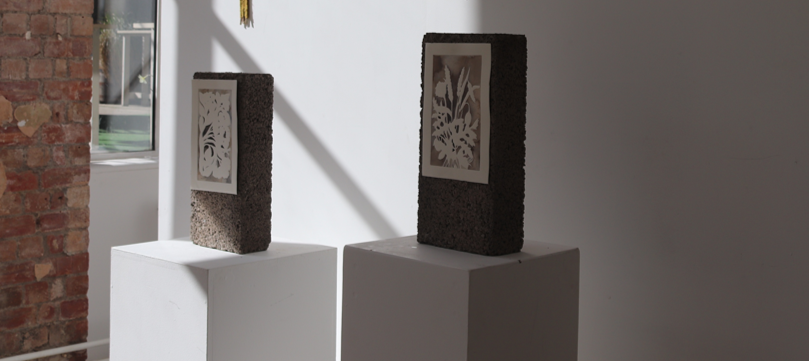
9.Layla Knox, Chapel Paintings (2024), Watercolour on paper, Breezeblock
Exhibition Renderings
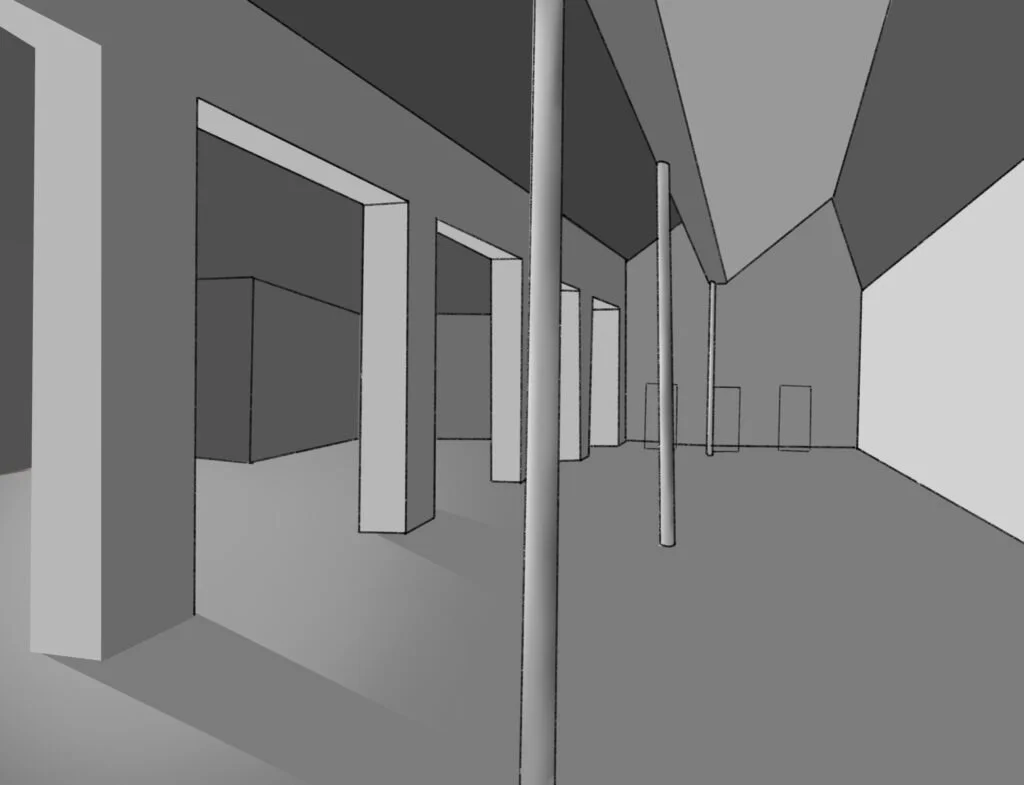
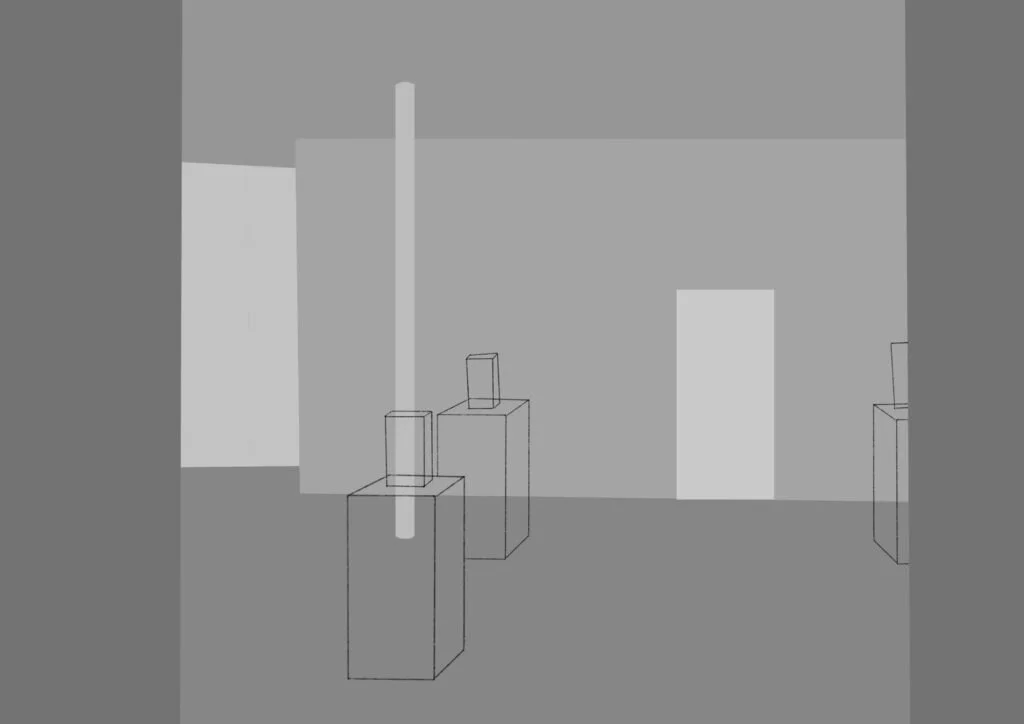
Accessibility Accessibility is built into the selection of artists and the layout of the space, not added afterwards. Floor space allows for mobility aids throughout, and the exhibition includes tactile and audio works alongside visual ones, so the show remains accessible regardless of impairment. The proposal includes consultation with Disability Equality Scotland during the design process.
Public programme A free gallery guide, risograph-printed on seed paper, gives visitors a structured route through the space. Two workshops extend the exhibition beyond the gallery: a walking and listening piece led by artist Lance Laoyan, and a foraging and craft session led by exhibiting artist Layla Knox.
Full Exhibition Proposal
Full development portfolio can also be found on the Edinburgh University Blog, accessible through the link below.
Please note that this is an external page and is subject to the discrepancies of The University of Edinburgh.