Mycorrhizal
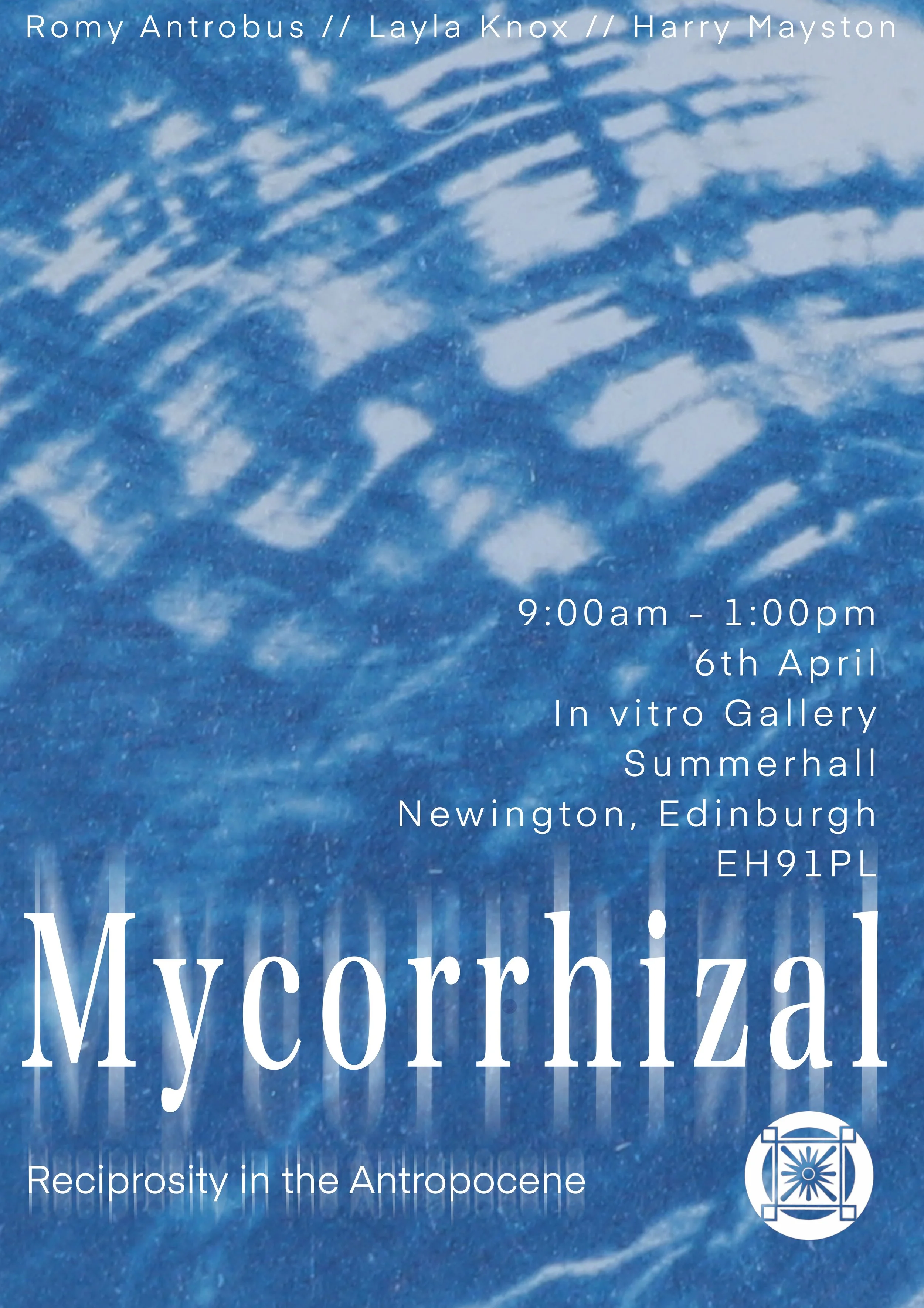
Mycorrhizal · 2025 · Exhibition · Summerhall, Edinburgh · Group exhibition, 3 artists.
Curatorial Statement
Named after a mutualistic fungus that grows on the roots of plants, mycorrhizal serves as a metaphor for the unseen connections hidden beneath the surface, linking us to the wider organic and inorganic world. This exhibition invites us to shift the soil and gaze upon the roots: fungal threads that connect plant to plant and flower to flower. The world around us is connected in minute ways that remain hidden from sight in the damp earth. In the age of the Anthropocene, where our individual actions, as simple as turning a key in a car engine or switching on a light, have begun to accumulate into causal disasters that threaten any sense of stable existence we once took for granted, it is time for us to examine our own roots and trace these gossamer-fine threads beyond our horizons, recognising our place in this ecological present.
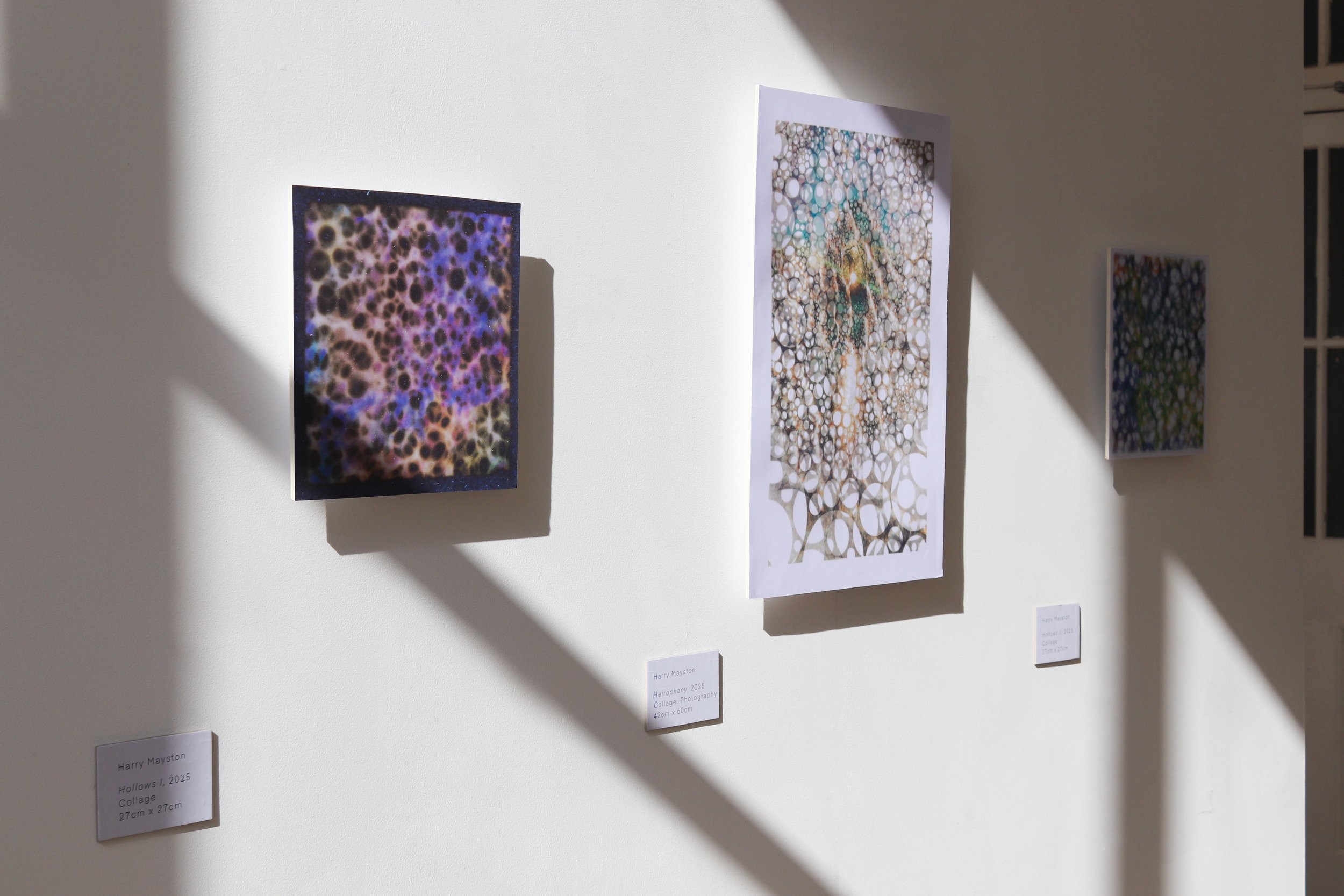
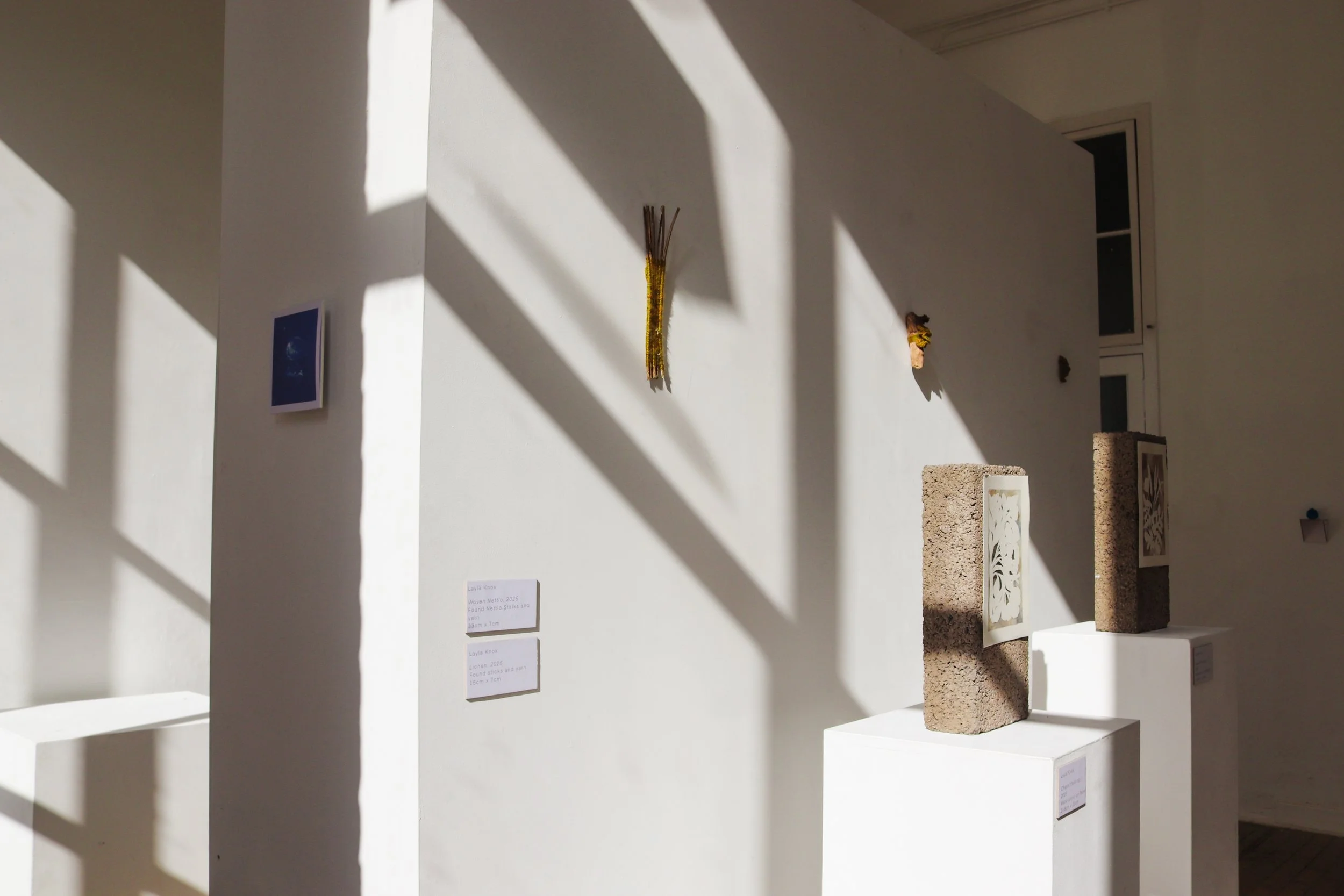
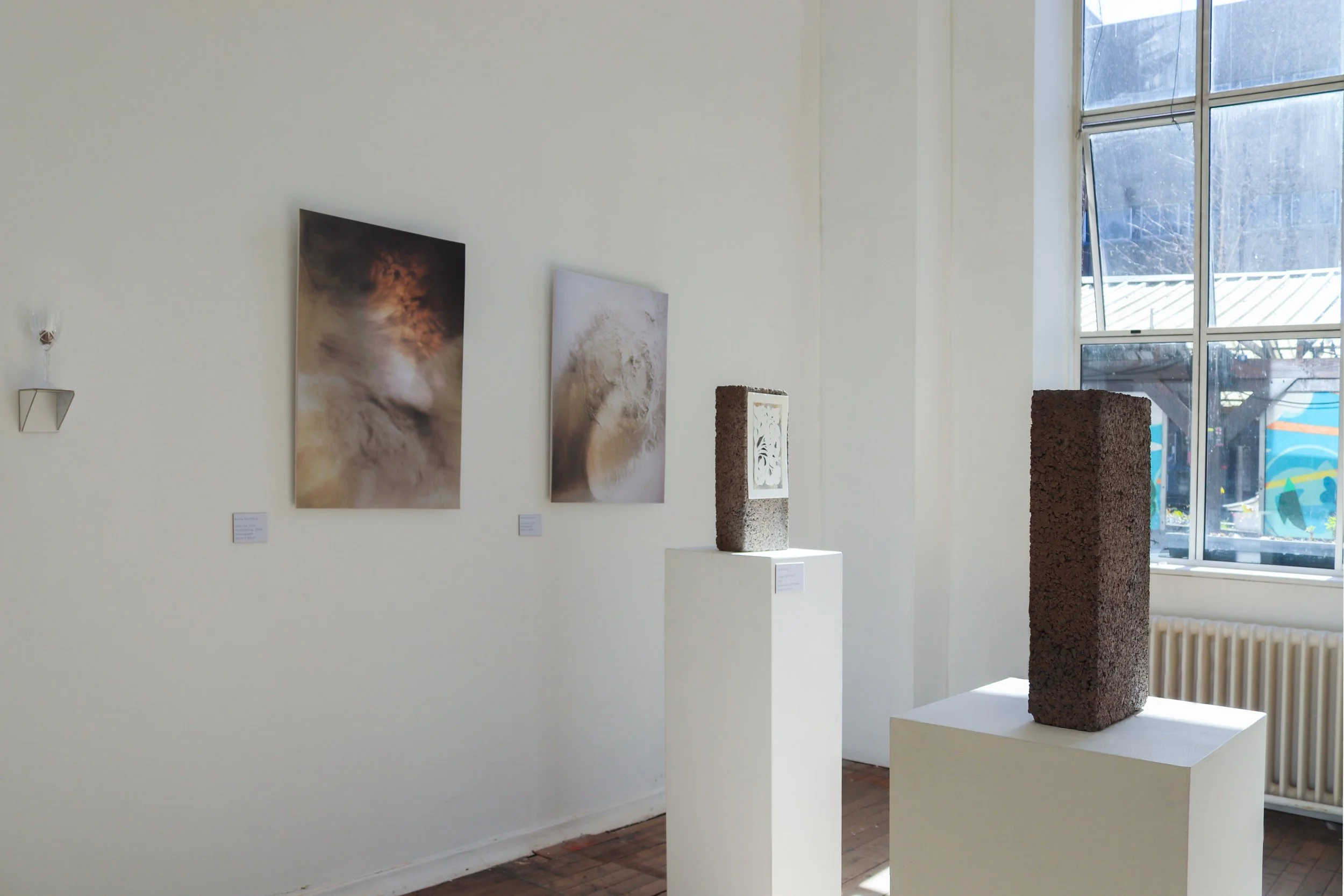
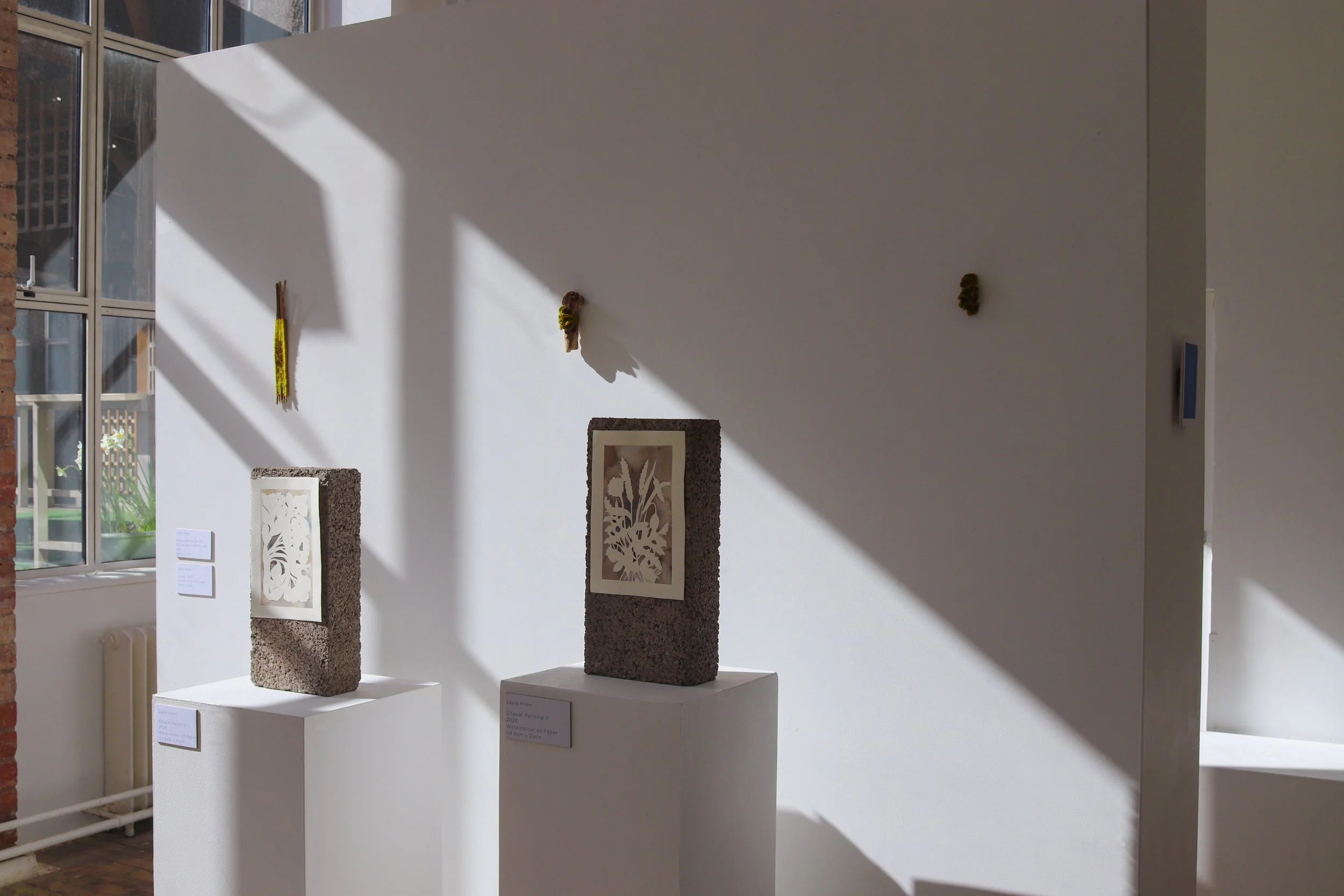
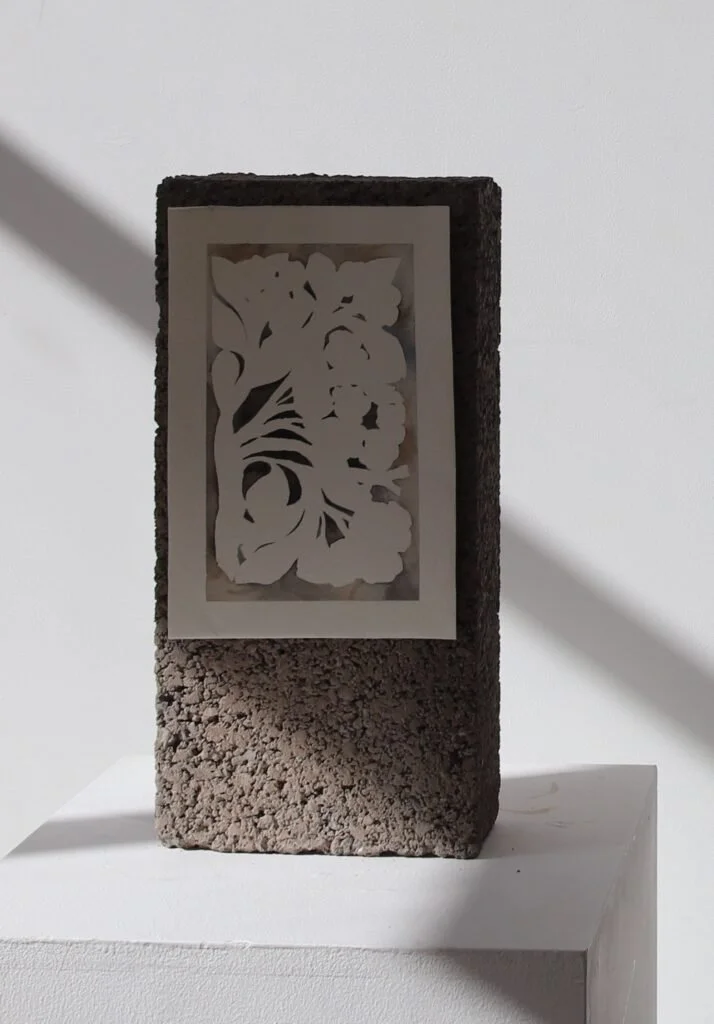
Three featured artists have come together to explore various forms of connection that embody elements of our contemporary ecology. Layla Knox traces biodiverse absences with delicate watercolours, illustrating plant matter through the negative space of blank paper, while subtly alluding to looming industrialisation through the use of breeze blocks. Meanwhile, Harry Mayston draws attention to environmental destruction through the systematic removal of collaged paper. The landscapes are only visible through this material destruction, while the resulting patterns symbolise biological growth and restoration. Finally, Romy Antrobus explores the concept of ‘happening’ through unconventional analogue photography. Through a process of chance, Antrobus questions how each event is the result of infinite preceding events and how the present moment ripples like water into the future in unforeseen ways.
This exhibition invites us to reflect on how we engage with the world in each moment, to recognise how our actions are connected to either destruction or resolution, and to understand how these choices shape the future.
Exhibition Photos
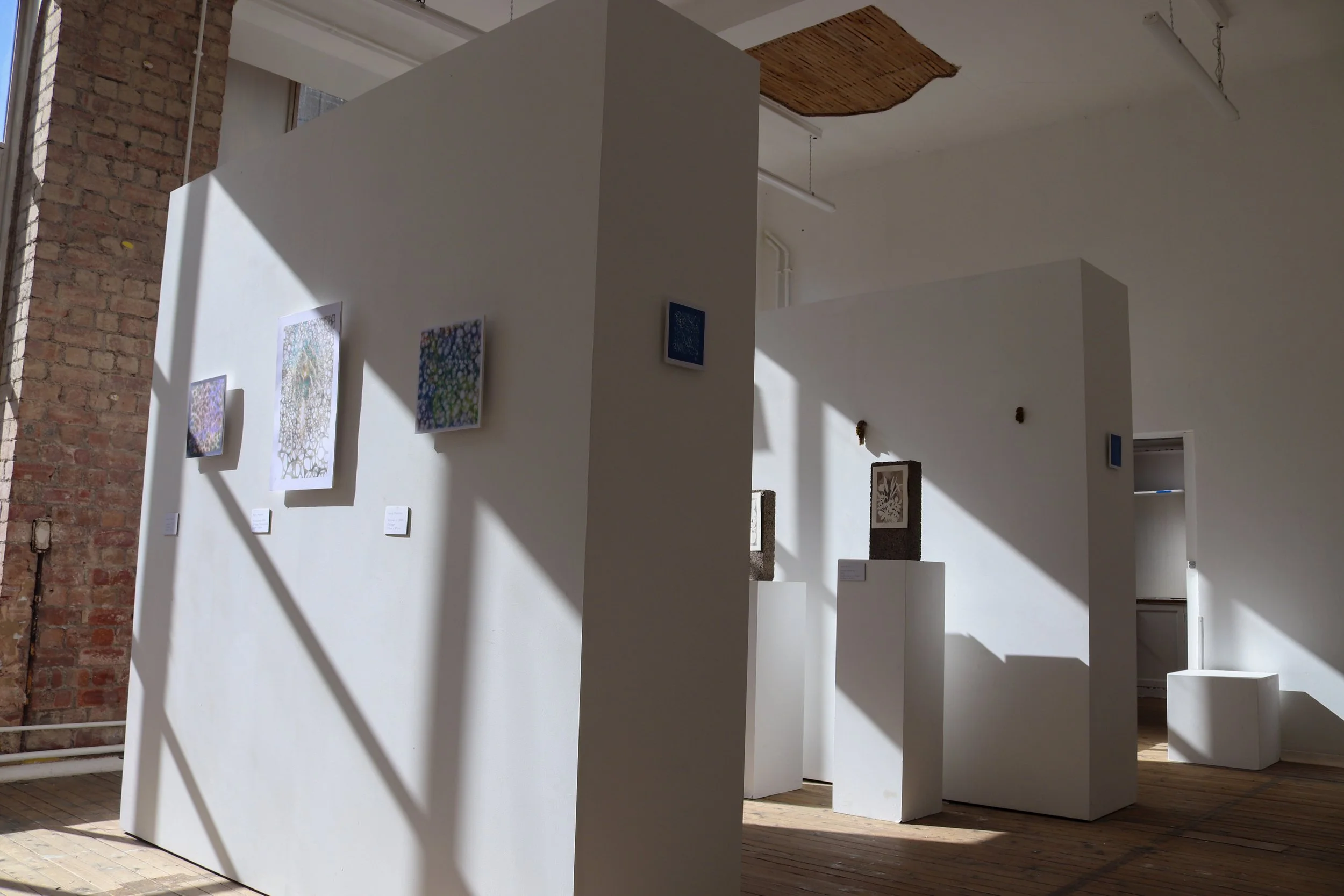
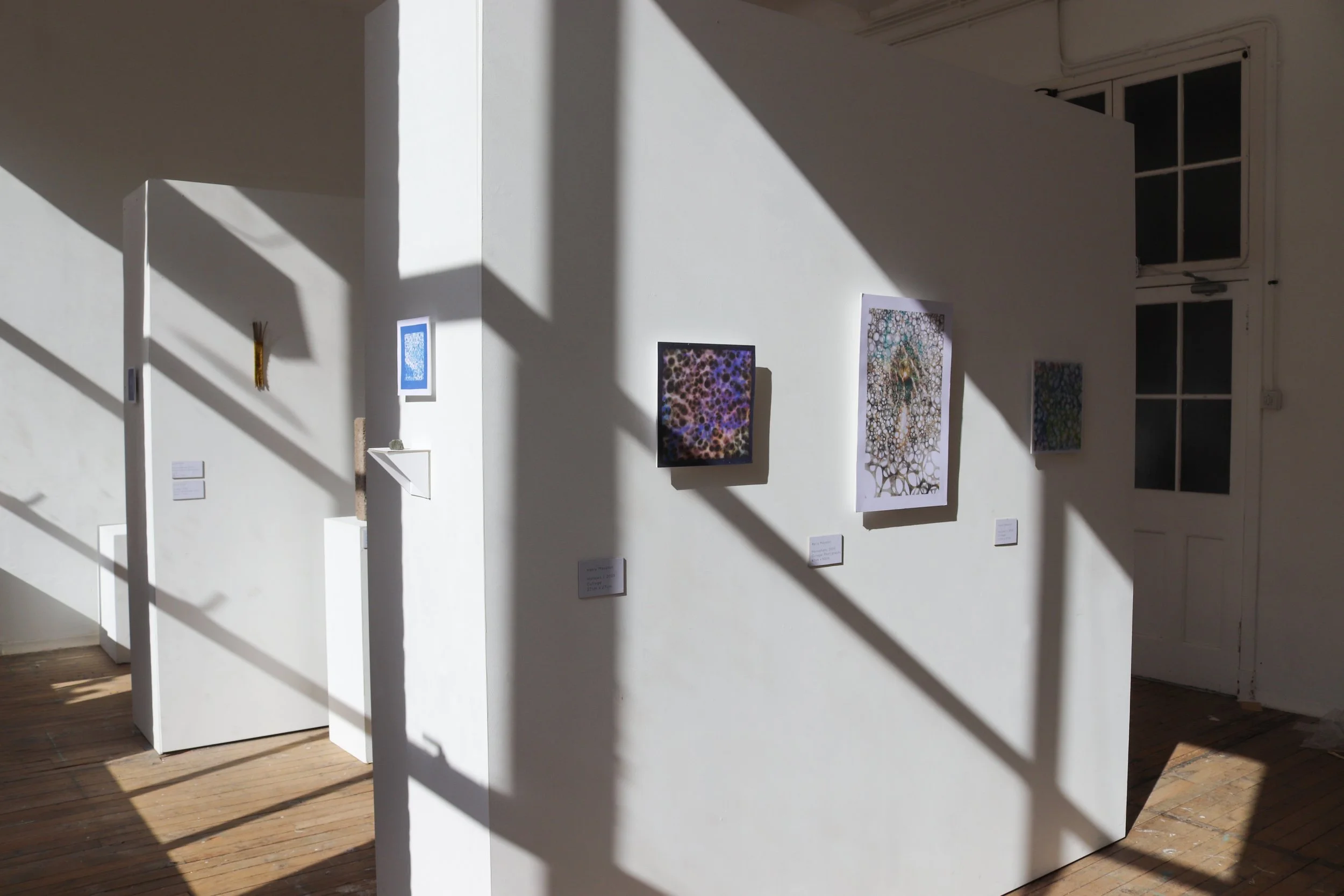
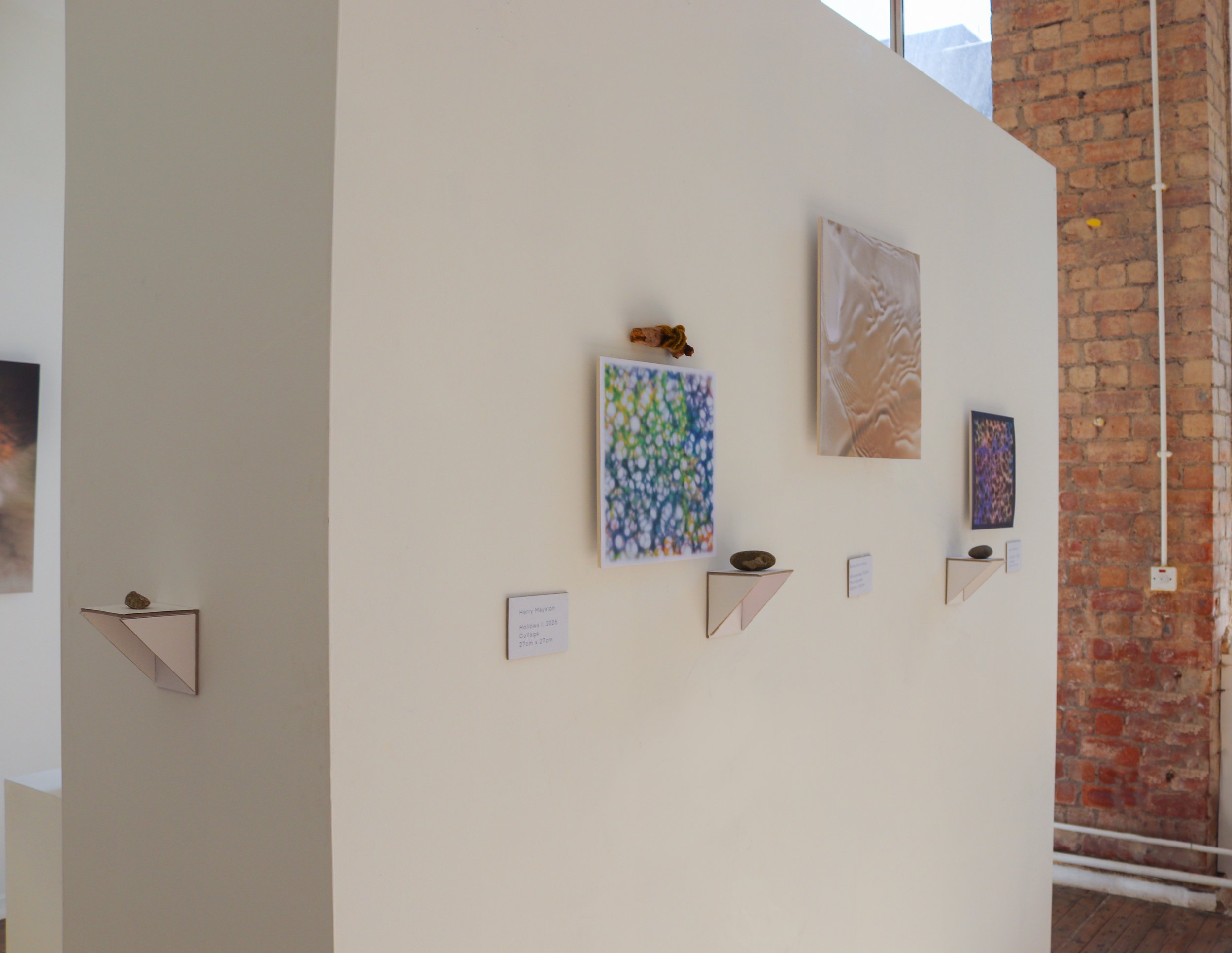
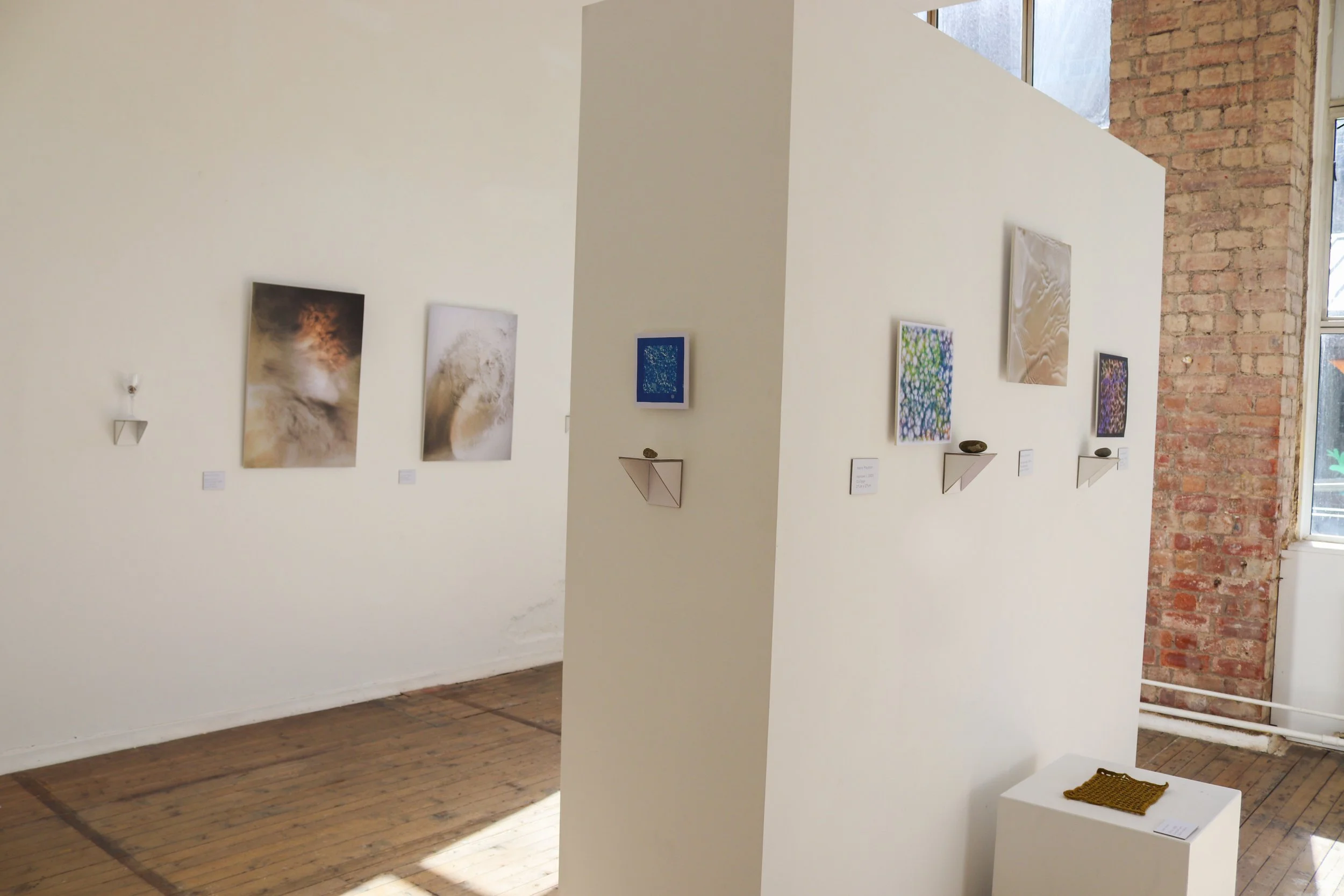
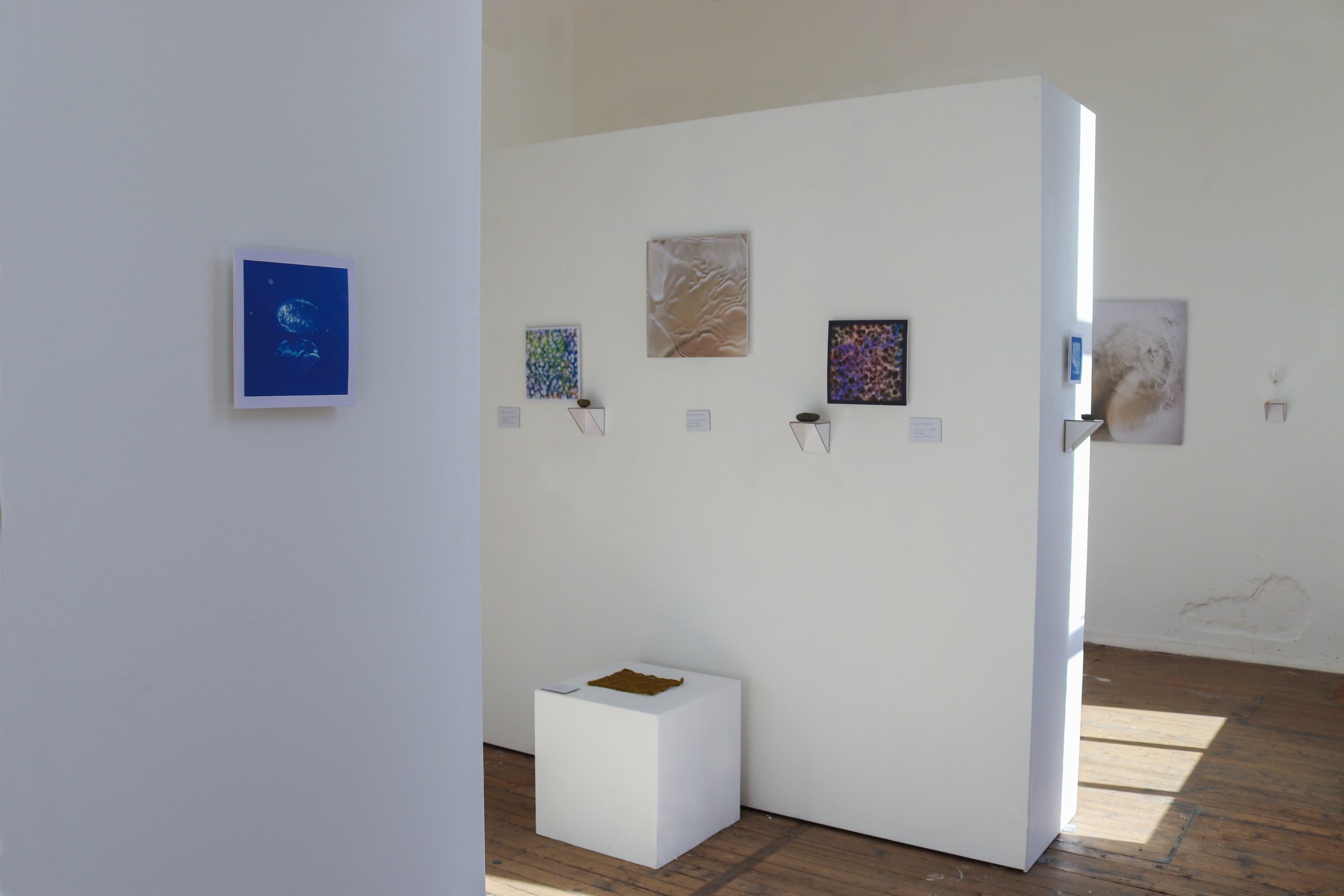
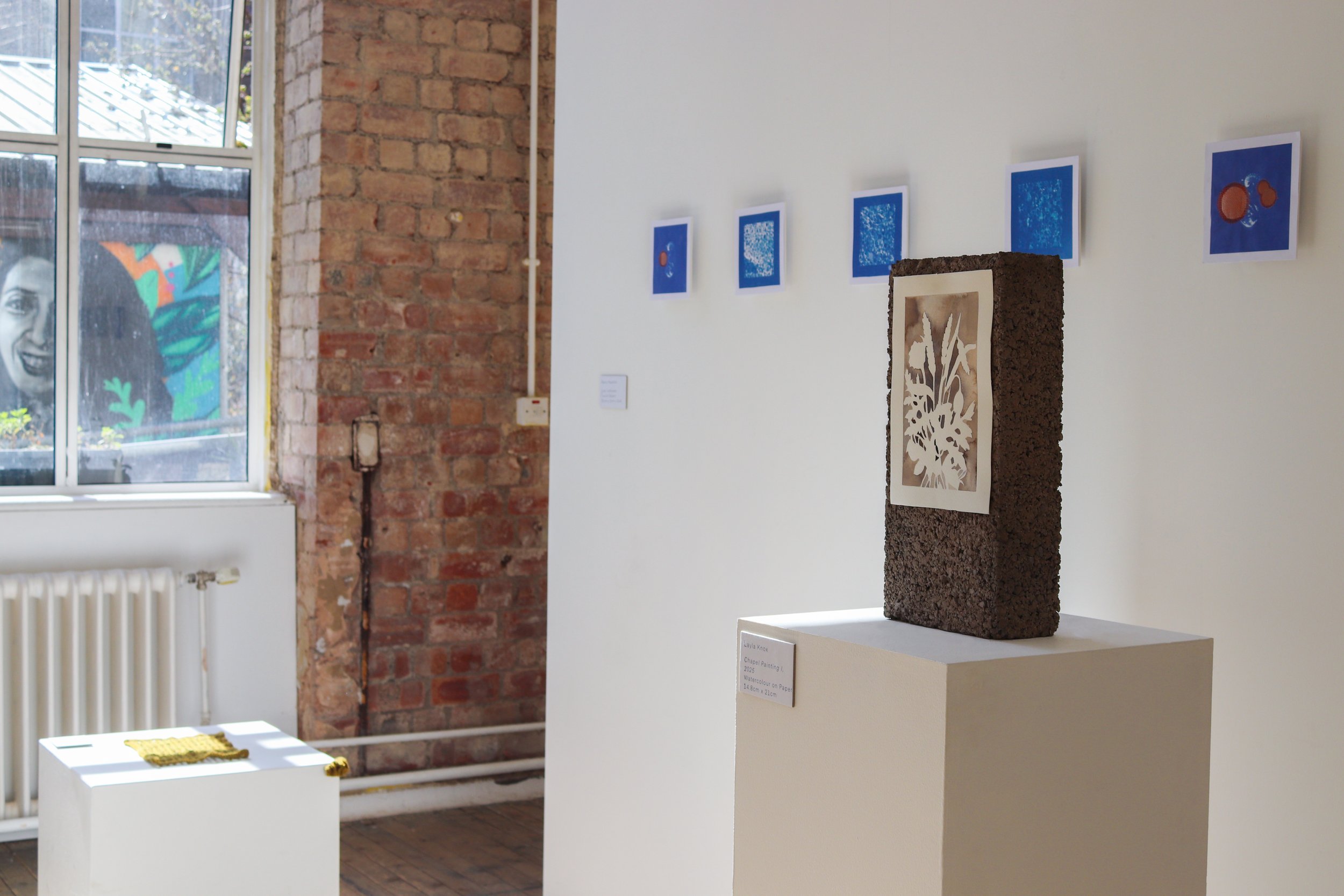
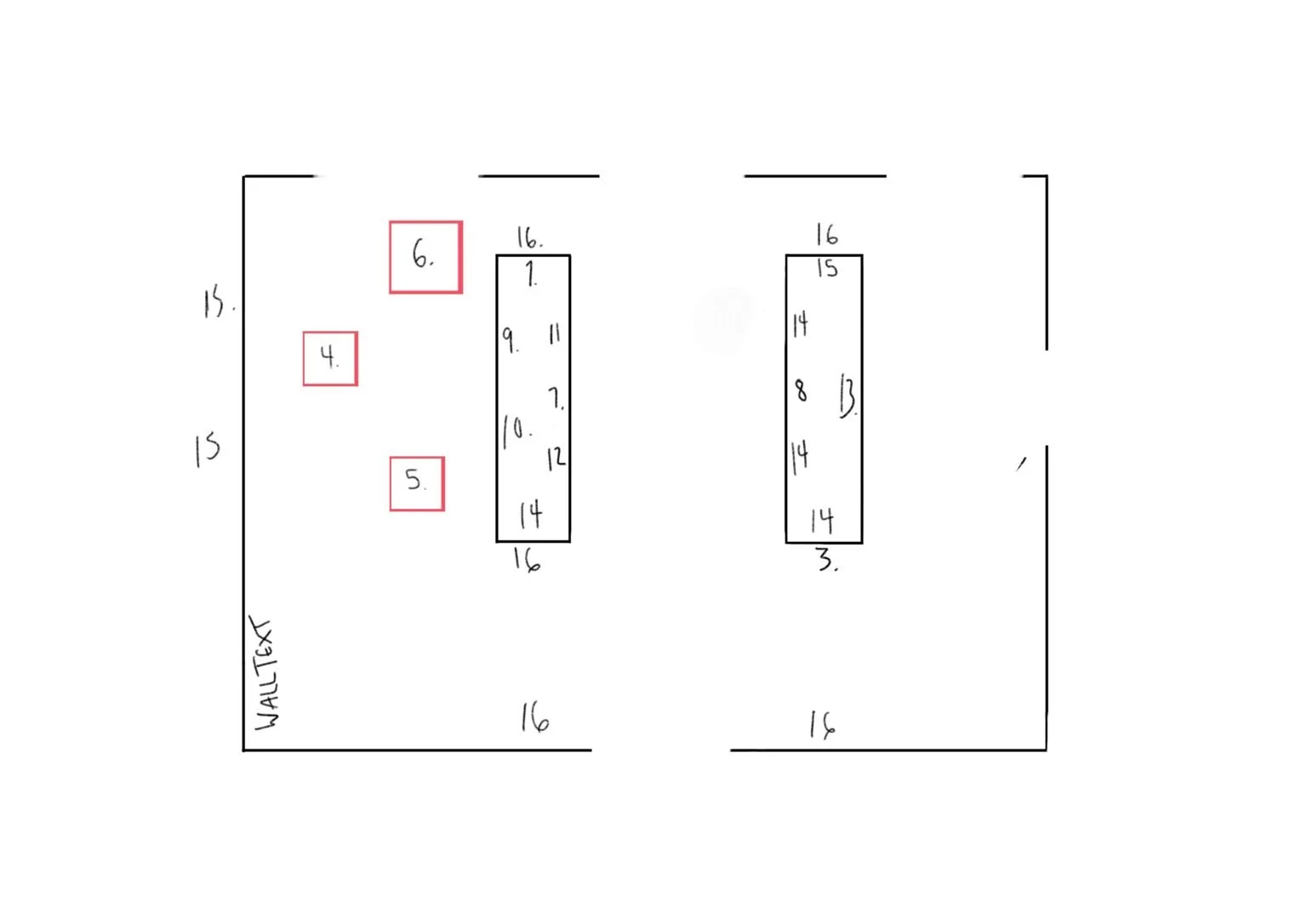
Exhibition Map
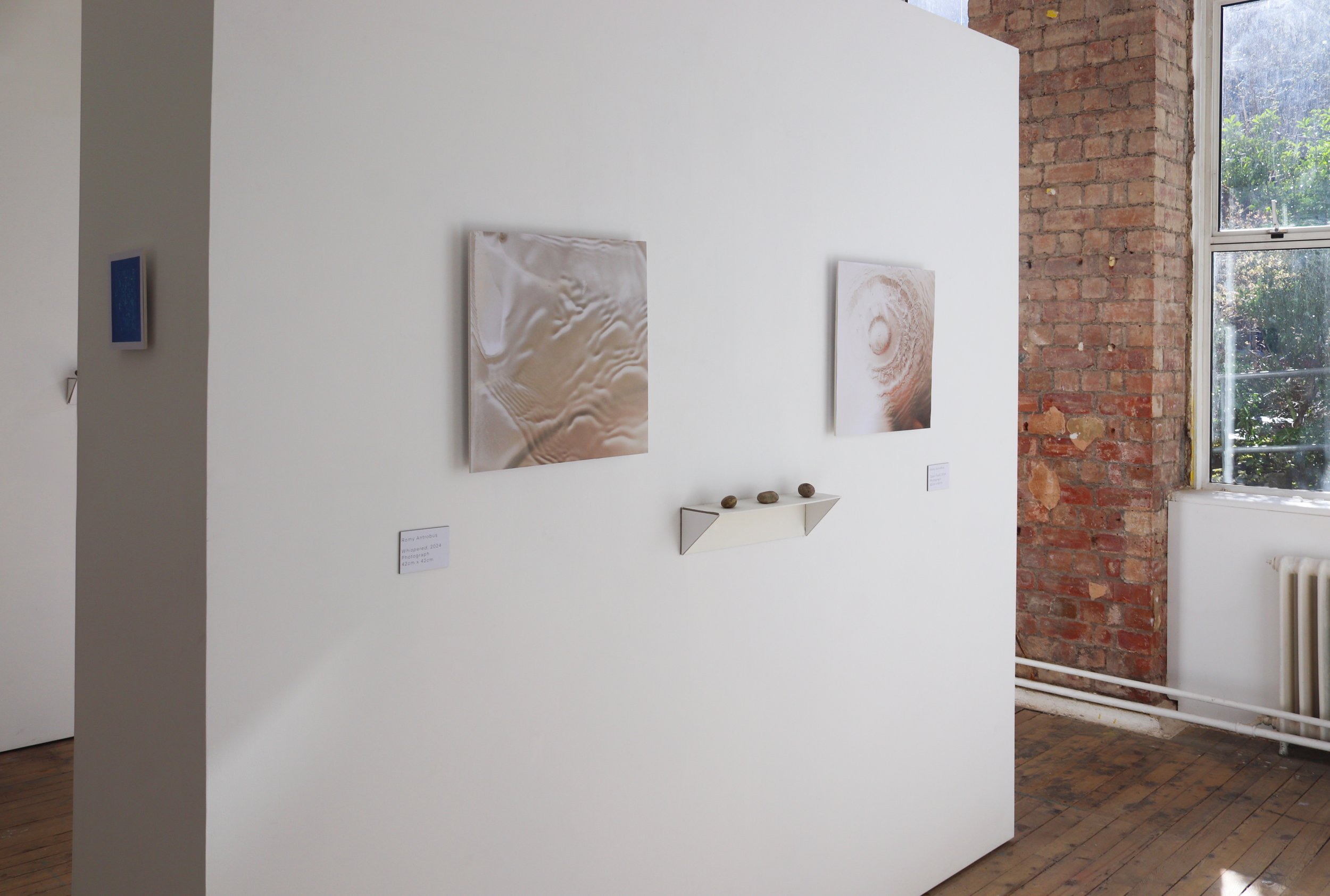
Pieces are assembled to allow narrative tensions to emerge. Contrast naturally arises between different works created by various artists, and due to the size of the space and the distinctive styles and mediums employed, pieces can be displayed side by side with a reduced risk of viewers misattributing them to the wrong artist.
This display was influenced by two major concepts. The first is central to the exhibition’s theme, where the pieces are placed in direct conversation with one another; the artwork resists rigid boundaries, instead operating as a connected network to be considered in relation to each other. In this sense, the audience is encouraged to value themselves within a connected present, just as every individual piece contributes to a total narrative. The second concept concerns cognitive dissonance: a state of bewilderment that disrupts conventional ways of thinking and thus stimulates the imagination. Acclaimed climate author Lawrence Buell stated that the climate crisis is actually a “crisis of imagination”; therefore, within the context of this exhibition, the unconventional placement of pieces aims to provoke this dissonant state, enabling audiences to achieve deeper insight into how they consider their role within the climate.
Artist Profiles
Artist 1: Layla Knox. – associated words: Care | Nurture | Absence
Layla Knox is an artist studying on the Contemporary Art Practice course at the University of Edinburgh, whom I met at the pop-up exhibition Corpse Flower at Inverleith House in the Royal Botanic Gardens. Here the work was site responsive to the history of the location, specifically the collection of plants gathered by Margret Haywood, who eventually donated her herbarium to the botanical garden. I took note of this from the lens of my individual speculative project themes as an artist who engages with the past of ecology. From this point I began to follow the work of Knox.
Recently at the contemporary art practice exhibition at Hospitalfield, Knox exhibited multiple pieces that progressed the previously displayed ecological themes. Woven Nettle (2025) consists of found, dried nettle stalks woven together with a green yarn. Knox creates a contrast between materials. The hard and brittle stems are wrapped in the soft and pliable yarn, arousing notions of comfort, as though the artist is offering sympathy and care to the materials that are looked over and left behind. Additionally, the watercolour paintings Chapel Painting I and Chapel Painting II are performed delicately; the detail suggests a certain reverence offered in the process, as though the artist is painting a portrait of the world, while the natural forms are depicted in the negative space of the paper, suggesting absence, possibly as a result of infrastructure and construction associated with the breezeblocks that these pieces find themselves mounted on. I find these pieces to be located explicitly in the present; the use of found objects in the weaving and crochet pieces creates contextual references to the outside world, while the use of breezeblocks and themes of absence in the watercolor pieces develop feelings of loss resulting from progressing industry.
Artist 2: Romy Antrobus.
Romy Antrobus is an artist located in Hertfordshire who explores themes of interconnectedness through non-traditional darkroom photography.
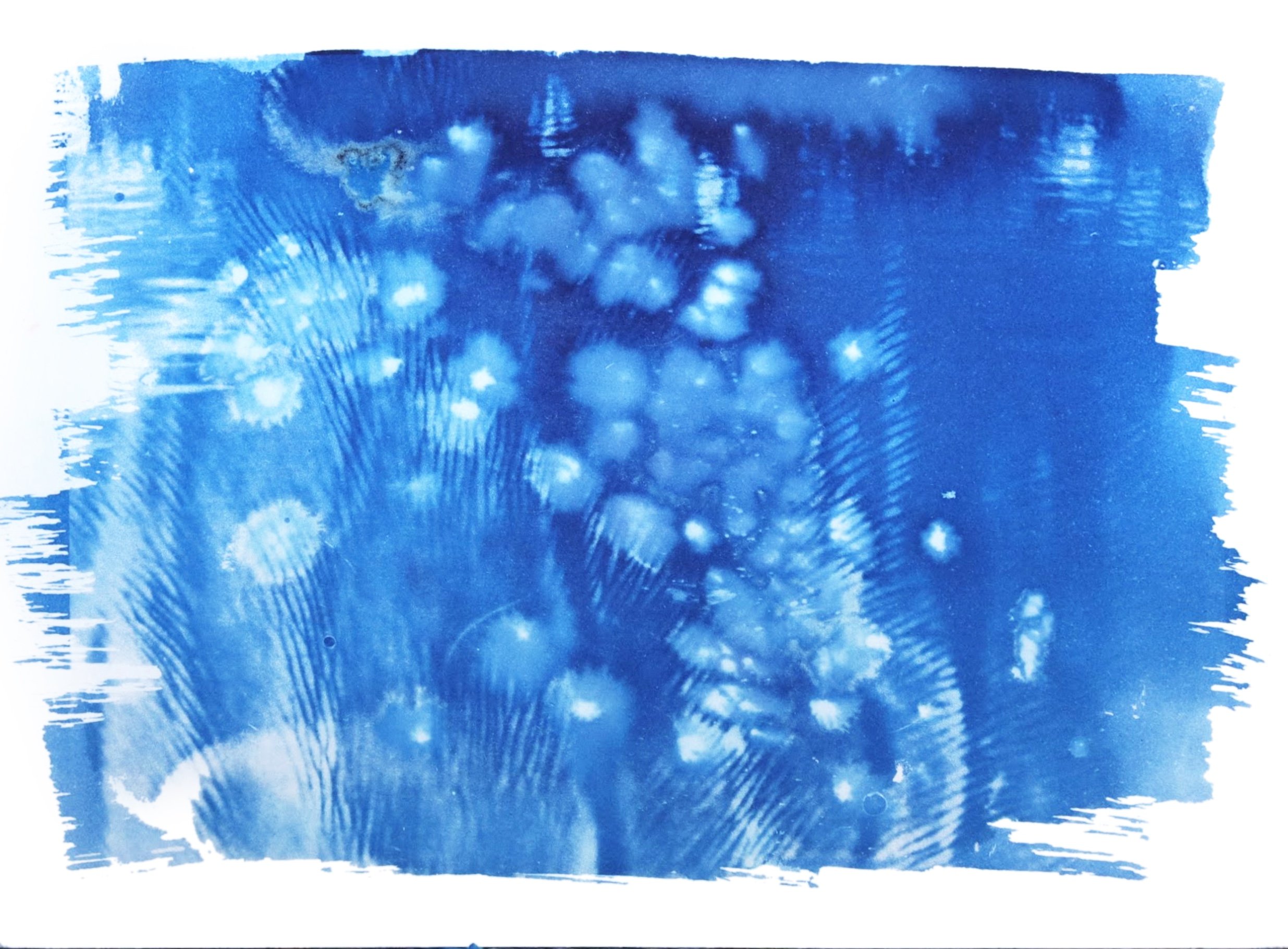
Antrobus’s process is situated in the darkroom; using light and running water. She captures fleeting and ephemeral patterns defined from events that, though they occur in a controlled environment, result in unpredictable outcomes. The resulting imagery Antrobus located within Karan Barad’s concept of space-time mattering, where each current event or action is recognized as a culmination of infinite unseen prior happenings, which in turn affects every subsequent happening. Beyond the process, the generated imagery enforces this perception, ripples extending from one point or interaction to affect far-away surfaces in unseen and unknowable ways. I believe that this work can take on an interesting role within an ecological narrative, despite not being ecologically focused in its own right. The audience is asked to look to both the past happenings that have led us to the point of ecological crisis and the future that the ripples of the present effect, emphasizing the importance of actions in the present. Additionally, climate activism is challenged by the statistical significance of our individual actions; thus, challenging the scale of our behaviour with regard to how actions create ripples spanning to the future would be an effective way of suggesting a reappraisal of climate to the perception of the viewer. By combining these concepts with the work of Layla Knox, the audience can perceive the role of nurturing and care as present-day actions that affect the future.
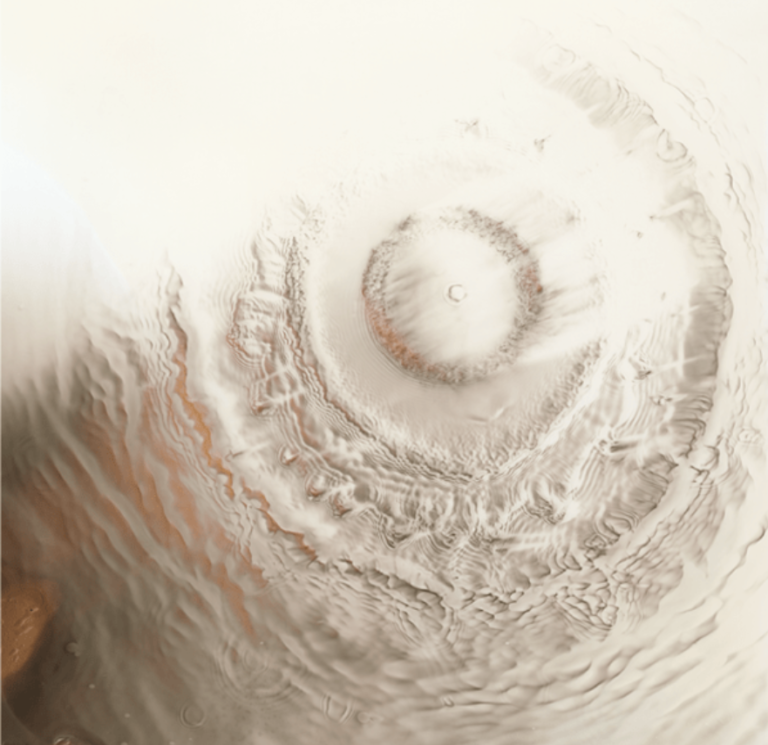
Artist 3: Harry Mayston (me)
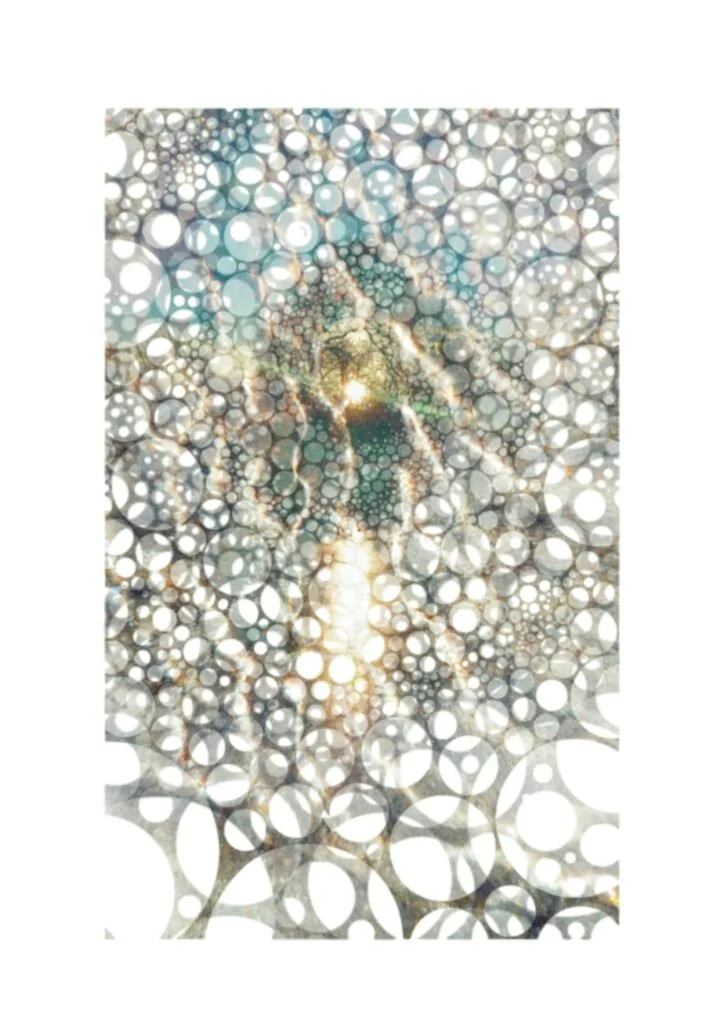
Centring around partially destroying images, I manipulate images using a rotary blade to remove small circular shapes in varying patterns, inspired by lichen growth, from the paper surface. I then repeat this process in varying patterns on multiples of the same image. Once completed, I layer the sheets on top of one another; each removed section from a surface reveals the image below. The result is a phenomenon where the viewer can only see the original image in its entirety through the lens of destruction. The intention of these pieces is to bring awareness to ecological destruction and highlight the forms of landscape that are being destroyed. However, the use of the lichen pattern is intended to represent symbols of resilience and a symbiotic coming together.
I have found synthesis with the work of Layla Knox. In my piece Blue Things, instead of letting the damaging process conclude a piece, I have employed traditional darning techniques to bring forth themes of mending and care. Both Knox’s Nettle Weaving and my Blue Things share material qualities of thread alongside thematic synthesis. Finally, many of my pieces use images of light interacting with water. My work and Antrobus’s are visually cohesive and may offer a more unified gallery experience but also may result in a blending of meaning where, for a viewer, Antrobus’s work may gain a greater attention to the role of water as a naturally occurring substance, where my pieces may inherit an association with actions and consequences; by placing these pieces in conjunction, new forms of knowledge will be allowed to emerge.