-Wyrdings-
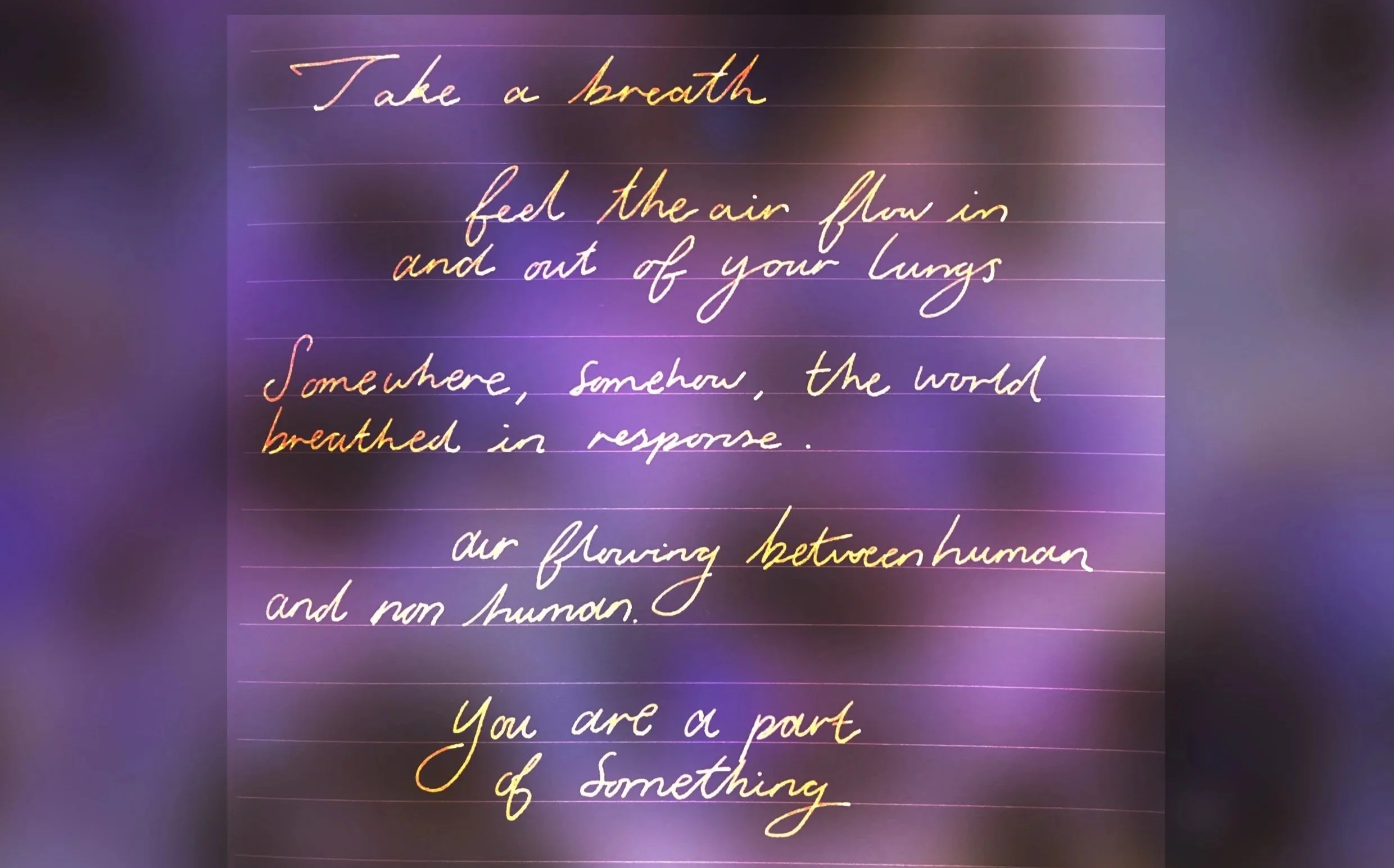
Caught Up In Time Wyrd is the old English precursor to the word weird. Alongside ideas of the strange and the uncanny, it primarily referred to destiny. A future fate. Wyrd (weird) is magic. The past, the present and the future overlapped and twisted into the shape of a word. Entrenched in history in the way that it describes what lies ahead, we are offered a glimpse of the world through eyes and narrative more than our own. The artists in this exhibition are held within time in a similar way. Bringing the past, the future and the present into one space, they unearth narratives of the planet, bringing light to the ways we understand nature and the world, within the context of climate change and disaster. As they explore ecological time for all its strangeness, weird worlds develop that find harmony within discord. Looking to lithic histories, uncanny realities of the extreme past give voice to the buried histories that we experience beneath our feet. Exploring the future of life, actions in the present emerge as future fossils as they span into the time ahead. We look at ourselves with the eyes of the future, evaluating the objects that we leave behind, and the forms of unfamiliar life that live in the remnants. Lastly the realities of the present are posed together as we recognise ourselves as part of interconnected systems of capitalism, the Anthropocene, and entanglements of reciprocity as we find kinship with the weird. This exhibition seeks to reveal how every individual is part of a reciprocal network of giving and sharing, with actions that fossilise into the future. The choices we make in the present shape the world around us and form the future. Fate becomes fluid and the past becomes present as we find ourselves entangled in ecologies of time and space, both human and non human
Curatorial Statement
Curatorial Methodology
Reciprocity
Reciprocity describes an entanglement. It is a concept based on the recognition of individuals as part of a greater system of meaning. Taking should be reciprocated with sharing as networks of connections emerge that form relationships and create a whole greater than the sum of its parts.
Within the gallery, the exhibition experience has been conceptualised in much the same way. Individual components of meaning form a network of knowledge, considered for their contribution to the overall exhibition, whilst not compromising individuality. The experience of the viewer is twofold. Initially their interaction with the exhibition is expected to be a result of an interweaving of multisensory phenomena. However, they are also viewed as a participatory agent within the space. The gallery attendee is a collaborator of knowledge formation, able to develop new forms of wisdom and thought in constructivist paradigms of learning.
By recognising the curatorial process as a reciprocal practice, the following sections in this proposal, though divided for ease of reading, are deeply interconnected. Reciprocity is a reflective practice where decisions within one area of curatorial process are apprised for the ripples it sends across other disciplines. This will be further emphasised as the target audience becomes defined by ethical responsibility, and the constraints of exhibition space inform the selection of artists.
Friction
Friction is a term that, in this context, will refer to narrative dissonance that leads to the evolution of new ideas and a reappraisal of the world we currently reside in. By selecting and arranging artworks in a way that focus on exposing the viewer to a set of different themes and narratives, they will have a chance to inspect where they believe their own values lie, possibly prompting an introspective awareness to reevaluate entrenched narratives associated with the dominant presentation of climate emergency.
Alongside an evaluation of their values, it also leads the participant to question what they want the world to look like in the present and the future. Participants have the chance to change the way they interact with the world.
The biggest barrier between climate change and restoration is limited imagination. In this exhibition ‘imagination’ is not conflated with innovation. It is not about creating new restorative ideas to make life within the Anthropocene easier, but instead to recognise the ability to think outside of the established and prescriptive forms of thinking that have emerged from capitalist contentions.
Through friction and reciprocity, the viewer begins to experience themselves as part of an interrelated network of art, space, and interpretation, reflective of the systems that we find ourselves a part of in the world. The audience is given the chance to look beyond their preconceived notions of what the world has been, what the world is, and what the world could be.
Format of Delivery
This curatorial project proposes a group exhibition held at the Strange Field warehouse gallery in east Glasgow. Lasting for a duration of two weeks and featuring 6 artists, the exhibition will explore themes of ecology and climate change, including two discursive artist led workshops, and two curatorial talks. The exhibition will be supported by a free publication, describing the displayed works, focusing on creating an approachable and accessible experience.
As a socially engaged project an exhibition is the most suitable form of delivery for this curatorial subject. The exhibition has historically cemented itself as a common ground between the institution and the public. Based on this notion, the gallery space has evolved beyond these means, becoming a location for the sharing of ideas and the construction of knowledge. Artist Richard Paul Lohse in his writing in New Design in Exhibition (2014), states that an ‘exhibition is an ideal medium for influencing the public’, representing an opportunity to engage with people in a way pertinent to peoples lives. Art becomes a setting for collective meaning and constructive education. Further, Marco Borsotti (2020) states that the exhibition is a space that poses existing objects within new contexts and theories, creating a ‘superstructural viewpoint’. An exhibition becomes a place for the generation of new ways of thinking, rather than the reproduction of already established ways of knowing.
The experience of the physical exhibition is one that causes people to lose a sense of chronology through the inspection of art and the objects that surround it (Porchaykina, N. 2012). A sense of meditativeness is incurred, that is especially important and will become clear in the following sections of this proposal as the temporally twisted nature of the exhibition is clarified.
As more elements are implicated into the space, artwork is simultaneously decontextualized, recontextualized and enmeshed into a web of interrelations and new forms of meanings. The established history of the public exhibition is based on a foundation of generating new ideas that defy presupposed standards, that relies on a process of entanglement and reciprocity.
Mediums
Artworks have been selected from a variety of mediums, focusing on an interdisciplinary exhibition design.
Many pieces engage with embodying mediums, such as tactile or sound-based work designed to situate the participant within the gallery space.
The themes of entangled ecological times are difficult to comprehend. Concepts, like Deep Time, specifically refer to scopes of history that subvert human comprehension, thus formats of presentation that are equally intangible, and immaterial would do little to solidify meaning to the viewer. Analogue grounding materials are conceptualised as an access point for the viewer, basing the complexity and unfamiliarity of alternative forms of ecological thinking in comprehendible sensory experiences.
Human progress is viewed through a technological lens. Society as we know it is built on scientific foundations, with advancements shaping human life. As a result, it is difficult for us to imagine a world where progress is not dictated by the advancement of technology. We have been led to believe that the solution to a rapidly warming climate is further investment in these infrastructures. However, often overlooked is the fact that the infrastructures of capitalism and colonialism that have supported industrial innovation, are also the structures that have contributed to pollution and climate change, establishing our current ecological era as the Anthropocene. The use of analogue materials steers a viewer toward other forms of innovation, looking past the dominant historical narrative of capitalistic progress, and finding meaning in the ways that alternate forms of thinking can shape our response to crisis.
Within analogue mediums a variety of materials have been selected to bring about a sense of friction. Different materials offer distinctive voices to pieces in the exhibition. Further cognition is deeply tied to material engagement. New forms of thinking emerge as the viewer is moved from one medium to the next. Friction emerges as cognitive dissonance is encouraged and fostered. The viewer to left to establish new connections of meaning.
Site
With a framework of reciprocity, the exhibition space is acknowledged as a vital component, within a network of discrete elements, that form the exhibition experience. This section will consider a description of the chosen gallery space, followed by a comparison to conventional white cube gallery spaces, highlighting Strange Field’s unique components that have made it the ideal location for Wyrdings. Lastly, Strange Field’s institutional priorities will be identified for their relevance to this exhibition.
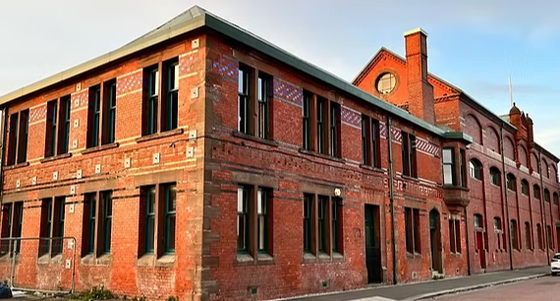
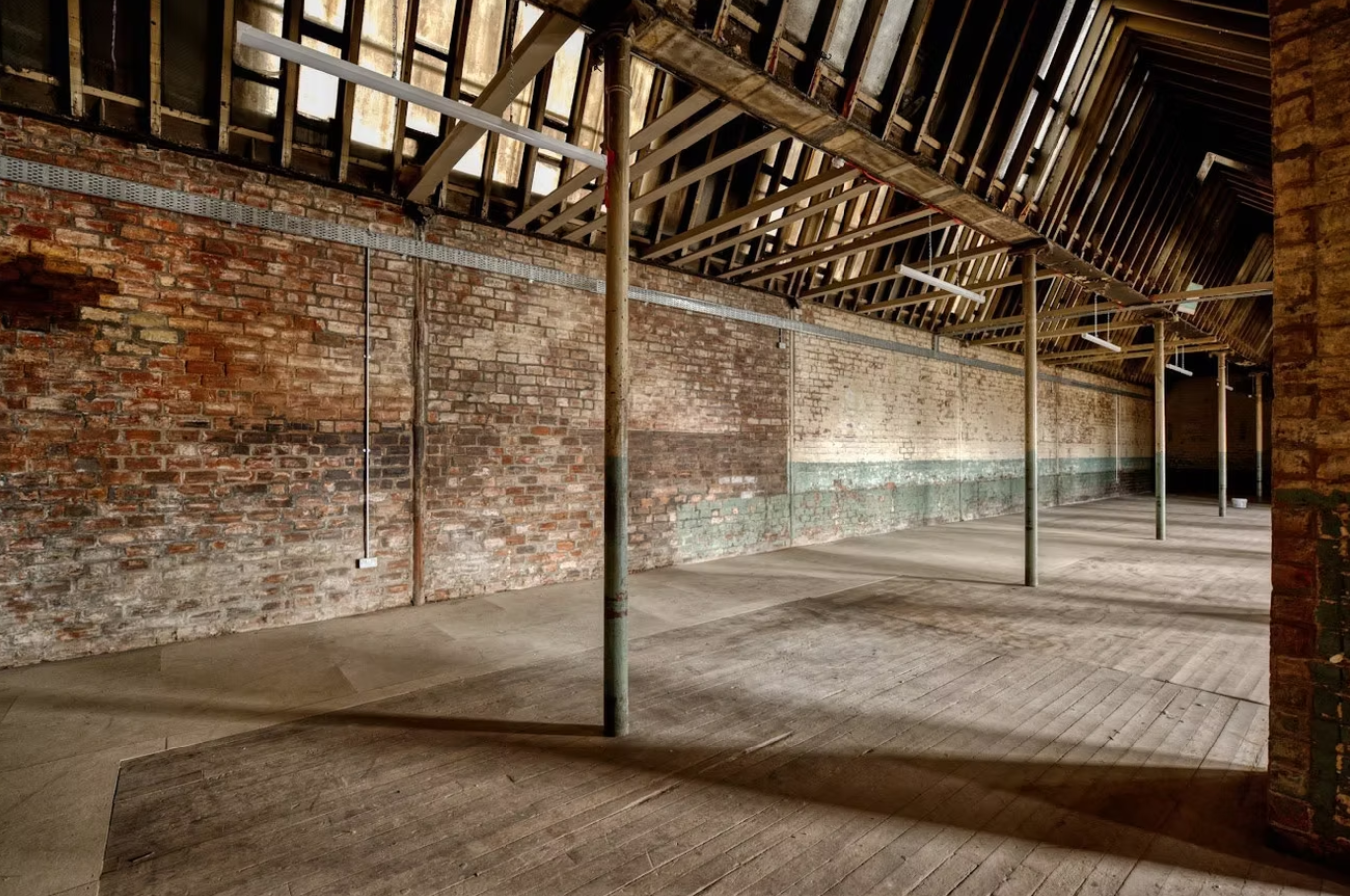
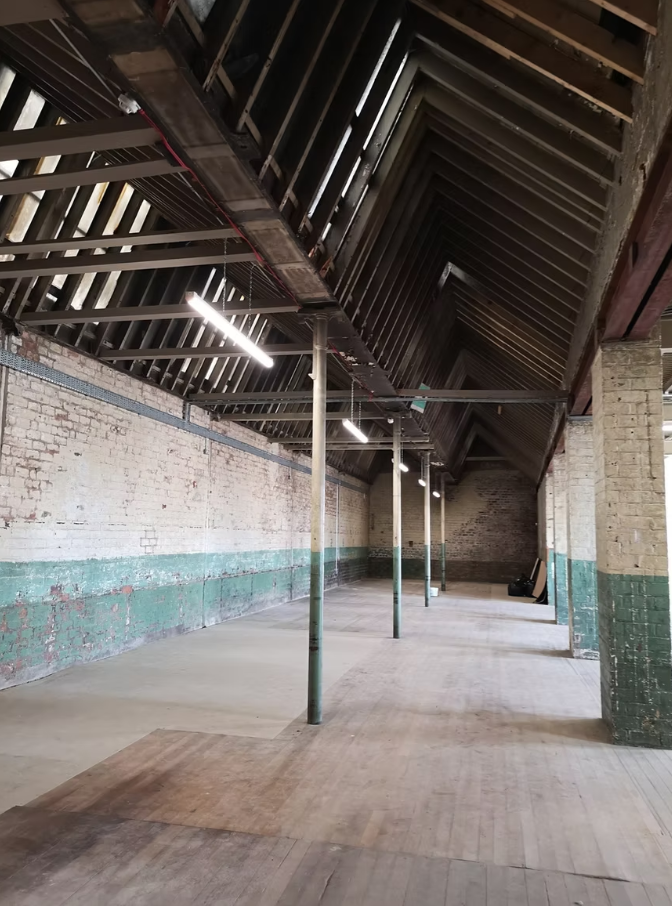
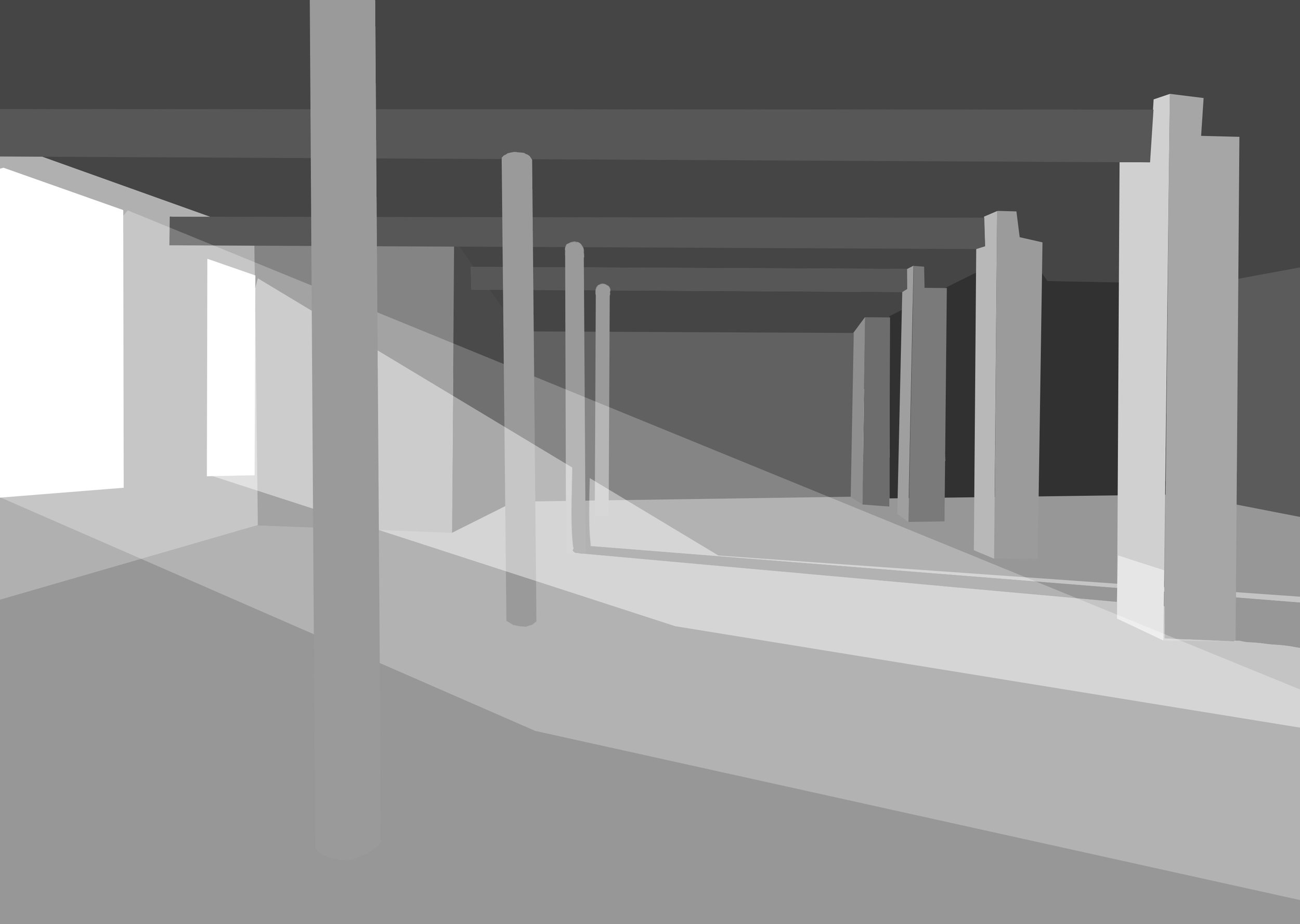
Strange Field is a small visual arts association located in the east end of Glasgow, located at 105-109 French Street, a 5-minute walk away from the Dalmarnock train station, and has been a registered Scottish charity since 2012. Strange Field is situated in a listed building with walls consisting of uncovered brick; structural support beams divide the space and destructive forms of wall mounting are prohibited. The gallery space presents a non-conventional warehouse expanse with high ceilings, large windows to the left wall of the entrance, and wooden floors. The space holds the history of its industrial past that offers unique opportunities for conceptual commentary.
Comparison to the White Cube Gallery:
The white cube gallery is the conventional modern gallery, minimalist and uniform; its plain walls are intended to serve as a clear distinction between the space as a non-art object, and the art pieces positioned within it. Conceptualized as a neutral space, it is intended to contribute nothing to the thematic exploration of the exhibition but also compromises nothing. Value is found for its universal application. However, despite contributing little to the conceptual components of the exhibition, the architecture and associated sensory perception of the gallery still influence the way that the audience interprets the gallery experience and the individual works of art that it holds.
Strange Field on the other hand, is a non-conventional space. Unlike the white cube gallery, the material architecture is purposefully implicated as a thematic component of the exhibition. The location history as a place for industry immediately creates parallel notions of the man-made; by contrasting the production coded environment with analogue natural inspired pieces of art and themes of ecology, a frictional sense of place is defined by an intertwining of human and natural worlds. The exhibition simultaneously queries the industrial history baked into the architecture, and forms humanitarian and ecological entanglements through the dialogue that emerges between the exhibition theme and the exhibition space.
Strange Field Priorities
Though not explicitly stated, Strange Field operates through a network of reciprocity. Rejecting the traditional hierarchical organisational structure, a horizontal framework focuses their methodology on collaboration as a key formative concept. They hold a diverse network which prioritises experiences and opportunities for the local East End community. Further the gallery was specifically selected in response to their commitment to embedded accessibility, and support for under-represented and early career artists within their arts programming, offering subsidized fees for programmed events that share these goals.
Action
Strange Field offers a non-conventional space, which implicates the architecture and sensory experience of place into the exhibition experience. The locational history itself becomes implicated within the network of meaning that spans the gallery space and throughout the exhibition. Strategic organizational priorities present mutual concerns that Wyrdings will treat with a similar importance within this proposal.
The artists selected for Wyrdings represent a diverse array of perspective, all approaching ecology and climate change from unique viewpoints. All individuals are early career artists graduating from UK universities within the last five years. Accounting for the friction and harmonies that emerge between pieces, the exhibition is divided into three conceptual times throughout the space with each artist’s work forming a component of past, future, or present.
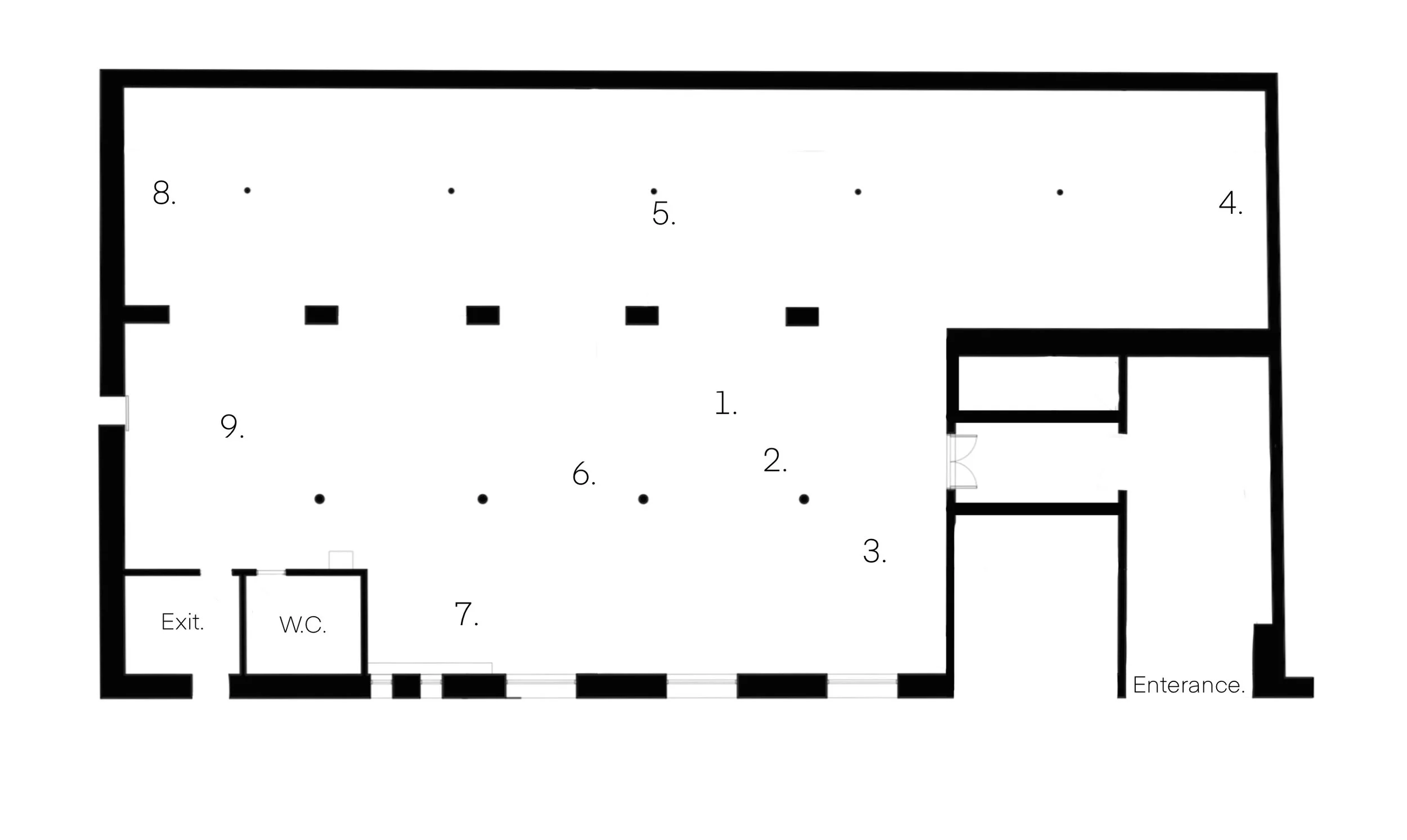
The artists are detailed in the order that they appear in the exhibition, and though a narrative has emerged, and networks of meaning have been analysed based on an anticipated path of audience engagement that progresses through the exhibition, the space is also left purposefully open to allow for visitors to explore in a self-constructed route, finding their own meanings as they progress. Additionally, though there is a heightened discussion about the meaning of artwork as a collective, the exhibited pieces are still intended to be represented as individual pieces with inherent value outside the context of the pieces that surround it.
Friction is embraced through the open gallery space. From any one point, while in the exhibition, all other pieces will be visible, meaning that as gallery attendees move around the space different pieces will be posed together dependent on their eyeline. Meaning making is not constrained to only one form of perception, even if the anticipated progression is followed.
Accessibility.
Accessibility is embedded into the selection of artists and the arrangement of space. Pieces of art are placed with a consciousness of how individuals with differing mobility may navigate through the space, with enough room on the floor to comfortably house aids, as individuals navigate the exhibition. Additionally, initiatives to incorporate more than visual arts have resulted in multiple gallery pieces that offer tactile and audio experiences, ensuring that visitors will be able to participate with the exhibition regardless of individual impairments. Disability Equality Scotland’s network will be used to find consultants living with disabilities with whom to consult about the exhibition design.
Artists & Layout
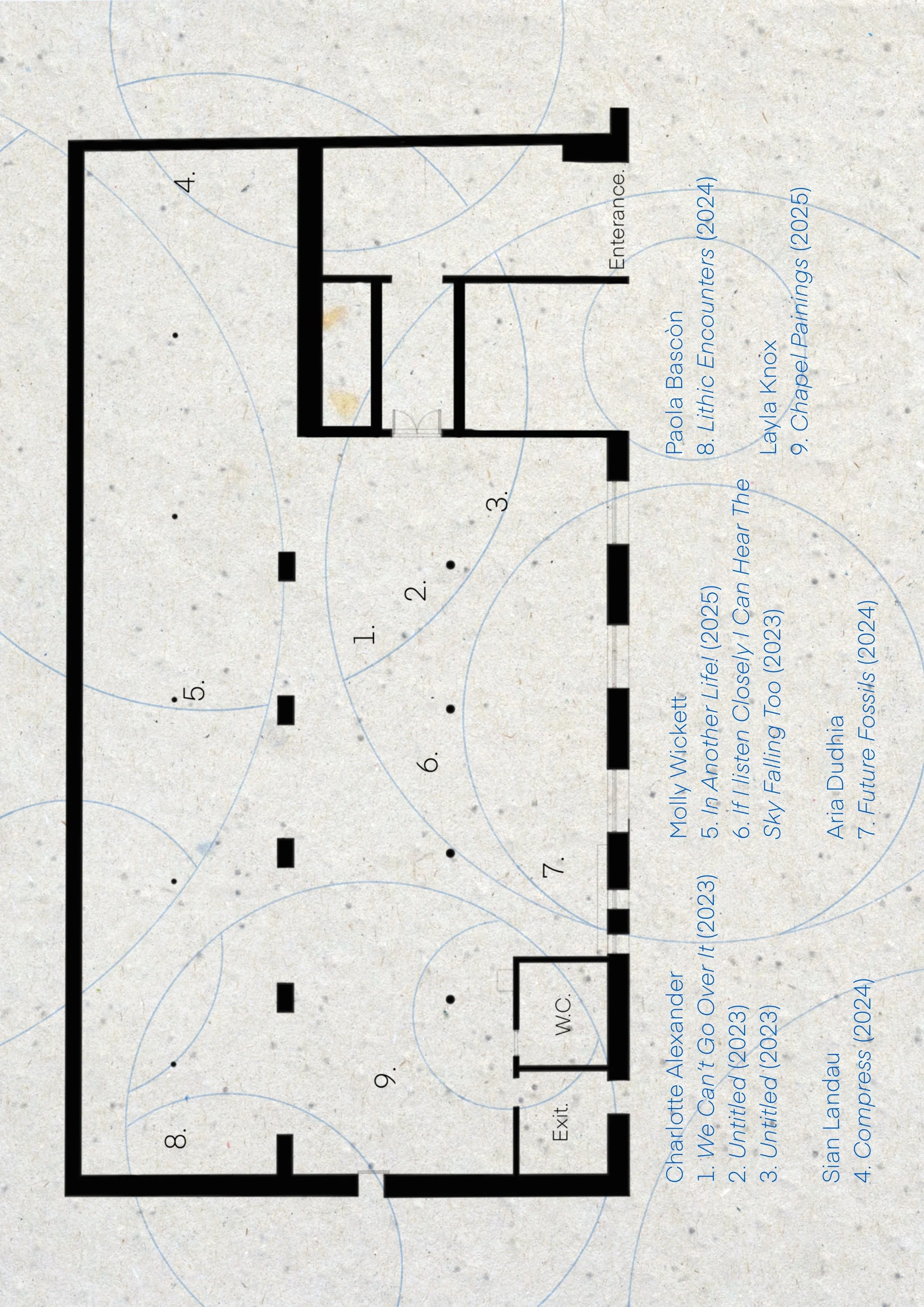
Exhibition Map
Charlotte Alexandar, We can’t go over it (2023), Photograph, Found Object, Oil Pastels
Charlotte Alexandar, Untitled [pressed clay piece] (2023), Pressed Clay Ceramic
3.Charlotte Alexandar, Untitled [found object piece] (2023), Found Object
4.Siân Landau, Compress (2024), Wall Mural, Photography, Audio Installation, Projection
Molly Wickett, In Another Life! (2025), Wood Elm ash and chains
If I Listen Closely, I Can Hear the Sky Falling Too (2023), ,Elm, oxidised steel, salt, soil, sand, ash, steel, aluminium, and lichens
Aria Dudhia, Future Fossils (2024), Ceramic
Paola Bascón, Lithic Encounters (2024), Sound installation, Found Object
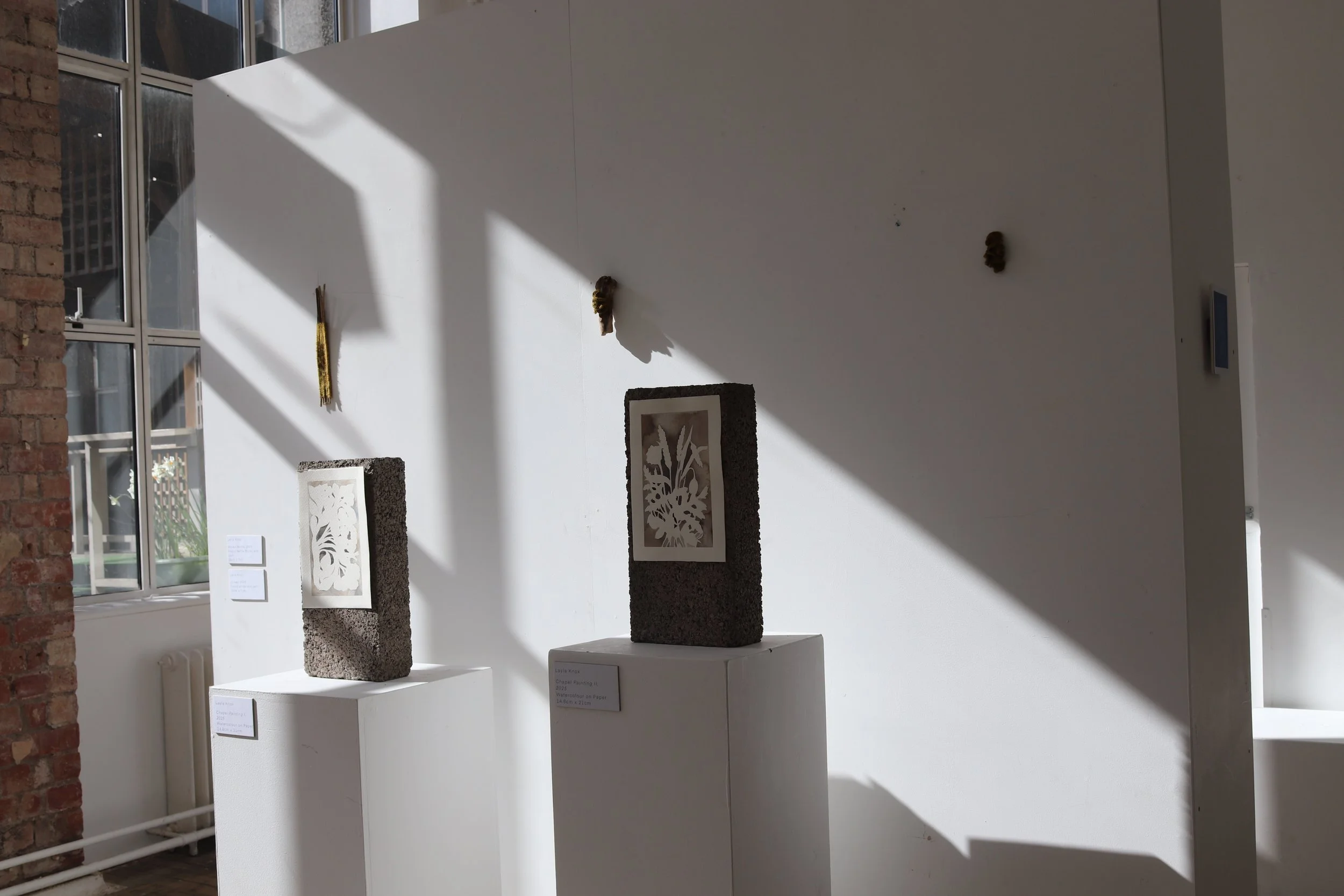
Layla Knox, Chapel Paintings (2024), Watercolour on paper, Breezeblock
Part 1:
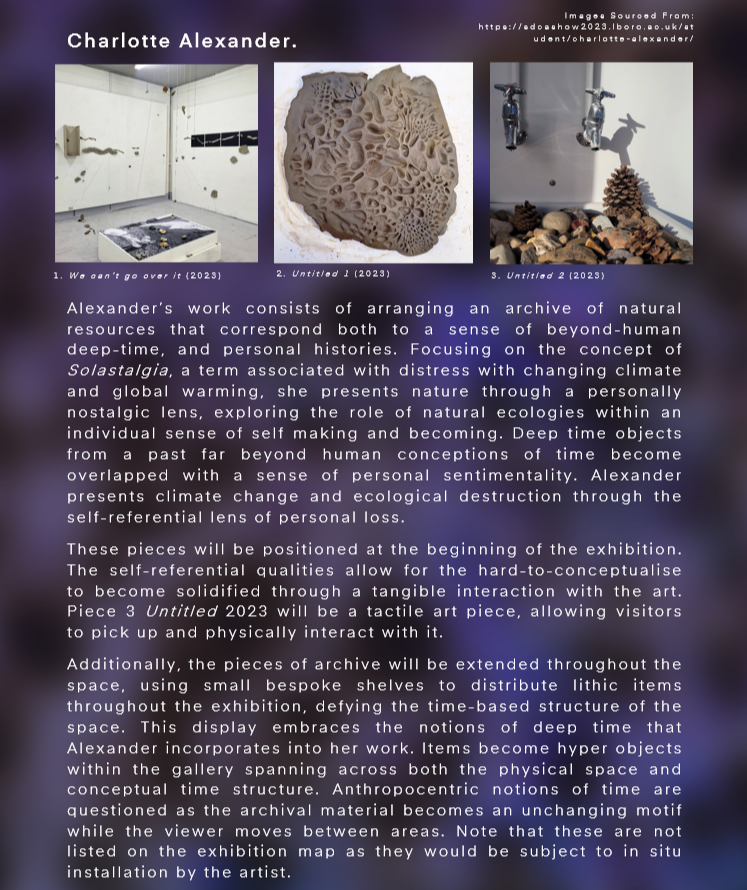
This section forms a connection between the audience and the exhibition. As the first section that a visitor experiences, the art pieces in this area serve to establish connections based on a shared history and an enhanced attention to the land that we live on.
Artist Profile 1
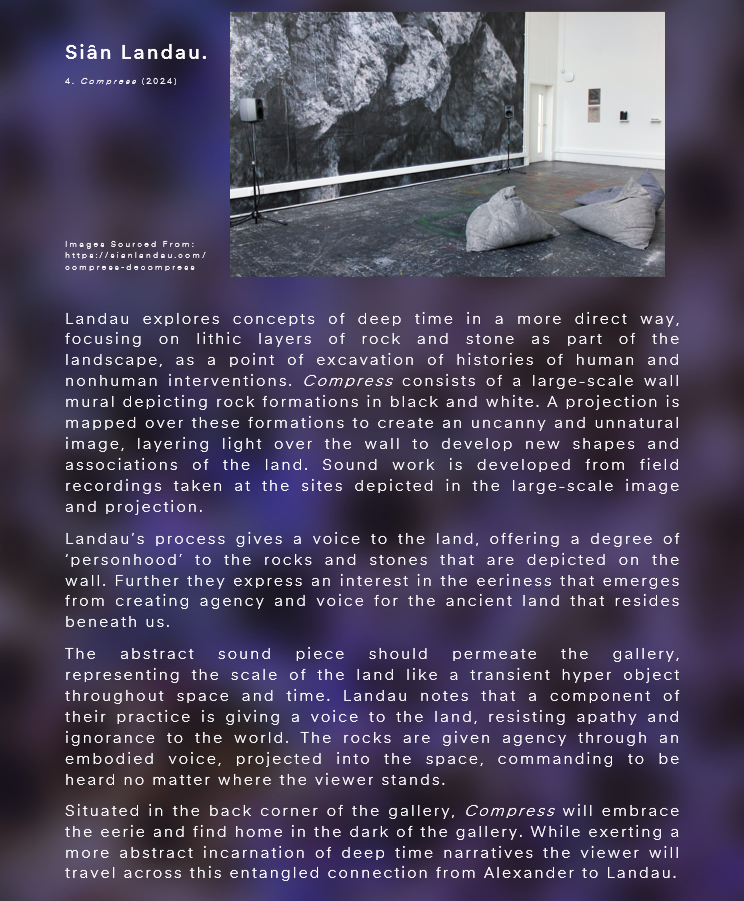
Artist Profile 2
Part 2:
Within this section two contrasting imaginings of the future are presented. The goal here is for the viewer to become immersed, examining their own beliefs in thinking about what they do and don’t want the world to become.
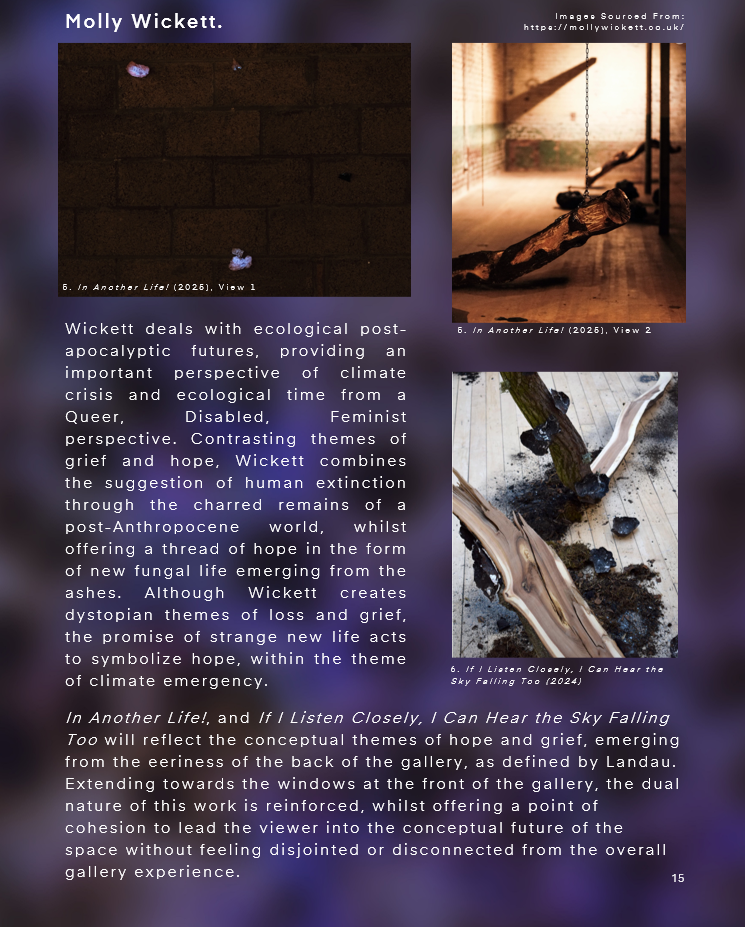
Artist Profile 3
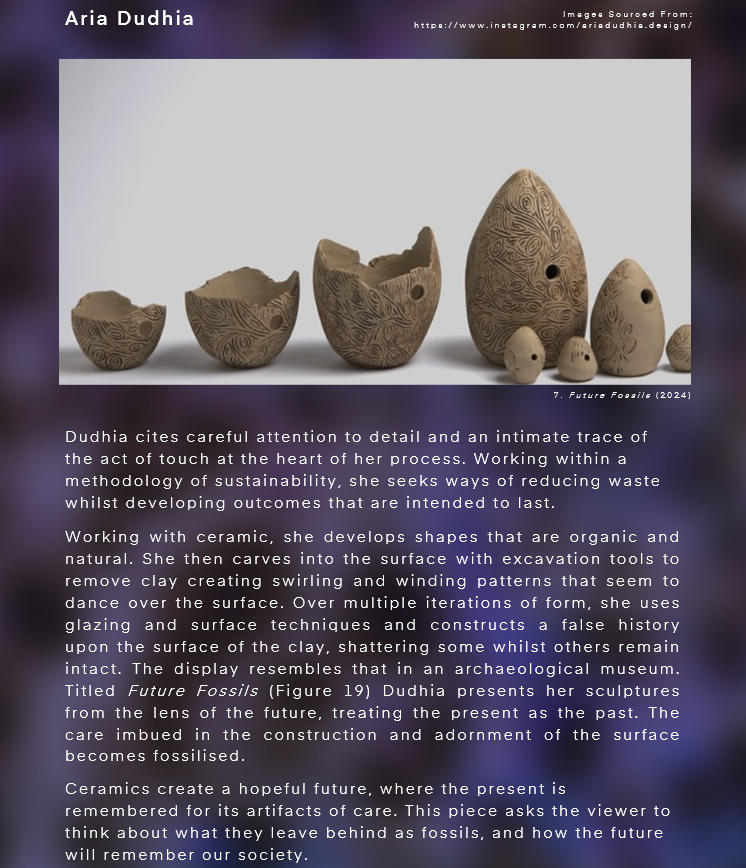
Artist Profile 4
Part 3:
Within this section two contrasting imaginings of the future are presented. The goal here is for the viewer to become immersed, examining their own beliefs in thinking about what they do and don’t want the world to become.
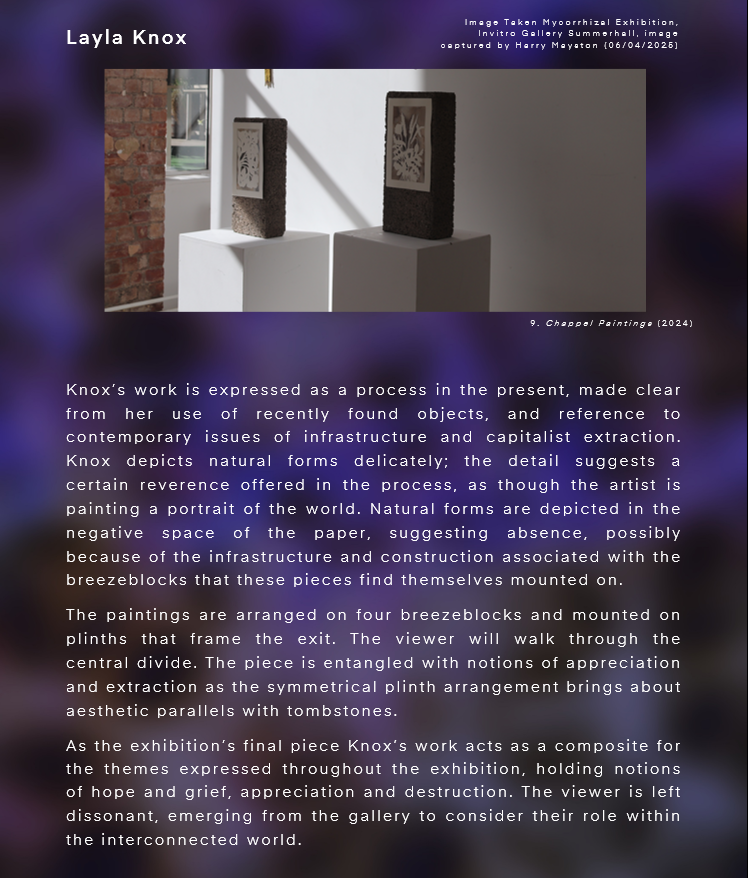
Artist Profile 5
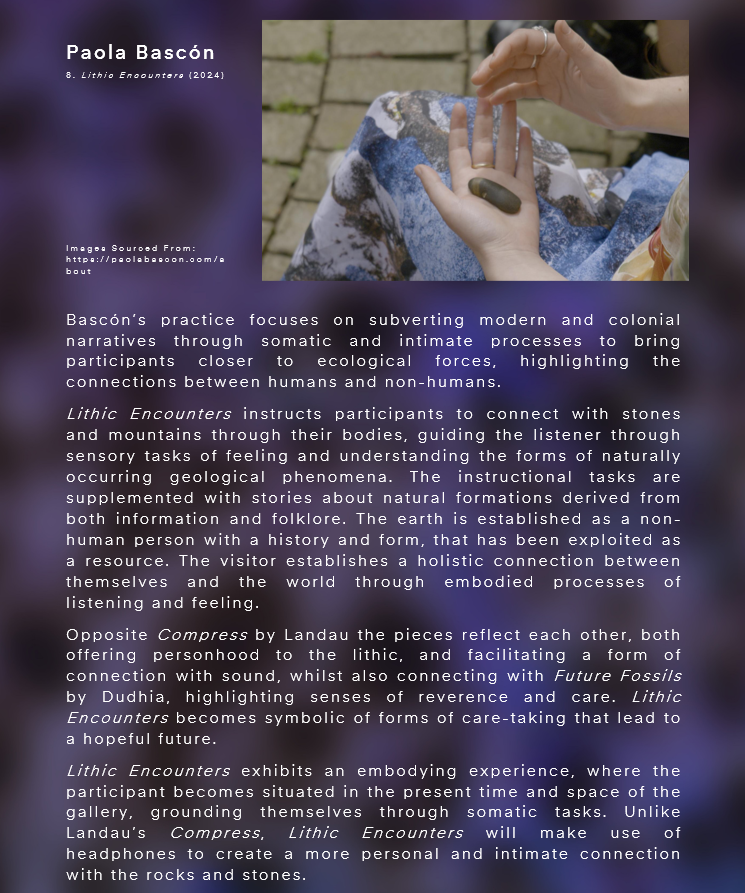
Artist Profile 6
Ethics
Artist Ethics
Wyrdings recognises the two forms of value that an art piece has within the exhibition. First is the reciprocity of the piece, how it contributes to the exhibition in constructing a collective meaning, the second is the inherent and individual value as a piece. To ensure that both spheres of value are represented and balanced the artists will be worked with closely to ensure that their vision is realised.
Artists are frequently under compensated for their engagement with institutional operations. The rental fee that the artist is offered is often not reflective of the additional labour that they have undertaken to prepare, package, ship and coordinate exhibition details with a curatorial/technician team. Additional labour will be compensated based on standard industry fees for graduate artists.
The featured artists represent a diverse array of perspectives and underrepresented voices within the Contemporary Art world, presenting counter culturally dominant narratives as early career artists. Wyrdings will be presented to embrace a universal selection of visitors ensuring that these voices are heard, and that artists receive deserved exposure to the Glasgow public.
Equality, Diversity and Inclusion
Wyrdings aims to promote an inclusive and welcoming exhibition environment for artists, collaborators, and gallery attendees.
Within ecological discourse the term ‘Anthropocene’ has received criticism. Directly translating to ‘the era of the human’, the Anthropocene suggests that humanity in its totality should be held equally accountable for the disasters of climate change and global warming, without recognising that the institutions of colonialism and capitalism have subjected societal groups of people to marginalisation, exploited alongside the earth. Further, ecological disaster is a crisis that affects the world regardless of social background or identity. As a result, a multitude of narratives and diverse perspectives have been fostered throughout the exhibition to promote equality, equal opportunities, and develop a comprehensive approach to the ways we interact with contemporary ecologies.
Publics
A Defined Audience
Everyone has a role within climate change, whether it is in the form of felt changes from global warming or contributing to pollution through plastic waste. Wyrdings seeks to make us aware of the repercussions of our actions as an interconnected web of humans and non-humans. As a result, regardless of individual identity or societal standing, anyone will be able participate, relate, and find introspection through engagement with this exhibition.
To facilitate the experience of a universal audience, Wyrdings assumes that the audience will have no pre-existing knowledge of ecology or the specifics of climate discourse. An educational format will be supposed, aiming to give the audience a comprehensive experience of the gallery. Referencing the Getty Museum’s hypothetical model for the universal viewer, Wyrdings will anticipate these following qualities to shape supplementary text and guiding materials to suit all visitors:
Is curious and motivated to learn
Spends less than 30 seconds looking at an object
Has underdeveloped perceptual skills
Is unfamiliar with art terminology
Expects a quick pay off (‘art should grab me’)
Senses that their knowledge is limited and limiting to their enjoyment
Lacks confidence in their ability to make sense of what they see
Makes emotional and personal associations with the object first
Wants to connect with the people associated with the object
Gallery Guide Publication.
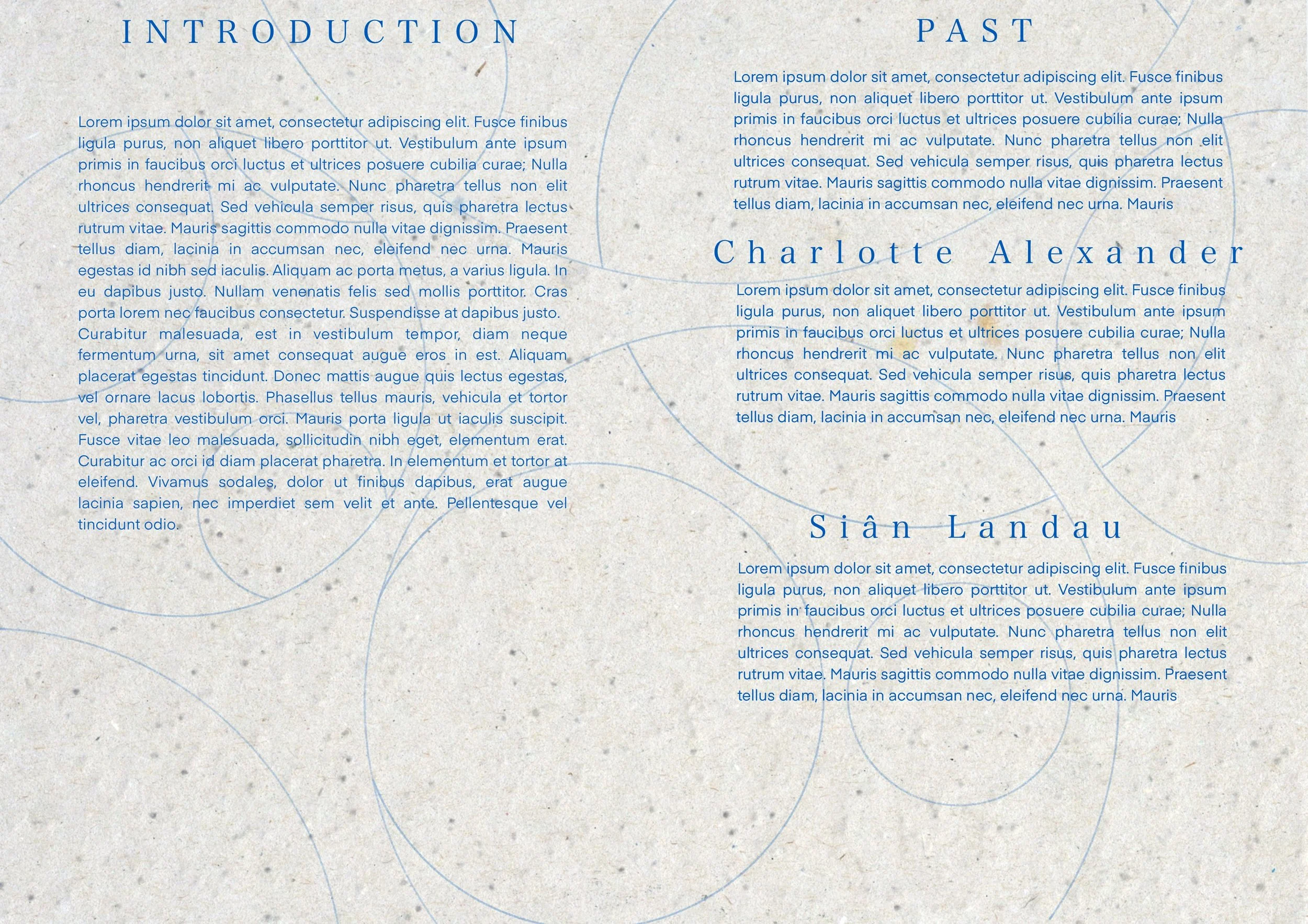
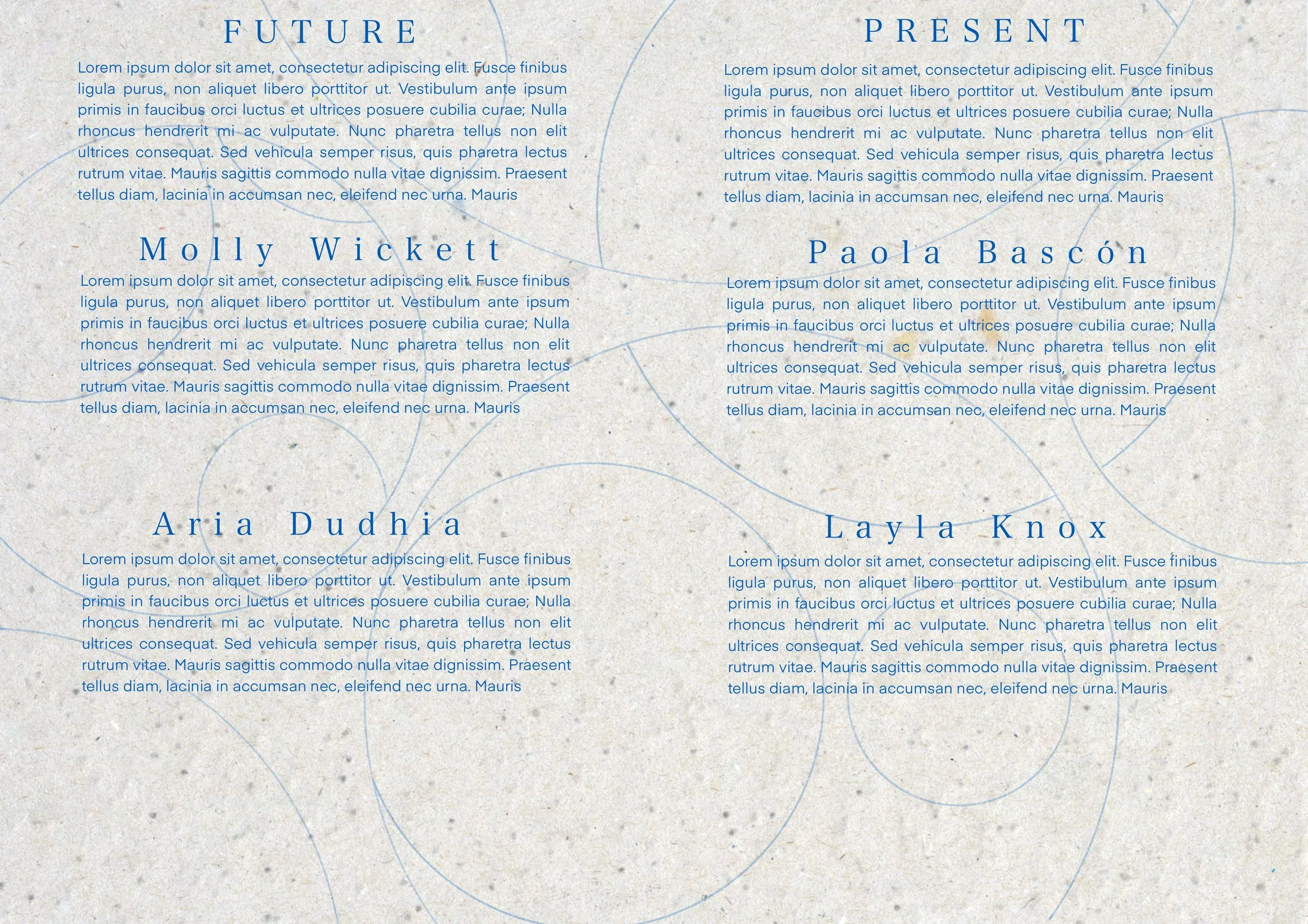
A free gallery guide will be offered on entrance to the gallery. Including interpretive material, this will act as an accessibility feature, describing the anticipated exhibition route though a printed exhibition map, alongside interpretive material written by the artists to aid in the understanding of the work. Individuals who may be unfamiliar with gallery experiences/feel overwhelmed by the open space will be able to have a more structured interaction with the exhibition.
The publication will be risograph print on recycled seed paper. This paper has plant seeds, so if the publication gets thrown away, it will have a beneficial ecological impact. This acts as an extension of the exhibition, directly offering the participant the opportunity to take part in restorative action by planting seeds.
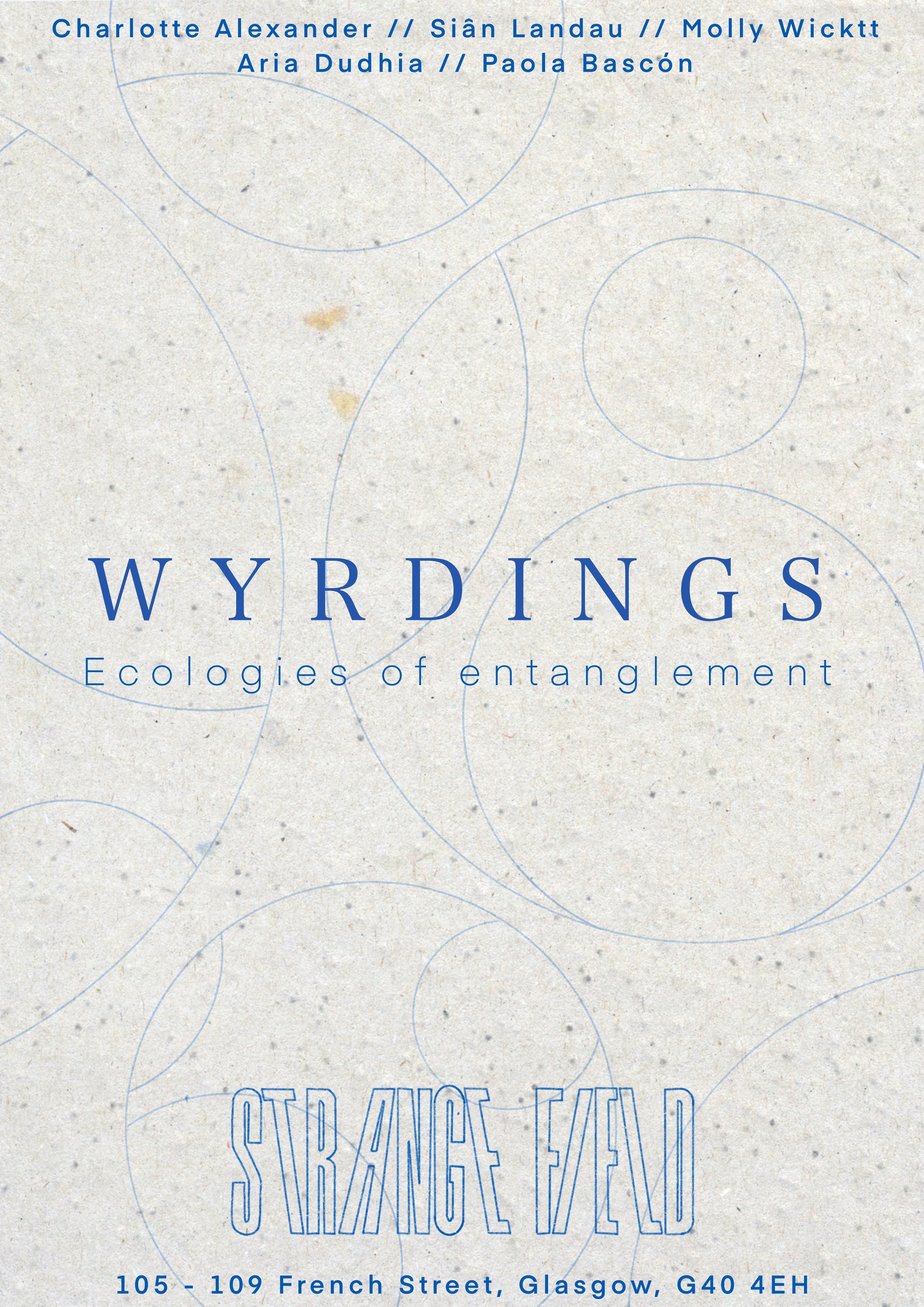
Guide Mock-up
Public Engagement Workshops.
Event 1:
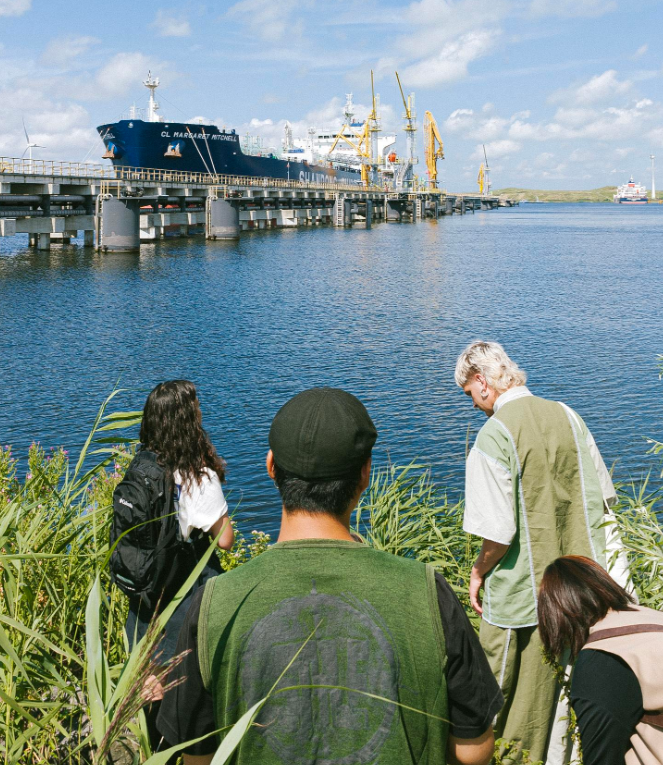
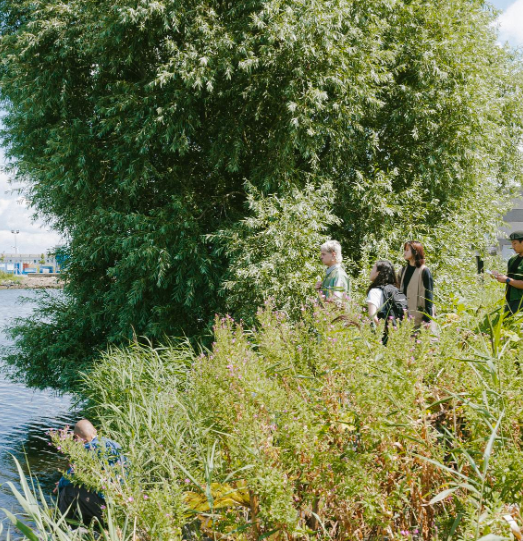
Lance Laoyan is a Filipino artist living in the Netherlands, whose practice revolves around creating experimental site-specific research that acts as an investigation into a specific location. Using multimodal methods of listening, the results of his research manifest as situated walking pieces, focusing on the act of listening to the land and fostering a closer intimacy with natural surroundings through acts that are intended to create an increased awareness of space and empathy with ecology.
Laoyan’s workshop would take place in Dassie Park and act as an extension of the ‘Present’, guiding participants to put the goal of the exhibition into practice as they physically situate themselves in a green space, and find an awareness for themselves as ‘rhizome’ within an interconnected network of humans and non-humans.
Event 2:
Layla Knox would lead a group through a foraging exercise, sourcing natural materials from nearby green spaces, followed by the process of combining yarn and plant matter to form artifacts of care. Like the Laoyan event, I anticipate that this will serve as an activity that both grounds the participants in the ‘Present’, whilst generating the call to action that is suggested through the ‘Future’ section.
Following the exhibition attendees may be left questioning the direction that they could take to realise the forms of future they wish to see. A workshop focused on mindful attentiveness through craft can act to direct us to a methodology of care.