-Mycorrhizal-
Curatorial Statement
Named after a mutualistic fungus that grows on the roots of plants, mycorrhizal serves as a metaphor for the unseen connections hidden beneath the surface, linking us to the wider organic and inorganic world. This exhibition invites us to shift the soil and gaze upon the roots: fungal threads that connect plant to plant and flower to flower. The world around us is connected in minute ways that remain hidden from sight in the damp earth. In the age of the Anthropocene, where our individual actions, as simple as turning a key in a car engine or switching on a light, have begun to accumulate into causal disasters that threaten any sense of stable existence we once took for granted, it is time for us to examine our own roots and trace these gossamer-fine threads beyond our horizons, recognising our place in this ecological present.
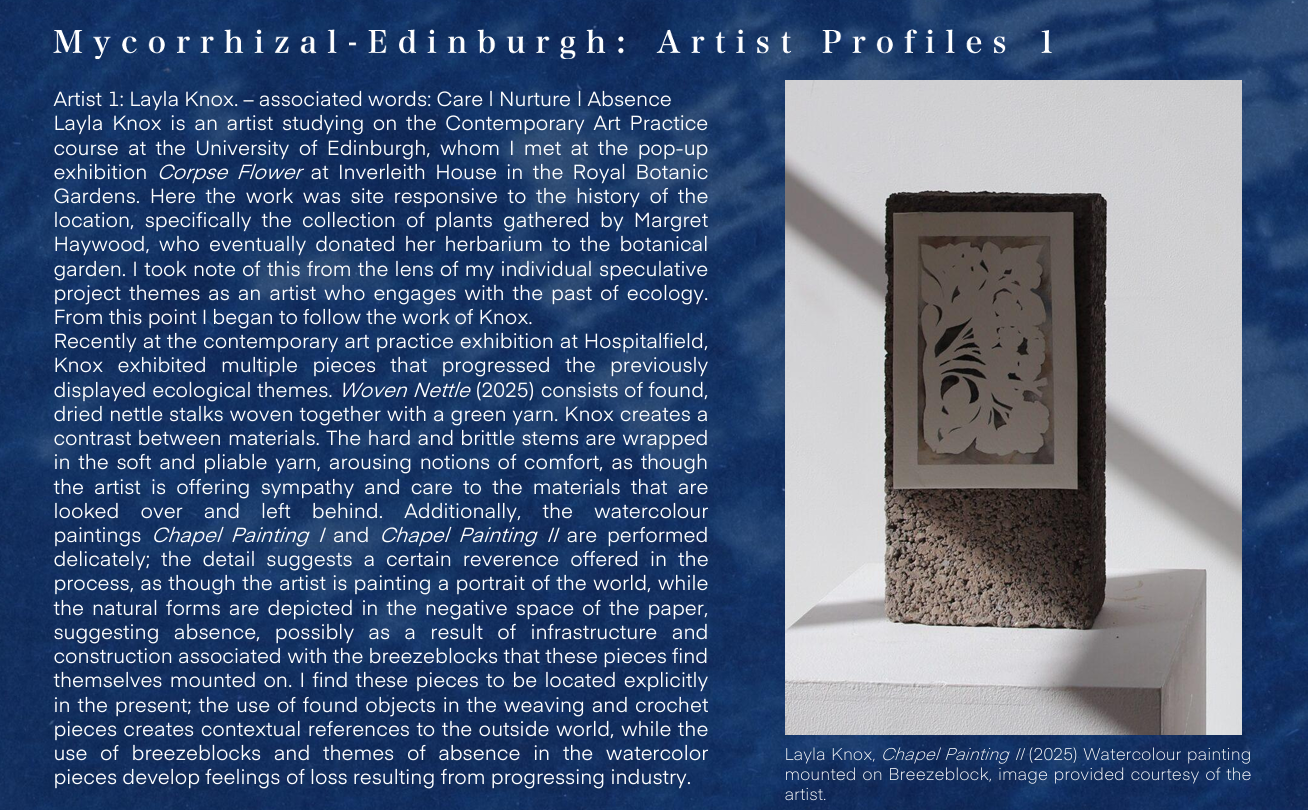
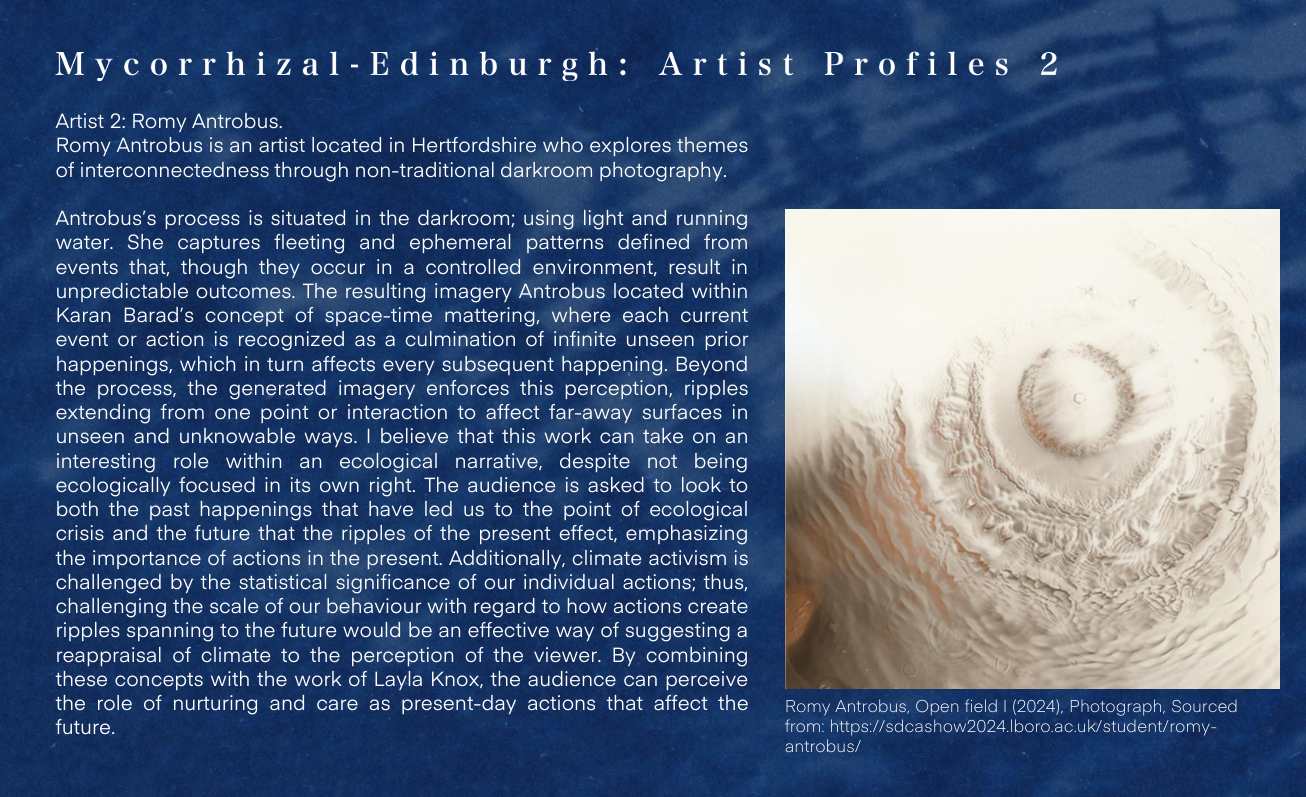
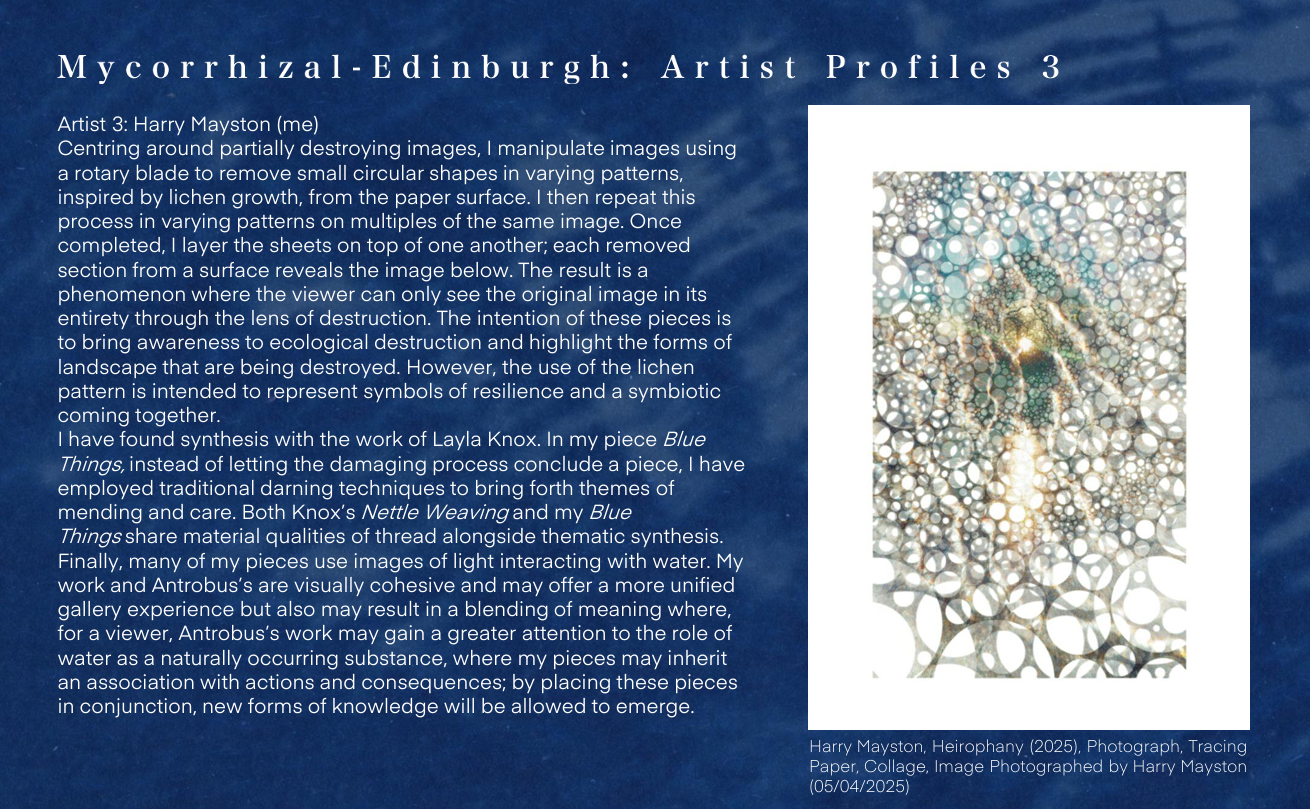
Three featured artists have come together to explore various forms of connection that embody elements of our contemporary ecology. Layla Knox traces biodiverse absences with delicate watercolours, illustrating plant matter through the negative space of blank paper, while subtly alluding to looming industrialisation through the use of breeze blocks. Meanwhile, Harry Mayston draws attention to environmental destruction through the systematic removal of collaged paper. The landscapes are only visible through this material destruction, while the resulting patterns symbolise biological growth and restoration. Finally, Romy Antrobus explores the concept of ‘happening’ through unconventional analogue photography. Through a process of chance, Antrobus questions how each event is the result of infinite preceding events and how the present moment ripples like water into the future in unforeseen ways.
This exhibition invites us to reflect on how we engage with the world in each moment, to recognise how our actions are connected to either destruction or resolution, and to understand how these choices shape the future.
Exhibition Photographs
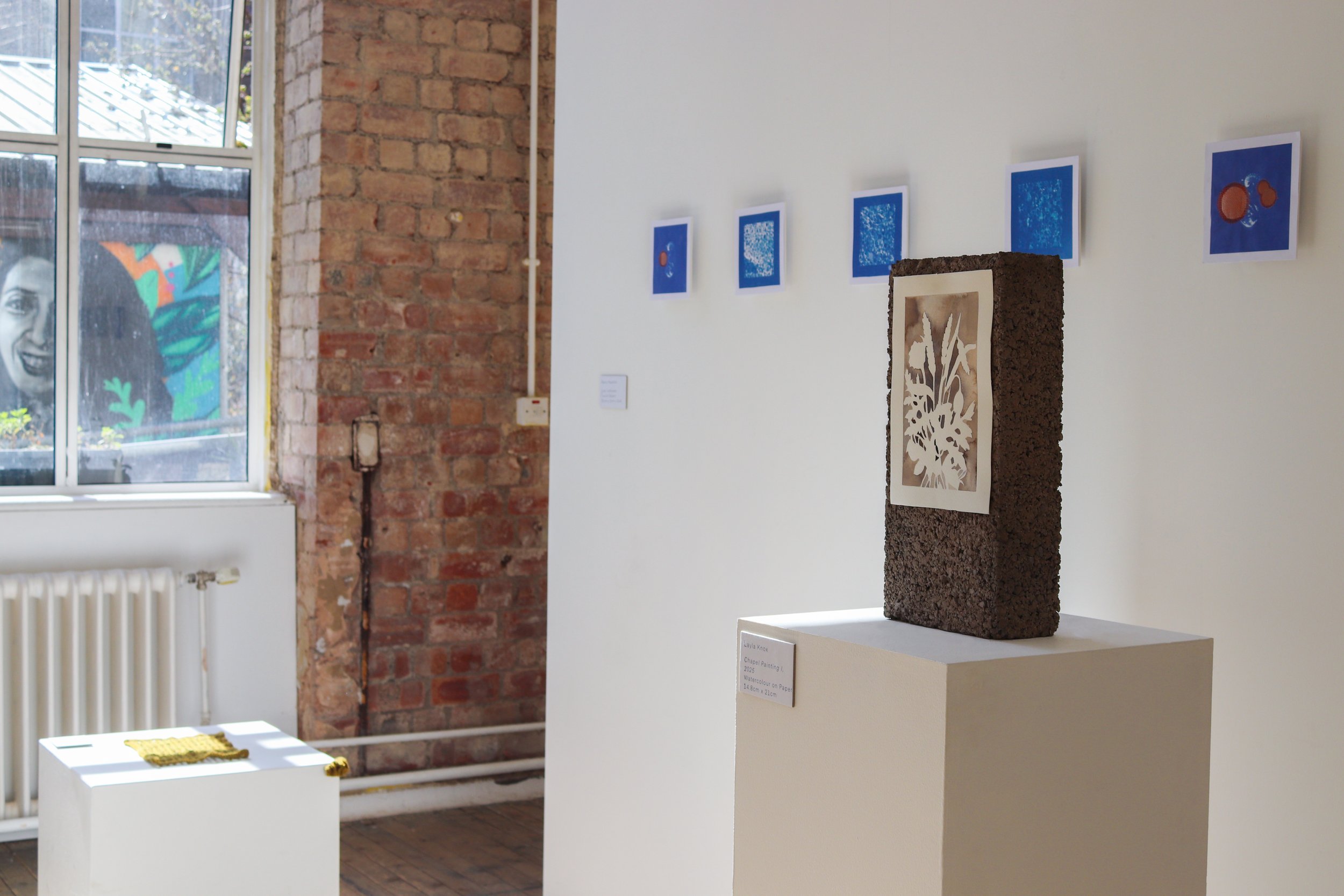
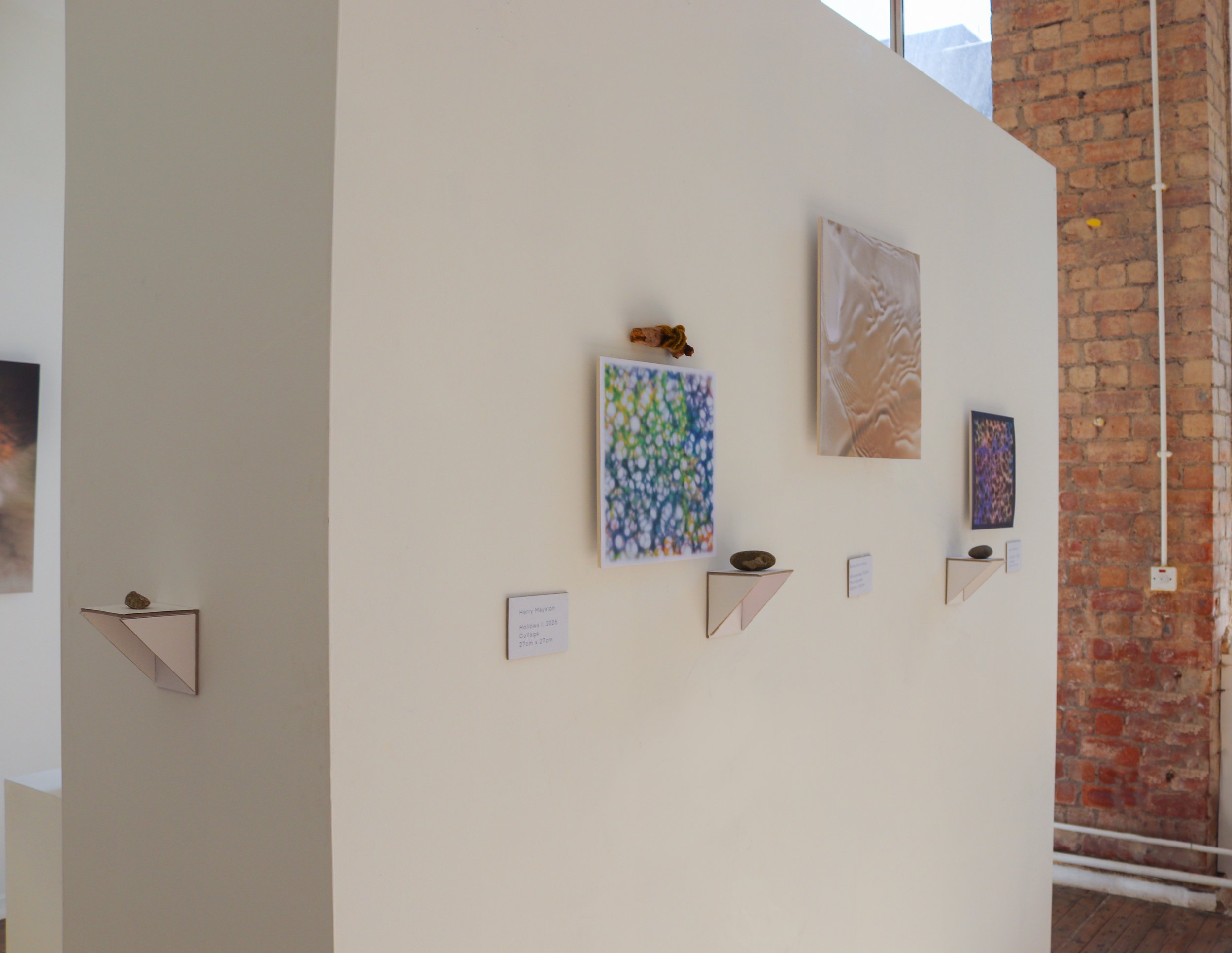
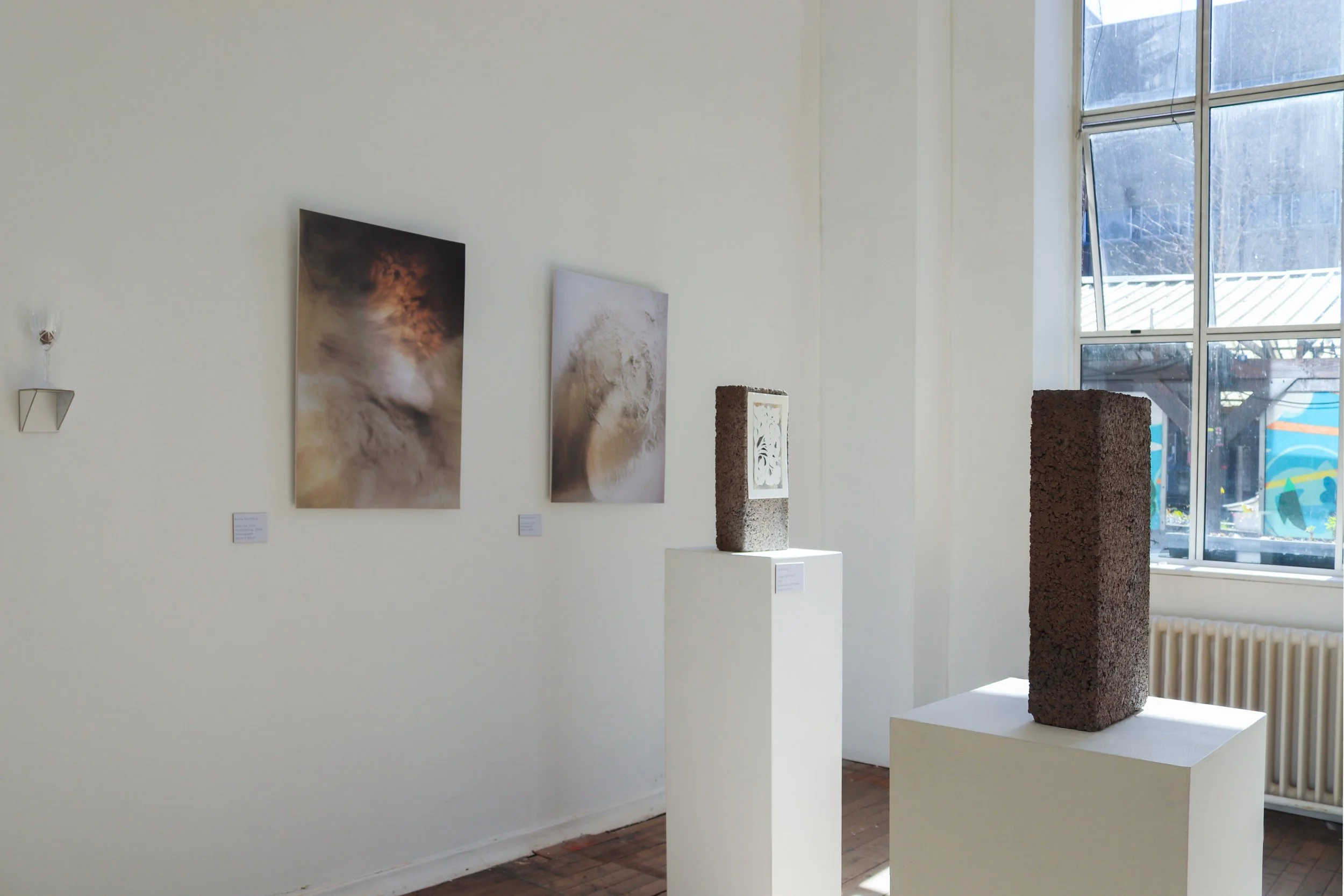
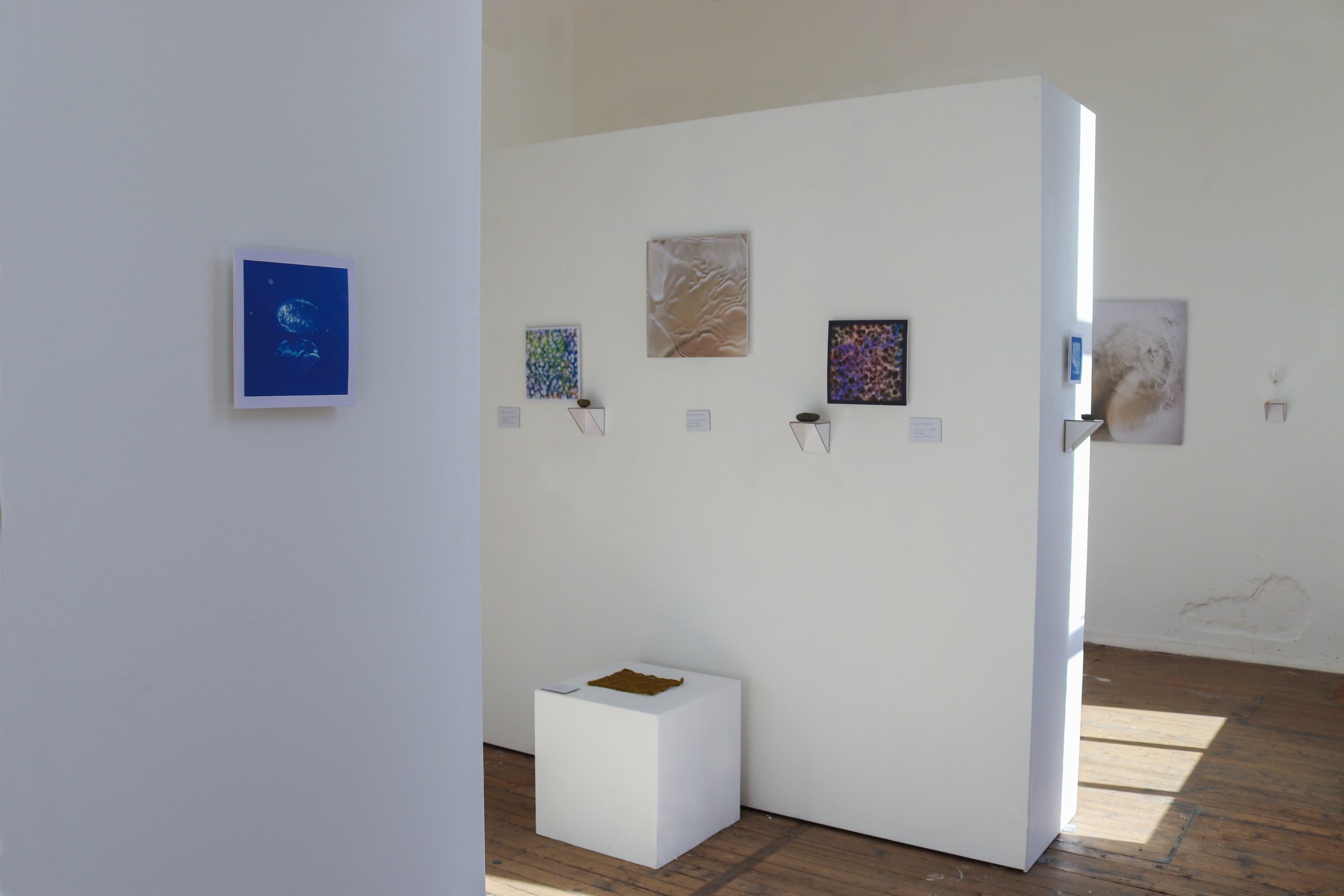
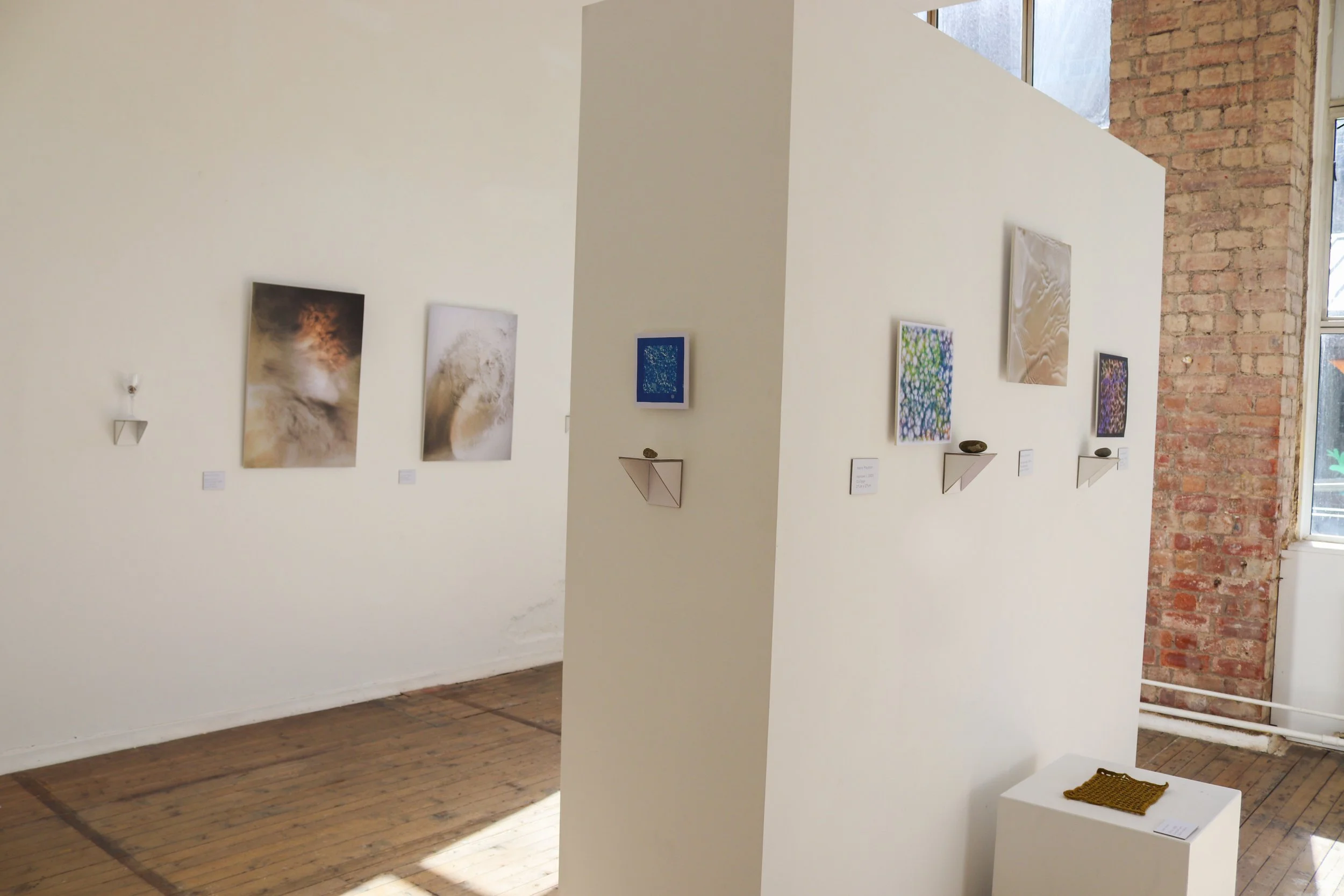
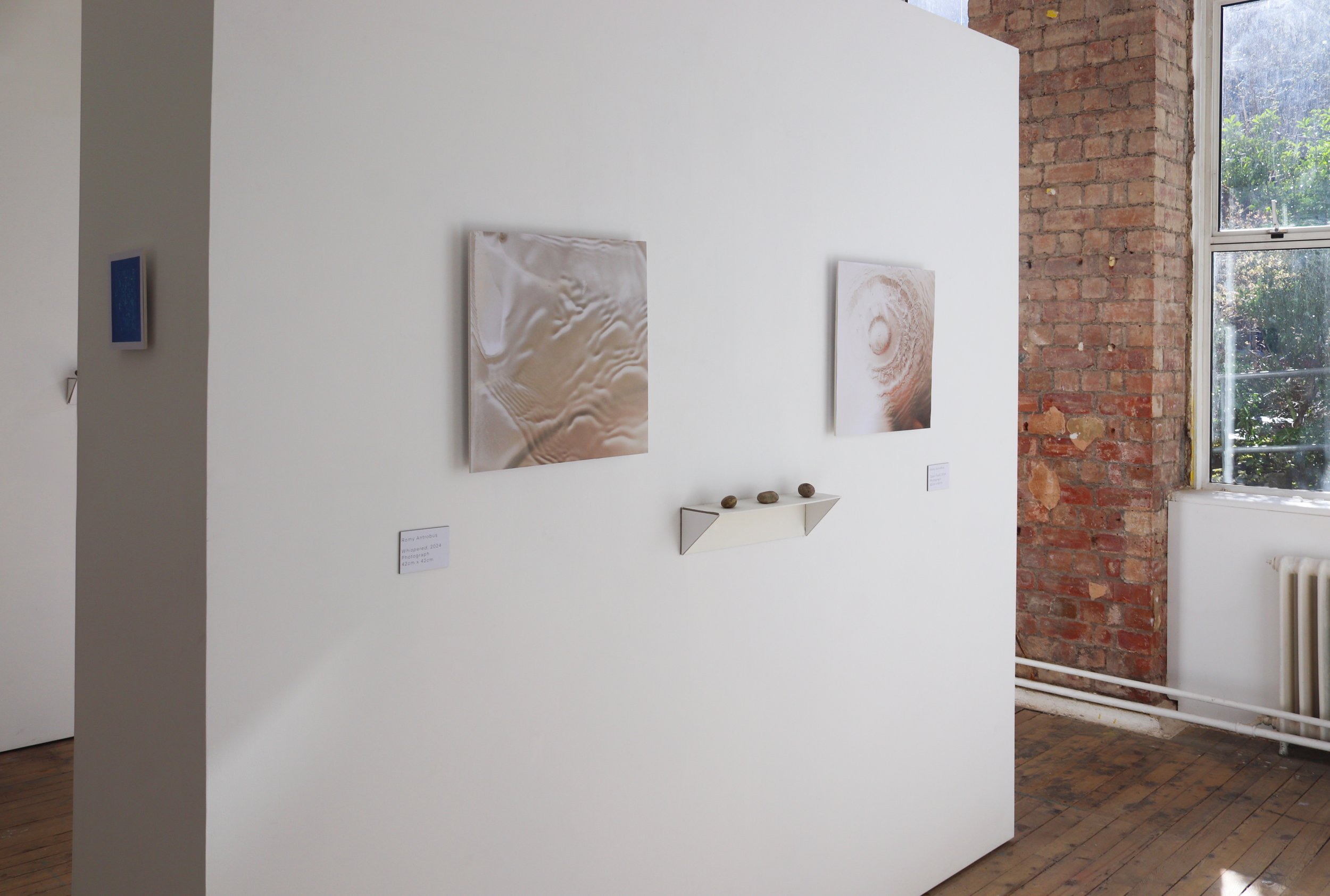
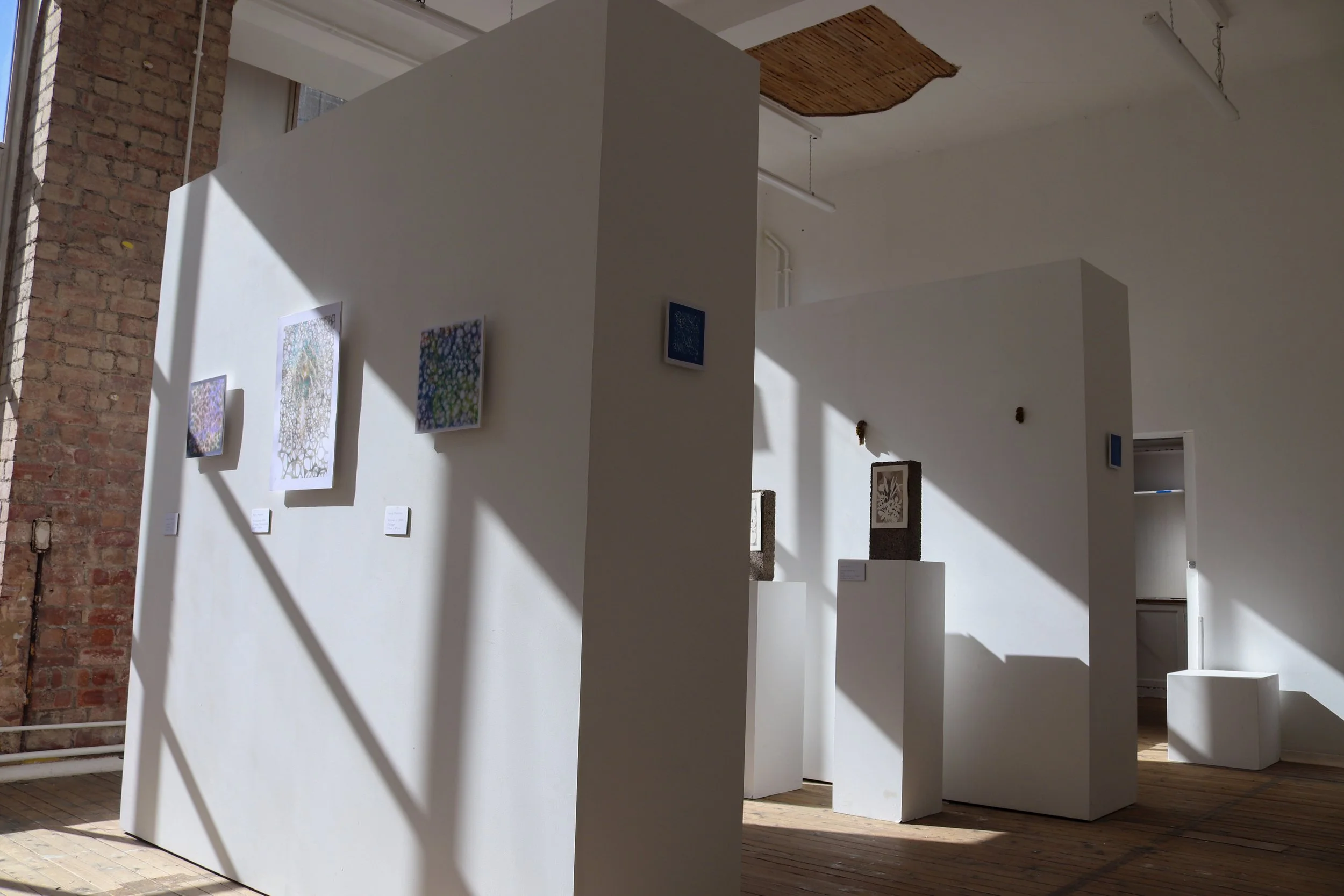
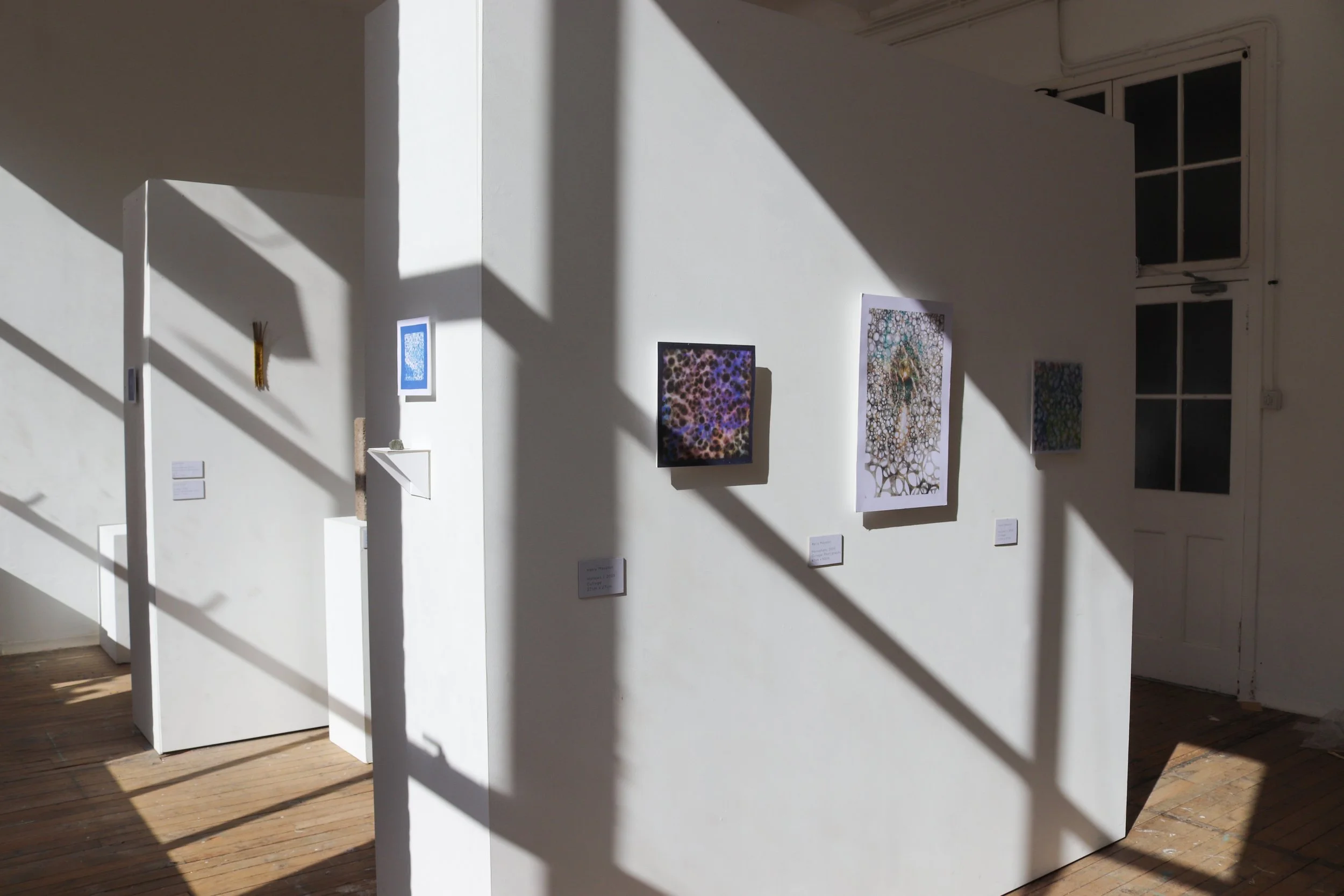
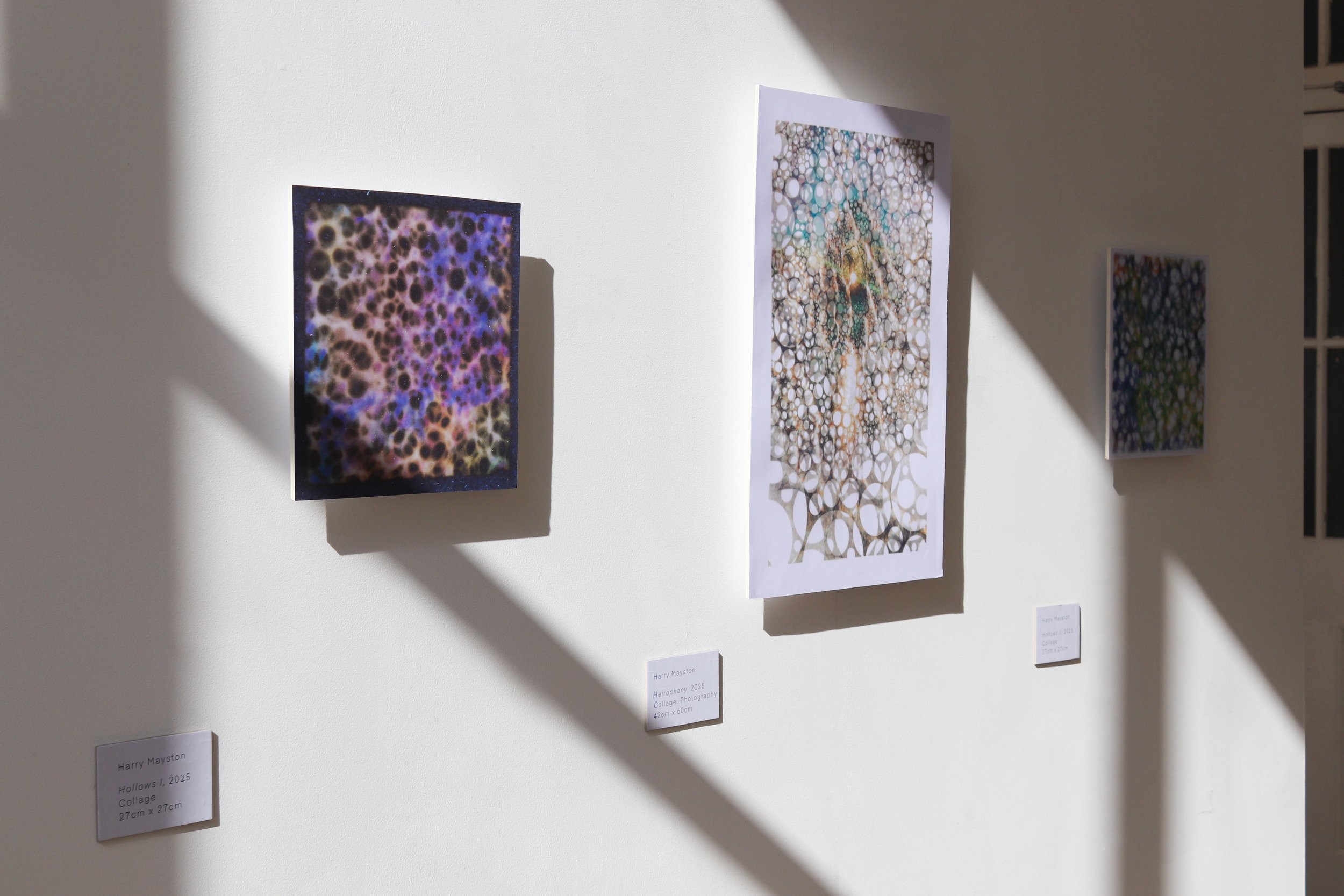
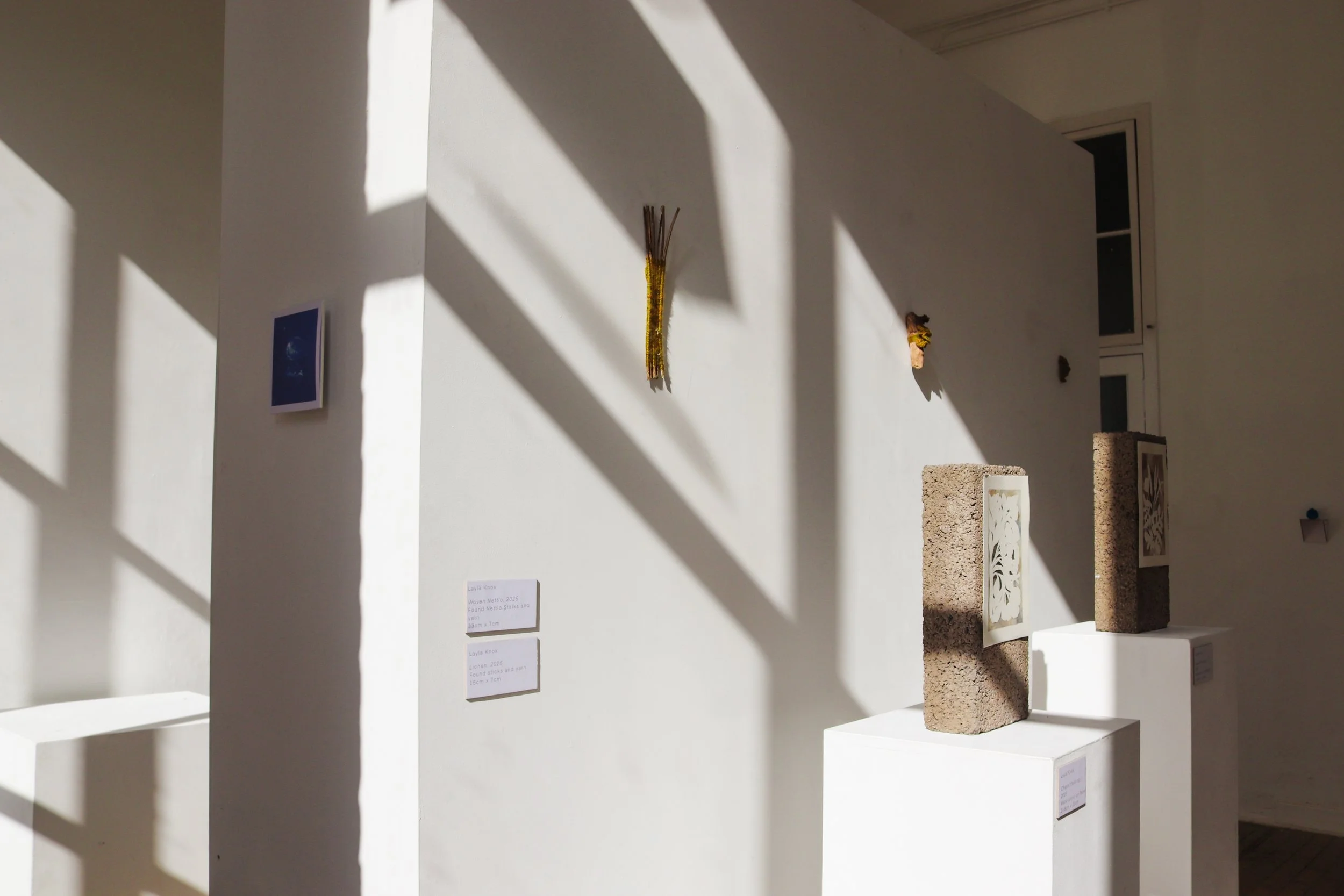
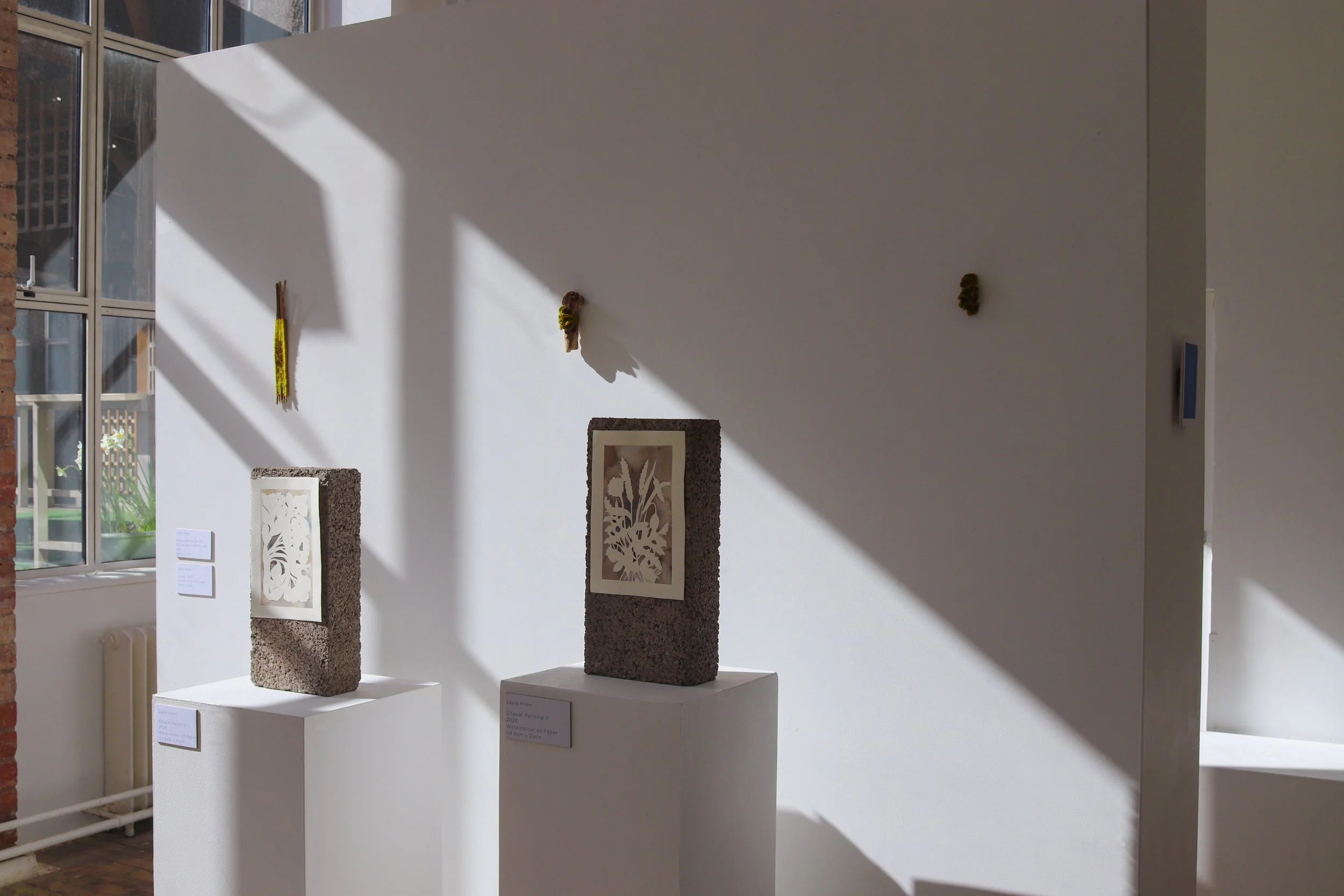
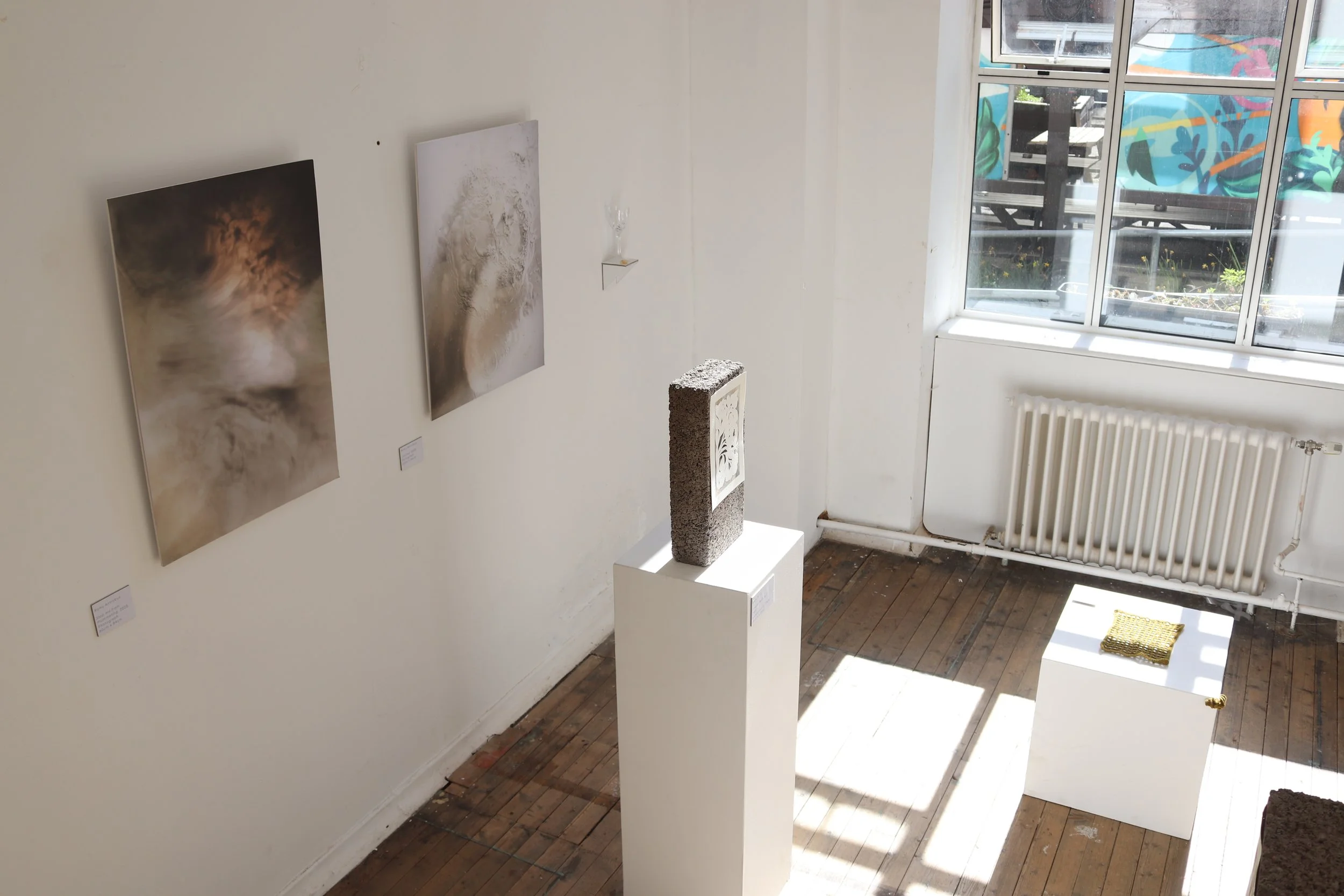
Artists
Theoretical Influences
Reframing Ecological Narratives- Curators note:
I believe that both the notion of interconnectivity and nurture can be iterated with notions of reciprocity. Robin Wall Kimmerer highlights reciprocity as a core theme in her book Braiding Sweetgrass (2013), locating it as a concept that unites the human and the non-human, alluding to a responsibility for caring for the other. Acts of taking must correspond to gratitude and giving. For Kimmerer (2013), this is based on the Native American wisdom and gift philosophy. The components of nature that have enabled humanity to flourish are conceptualised as gifts, and ones that we should be thankful and responsive to. Kimmerer iterates mycorrhizal fungus as a microcosm of reciprocity. Trees are connected underground with this division of fungi, attaching to roots by either acting as an extender, or growing into the cells of the tree root in a more traditional mutualistic relationship. The tree offers sugars to the fungus, while the fungus extends the capability to absorb nutrients and water from the soil. Additionally, mycorrhizal fungus connects trees, allowing for a form of communication based on the flow of charged particles that has frequently been compared to the movement of chemicals in the synapses of the brain; this has led to discussion of forests as thinking organisms. Trees send nutrients to early saplings, fostering growth, while dying trees have been observed to distribute their remaining sugars to nearby trees (Simard, 2021). Mycorrhizal becomes a hopeful metaphor for exploring connections beyond notions of harm and destruction that predominates climate change discourse. Instead, by focusing on mutualistic exchange audiences are directed towards a more hopeful idea of a future climate
Artwork Presentation:
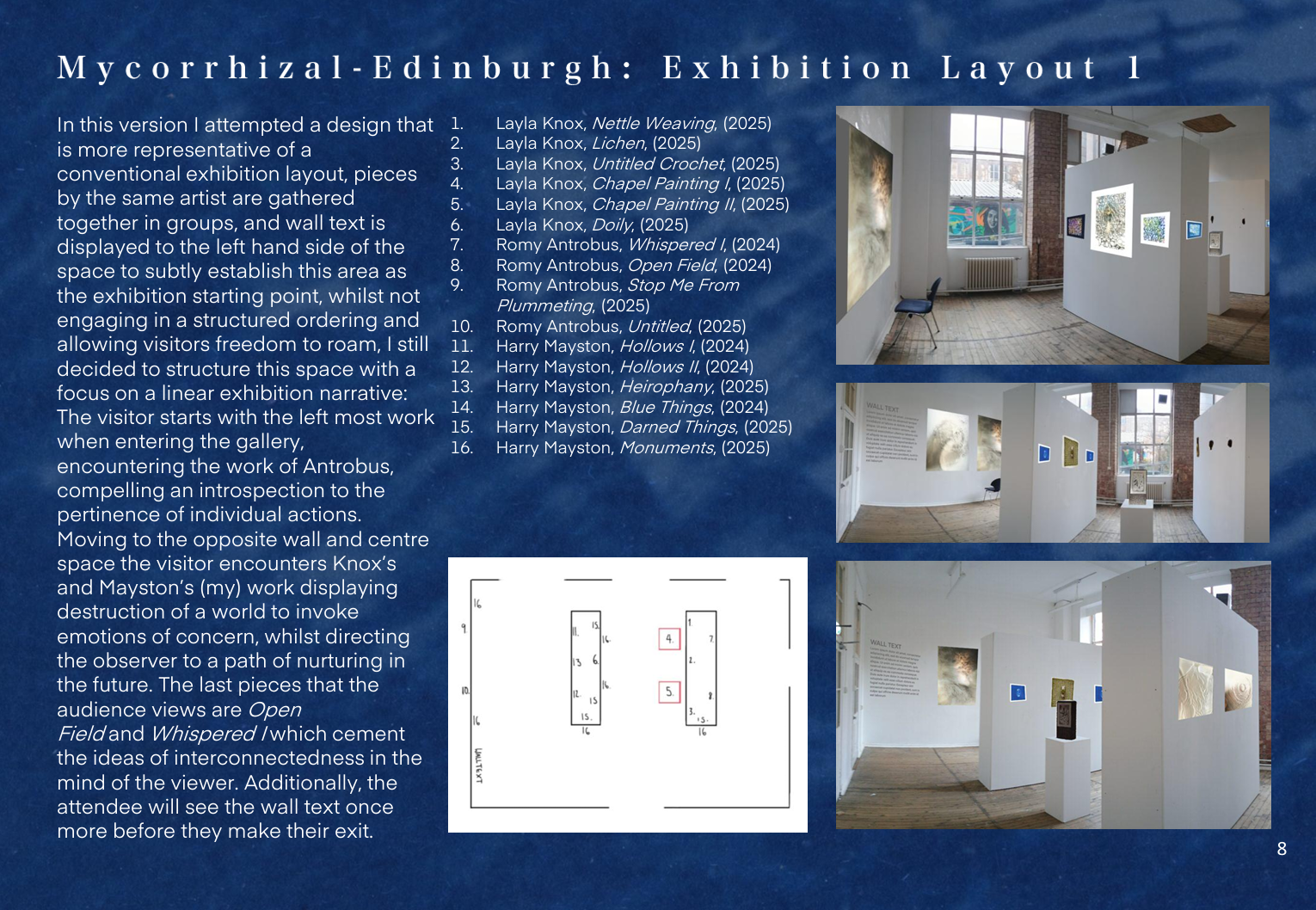
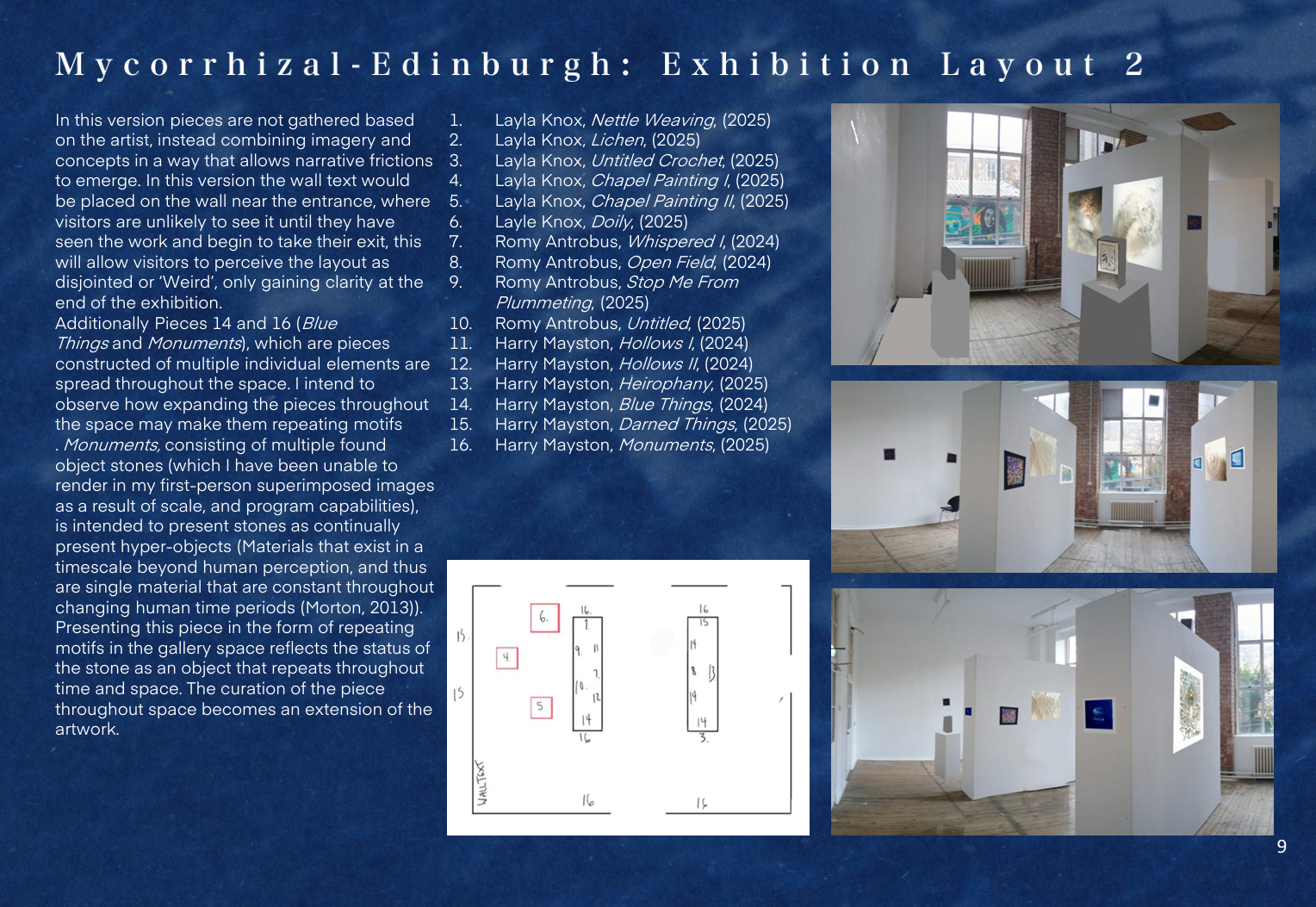
All printed/2-dimensional pieces are to be mounted on foam board, then attached to a frame. This will ensure that the pieces remain flat when wall-mounted, without wrinkles or buckling, while the frame will raise the pieces to jut out from the wall slightly. Many of the pieces have light colours towards the edge; mounting and elevating the two-dimensional artwork from the wall will help the viewer differentiate the piece from the wall immediately. Small sculptural pieces, such as Layla Knox’s Lichen and my piece Monument, will be displayed on small shelves attached to the wall. No invasive wall hanging methods are permitted in the In Vitro gallery. As a result, I will be using a combination of adhesive command strips, silicone wall adhesive dots, and professional double-sided tape. Wooden shelves would be too heavy to be supported with these adhesive methods, so I shall be developing a lightweight but structurally stable set of shelves made of cardboard. Gallery tags will be constructed using printed paper and thick cardstock. Promotional posters, gallery text, and gallery guides would also need to be printed but will not require the same level of construction as the other tasks.
Construction:
Please note: Decisions have been made based off my own personal material investigations and practical research.
Pieces that require printing will be done so using the ECA click and collect printer services onto four sheets of 160 gsm A1 paper: Romy Antrobus, Whispered I, (2024), Romy Antrobus, Open Field, (2024), Romy Antrobus, Stop Me From Plummeting, (2025), Romy, Antrobus, Untitled, (2025), Harry Mayston, Hollows I, (2024), Harry Mayston, Hollows II, (2024), Harry Mayston, Heirophany, (2025), Harry Mayston, Blue Things, (2024) These are to be mounted on foam board using double-sided tape. The most effective way for attachment is spray adhesive; however, this was too expensive, and I did not have the space to safely use spray solvent glue. Water-based glues, like PVA, were also not used, as they can result in buckling of paper. Double-sided tape is less secure but is easily applicable and does not compromise the display. The frame, used to elevate the mount board from the wall, will use leftover card and foamboard and be attached with a hot glue gun. The above wall pieces will be adhered to the gallery walls using adhesive command strips. The Piece Monuments(2025) requires multiple shelves. I will construct these using grey 600 gsm card. Using a box cutter, I will cut the sheets of paper into square and triangle shapes, and then with double-sided tape, I will attach white paper to both sides to mimic the white gallery walls. Finally hot glue will be used to assemble the pieces and create a lightweight, stable shelf.
Budget
Below are listed the costs of materials:
ECA Printing: £4 per sheet: £16 Foamboard: £4 Per Board: £16 Grey Board: £2 per Board: £4 Box cutter: £2.60 Hot Glue Gun + Glue Insert: £3 Silicone glue dot: £3 Command strips: £5 Double Sided tape: £2 Total: £51.60