The Others
The Others · 2026 · Curatorial proposal · Eastside Projects, Birmingham · Group exhibition, 3 artists
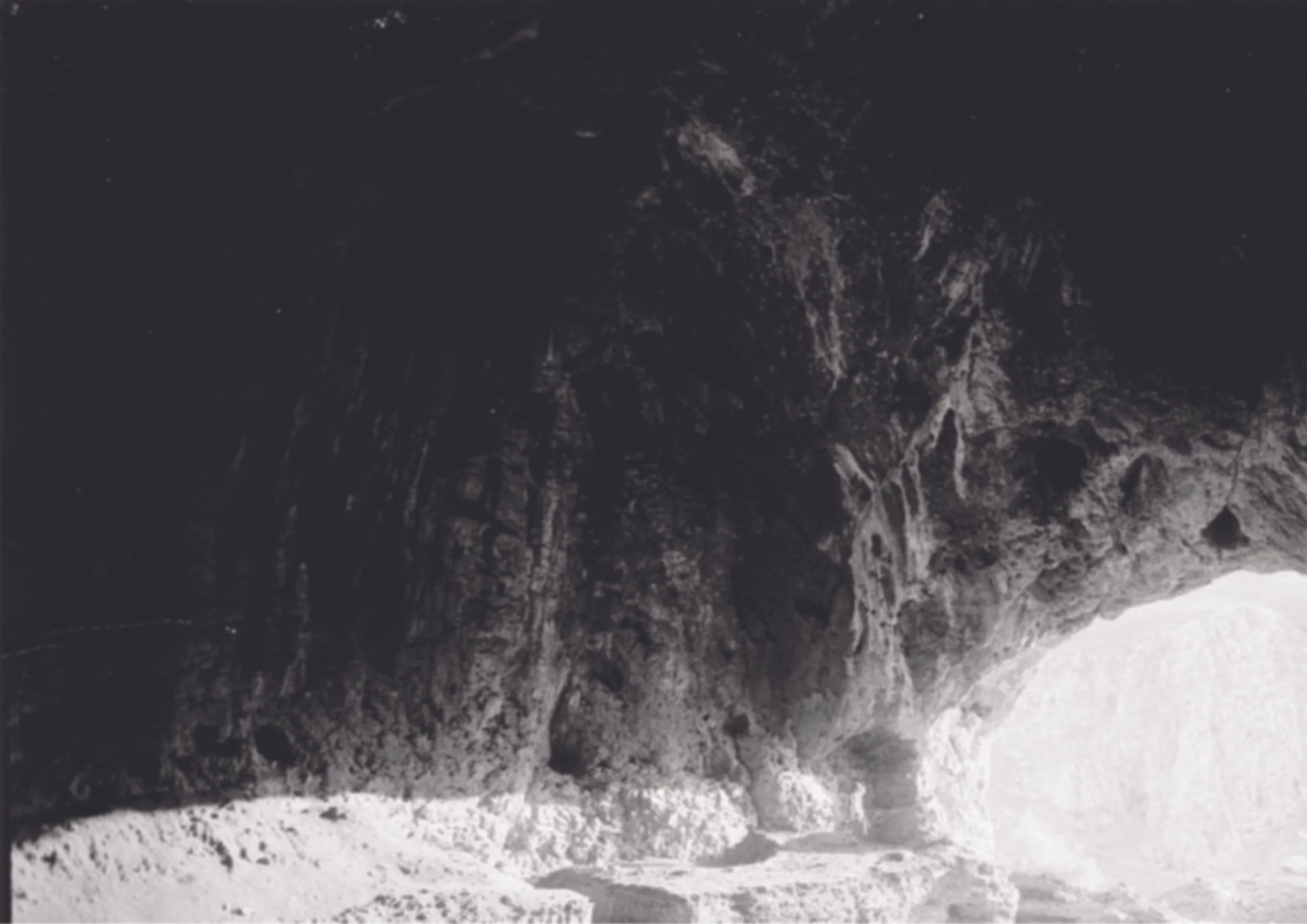
The Others is a curatorial proposal for a 3-person group exhibition in Eastside Projects Second Gallery space. Focusing on contemporary artist’s use of monstrous imagery as a way to articulate the lived experience of societal estrangement, The Others utilises a Artist-Curatorial approach, bringing body-inspired pieces together to create a central chimeric ‘Amalgam’. The gallery space is transformed into a monster’s lair, offering a rare glimpse into the lives of others, as we become the ones out of place in this strange home.
Theme
Monsters are physical representations of weirdness. Jeffrey Jerome Cohen, literary theorist, argues that they are cultural figures of alterity, embodying a form of societal other, whether that be the fears of things we would rather not look at, or cultural taboo; the monster is the ostracised, unwelcome intruder. It does not belong, because it challenges conventional thinking and breaks boundaries, we would rather keep solid. Creatures like the vampire or Frankenstein's creature teeter precariously between life and death, while the werewolf and the chimera blur the boundaries between solid species distinctions. It is here that this exhibition is rooted: artists who experience this same tension as a result of their own refusal to conform to categories that don't fit them. Whether that's gender identity, a queerness that defies typical binaries, neurodiverse thinking that moves in unexpected directions, or a position caught between cultural diasporas, the artists proposed for this exhibition explore their own lived experience of otherness through the lens of the monster.
This exhibition uses weirdness, bewilderment, world-building, and multisensory installation to lead viewers beyond the surface; to look beneath the monstrous visage and reinspect the narratives and beliefs that shape how we treat those unlike us.
Artists
San Zhang:
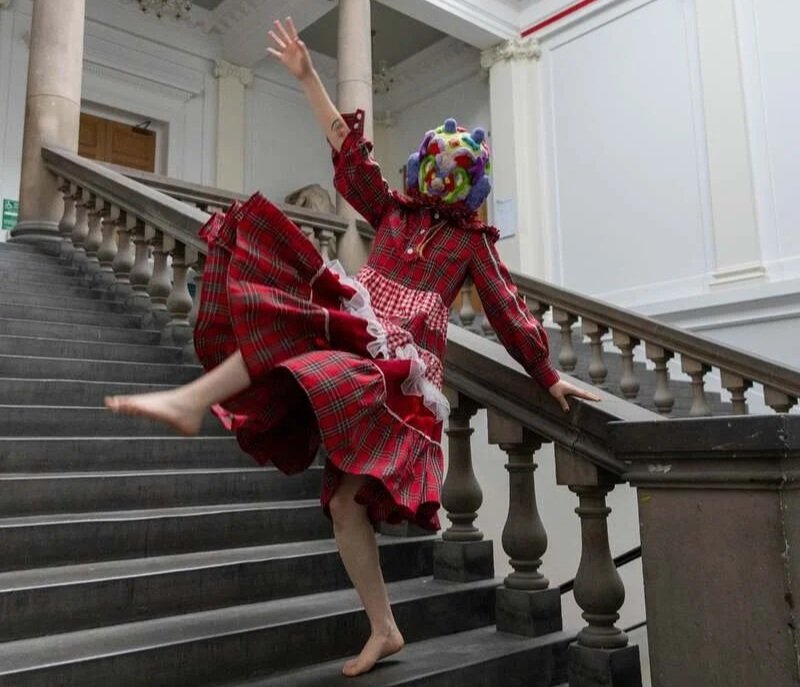
Zhang is a Chinese interdisciplinary artist originally from Spain, now based in the UK. Working in 'chimeric' pieces that merge physical media, Zhang explores the queer body and investigates gender expression by bringing together folkloric and monstrous imagery in the form of felted masks, alongside a physicality inspired by the LA queer ballroom scene. The pieces exhibited respond to shame, and offer a way of processing trauma.
Keziah Greenwood:
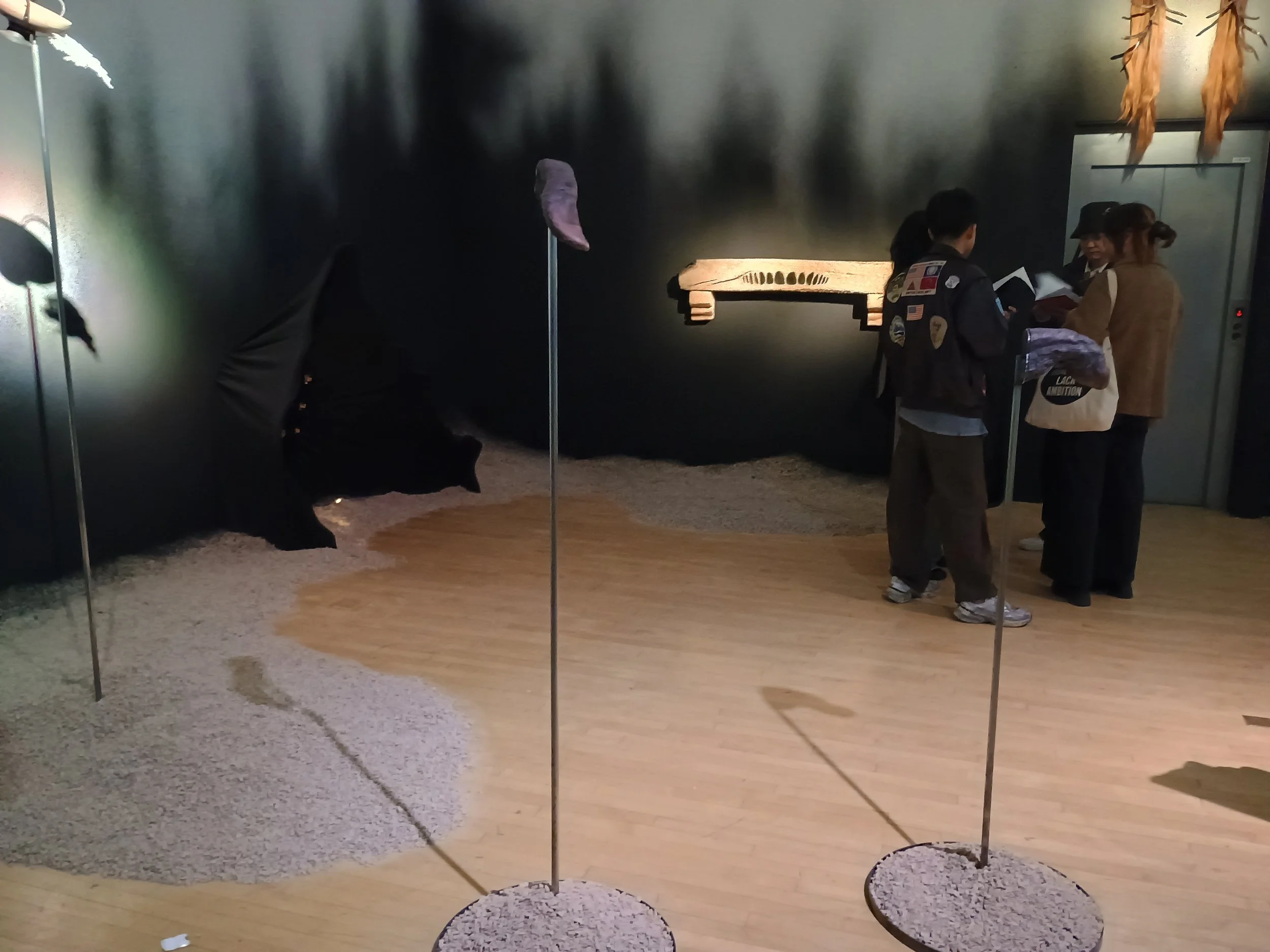
Greenwood is a sculptural artist based in Edinburgh, Scotland. Like Zhang, her work focuses on classical monsters, exploring a 'conceptual chimera' that investigates difference through a theatrical stage setting. With elements reminiscent of the home, Greenwood explores the feeling of otherness generated by lived experience of neurodiversity.
Molly Wickett:
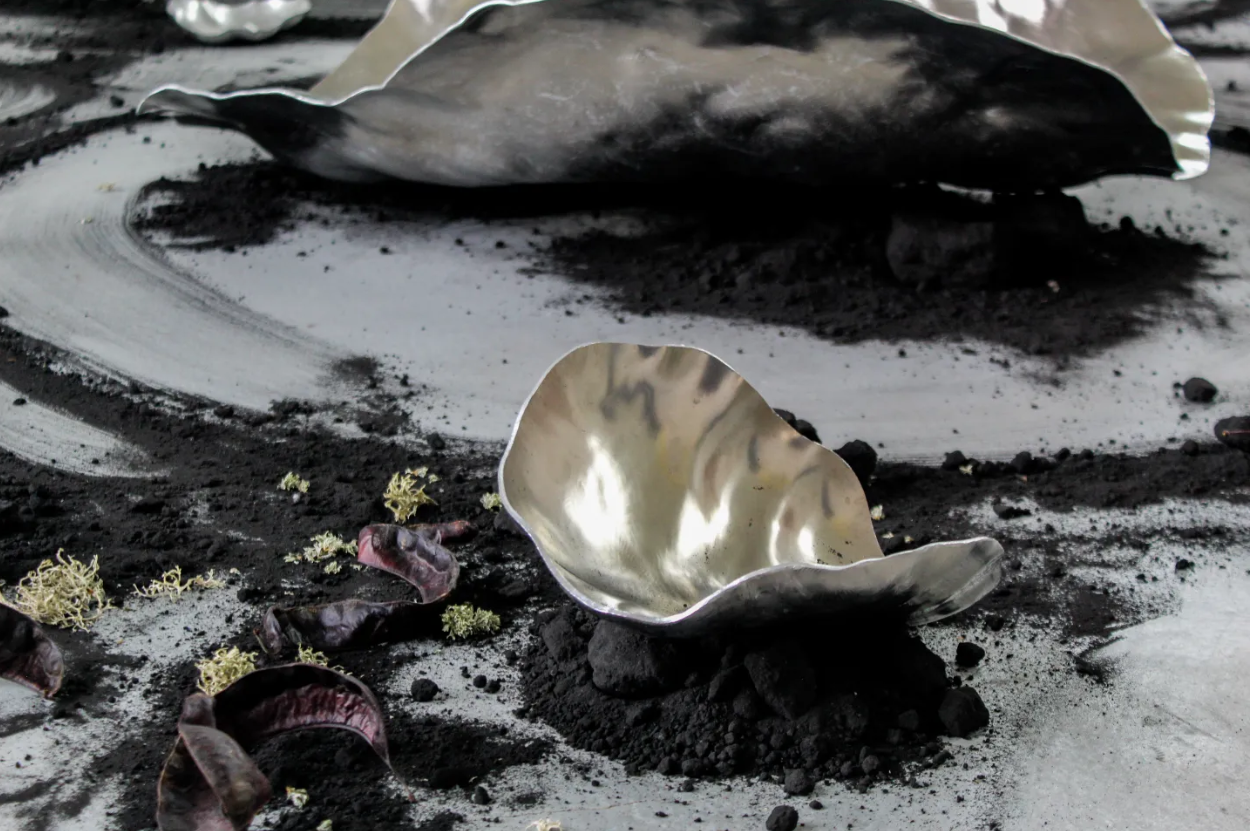
Based in London, Wickett explores nature through a queer lens, using wood, metal, and ash to create a 'landscape of otherness'. Her work imagines a queer future utopia, using lichen and mushroom imagery as a metaphor for mutualistic, boundary-defying diversity.
Curatorial Framework
Selected pieces will be arranged centrally to create a conceptual 'amalgam monster'. Each artist provides a piece of the monster that, when brought together, forms the whole: Zhang brings the face, in the form of a mask; Greenwood brings the cast-iron tongues; Wickett confuses the boundary between body and nature with fungal limbs. In line with my personal frame work of reciprocity, to preserve artistic individuality, this concept would not be broadcast to the audience, to avoid homogenising the pieces into one installation. Each artist also works in a distinct medium, Zhang in felt, Greenwood in metal, Wickett in wood, so authorship of each piece stays legible, even as the body of the exhibition crosses material boundaries into a total amalgam. Together these pieces recognise that otherness isn’t one experience but several distinct registers that don’t usually get to recognise each other as kin. The amalgam makes the connections literal and finds home in one body of strangeness.
The exhibition space would be transformed into the monster's 'lair', capitalising on natural imagery to build a separate world within the gallery. Nature has long been a thematic setting for monsters and otherness: separate from a scornful society, the monster resides on the fringes, out of sight and hidden. Articles published in the National Forest and the Journal of Adventure Education and Outdoor Learning support anecdotal evidence that individuals experiencing discrimination build community in nature as a non-judgemental space. By building a conceptual home for the monster, the exhibition also offers the viewer a role reversal: within the second gallery, the visitor becomes the other, the stranger in peculiar surroundings, while it is the monster that truly belongs.
The exhibition would open late at night, including nocturnal walkthroughs, playing into a mysterious and strange semiology while also lending its setting to the ballroom influences within Zhang's performance work.
Interpretive text would follow the same framework of strangeness, pairing poetic responses to each piece with plain-language interpretive text. Poet Alyia Pritchard-Casey, who has a previous body of poetic exhibition responses, would be commissioned for this new space. Excerpts would also be featured throughout the space, positioned low on the wall; almost hidden, and secret.
Accessibility would be embedded throughout, aspiring to genuine access intimacy, where impairments are not only catered for but visitors are made to feel welcomed into the space. Sofia Armella, an early-career composer and producer who has previously made audio responses to exhibitions and artworks, would be commissioned for this exhibition. With the artists' permission, I would also include designated tactile sculptural areas so visitors with visual impairments can interact with the pieces directly.
Why at Eastside Projects
This exhibition draws directly on Eastside Projects' pluriverse, a space built to house multiple, alternative narratives. Since the exhibition investigates dominant social narratives alongside their counter-argument, with the explicit aim of inviting viewers to reinspect their own ideas, Eastside is the ideal home for it. Their Long-Term Works Initiative also demonstrates that the building itself is treated as raw material for art-making, meaning the spatial alteration needed to build a new 'world' within the second gallery is entirely attainable, building on the precedent for world-building already explored in LOCAL SUPERSTAR.
The second gallery is the ideal space for this exhibition: its exterior can act as a buffer zone, gradually introducing viewers to the world within by letting visuals leak out from inside the lair, defying binaries and forming a cave-like entrance that immerses the audience before they've even stepped inside. Thematically, a space the audience has to seek out reinforces the sense of secrecy, and of stepping into somewhere that belongs to someone else.
Finally, the Long-Term Works Initiative offers an especially fitting final step: the symbol of otherness finds a permanent home, becoming an amalgam with something wider still.
Why Now?
In January this year, the Crown Prosecution Service recorded the highest level of hate crime on record, with 2025 figures showing rising levels of queer, gender-based, and race-based discrimination over the last five years. Alongside this, marginalised groups are increasingly assigned monstrous characteristics, a well-documented phenomenon in which the dehumanisation of a group makes violence against it feel permissible. Trans people are cast as predators; immigrants are portrayed as dangerous, both framings leading to real, violent outcomes.
This exhibition rejects these antiquated narratives, exploring the other and the monster as something unique and worth protecting: an invitation to look deeper, and to connect with something wholly different.
Proposed Layout Illustration
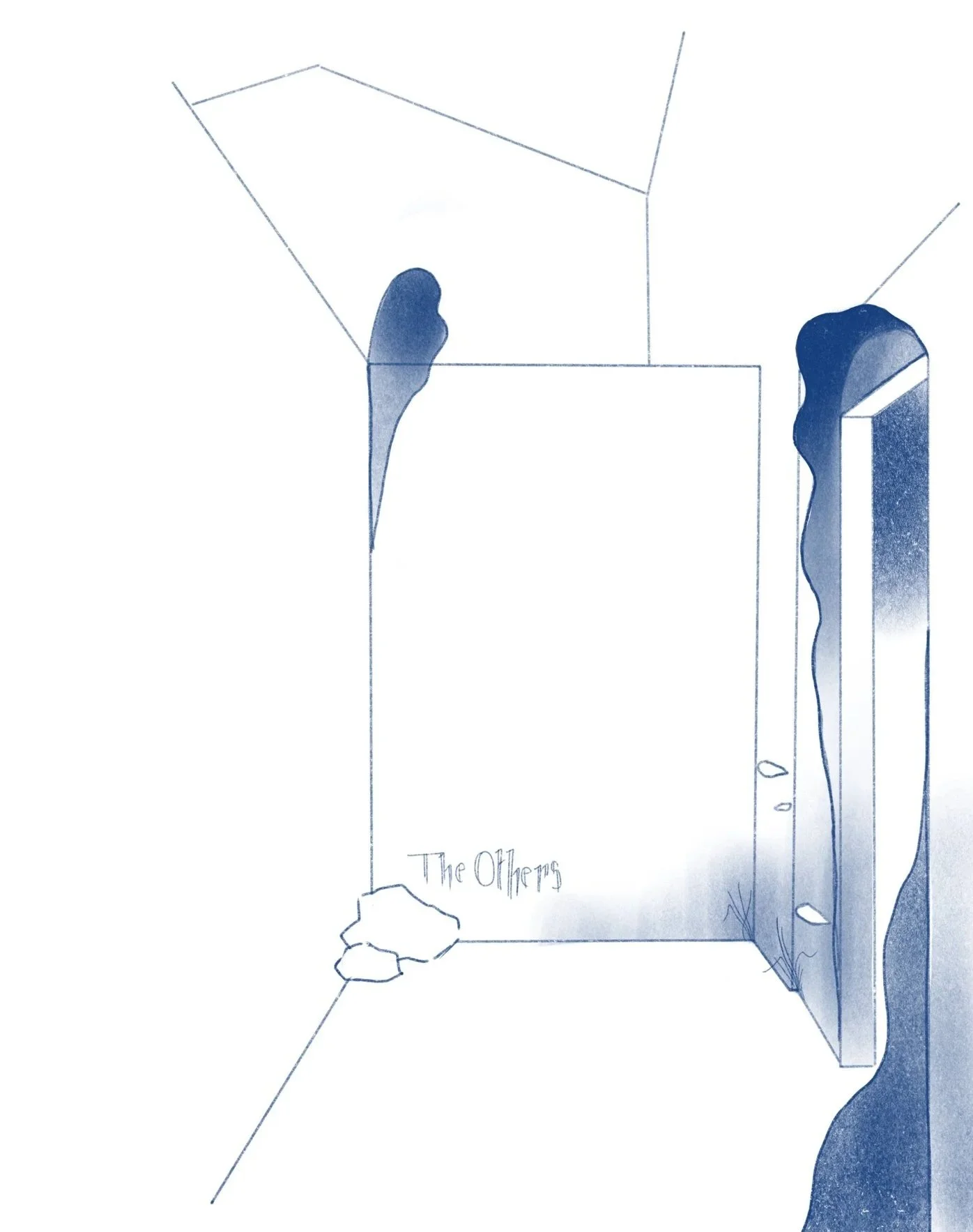
View from outside the exhibition space, displaying how the display contaminates out beyond the boundaries of its home. The entrance to the space displays ruffled fabric protrusions, reminiscent of a cave opening, and in dark colours to evoke a sense of twilight mystery. This space would act as a transition space from the more conventional white-walled gallery, luring the viewer in, and provoking a sense of immersion in this ‘other space’.
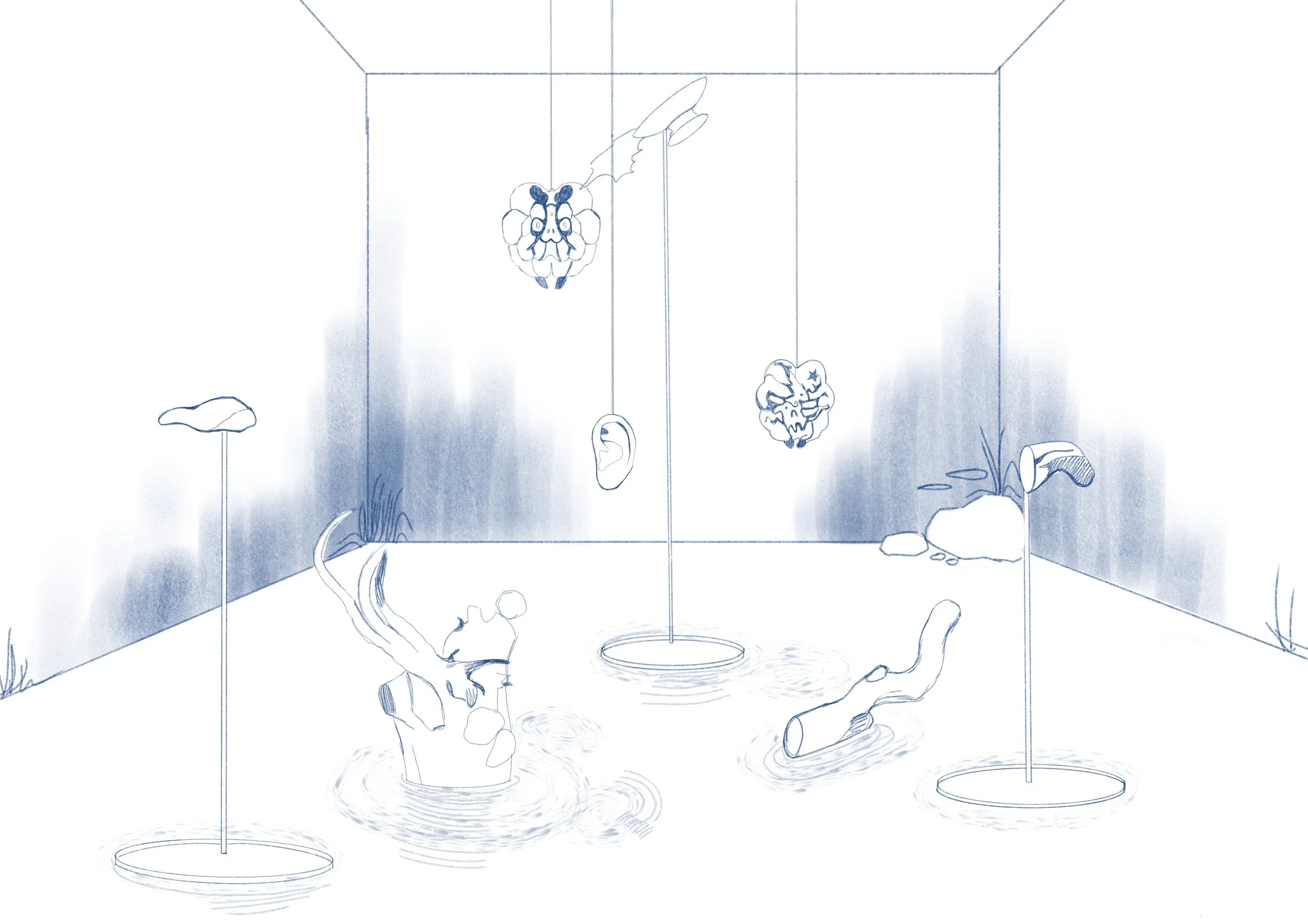
Proposed internal view of the exhibition. Pieces are arranged centrally in the space, allowing for an intentional overlap between artist works. With each artist representing a certain monstrous body part - Zhang with the face, Greenwood with tongues, and Wicket with wooden fungal limbs - the works accumulate together to create a unified monstrous, hybrid, form. The Space is artistically altered, combining both Greenwood and Wicketts use of cinder-inspired charring on the floor and wall of the space. The gallery includes rock-like forms, dried grasses and fungus-inspired wall ridges, anchoring the space within the suggestion of the natural world; one separate, and therefore free, from the colonialist and societal convention that underlies the white-walled gallery space. The Others utilised this natural imagery to create an ‘other space’ outside oppressive confines where the monster can be at home.
Conclusion
Ultimately, The Others is not an exhibition about monsters so much as a reality built from parts: felted mask, cast metal tongues, and fungal limbs are positioned together both to illustrate lived experiences of otherness, and to imagine a space where difference can be made at home together as kin. Through artist-curatorial intervention the pieces are allowed to reside in a space that casts them in a new context to make something new, bigger, and authentic.