Hollows
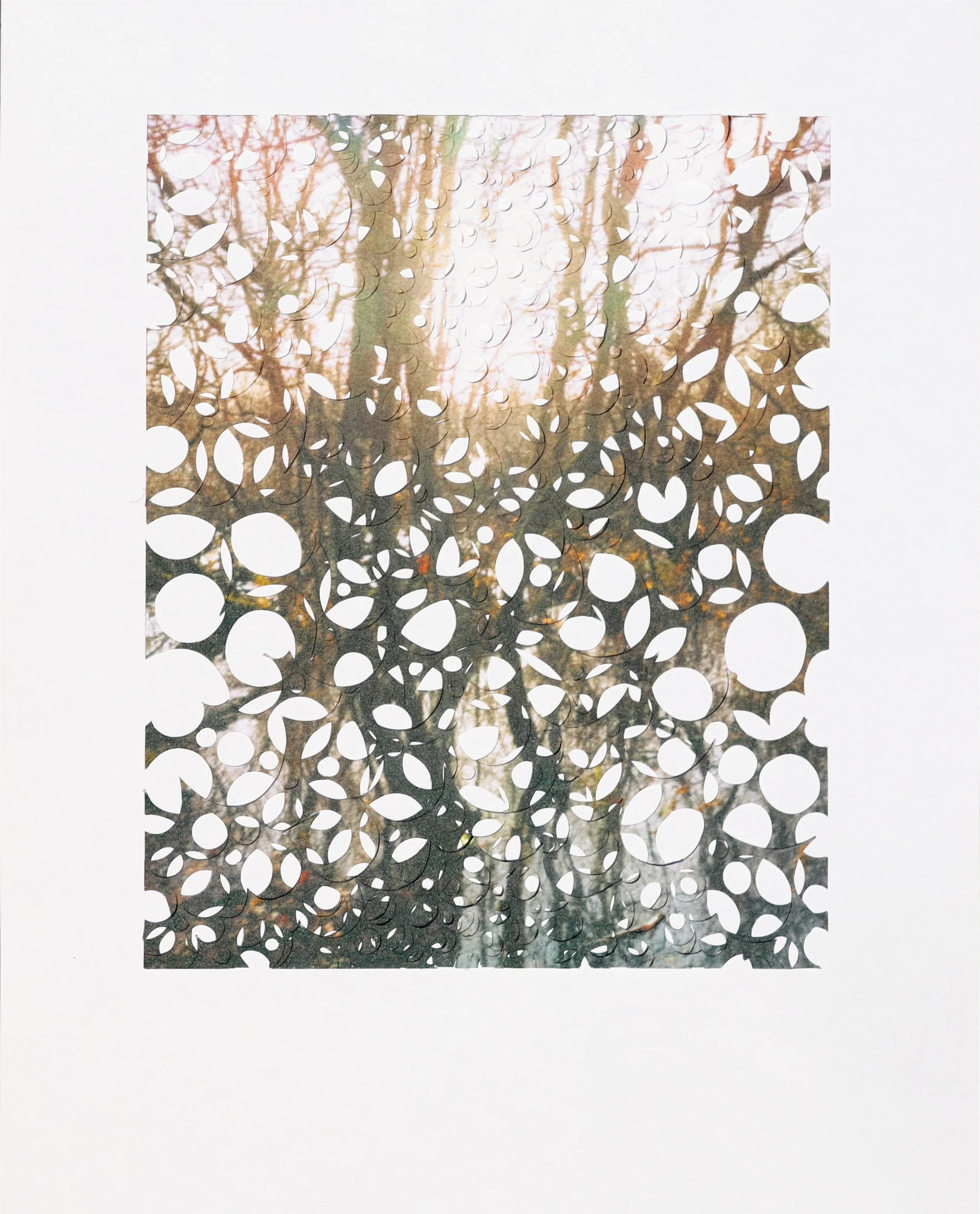
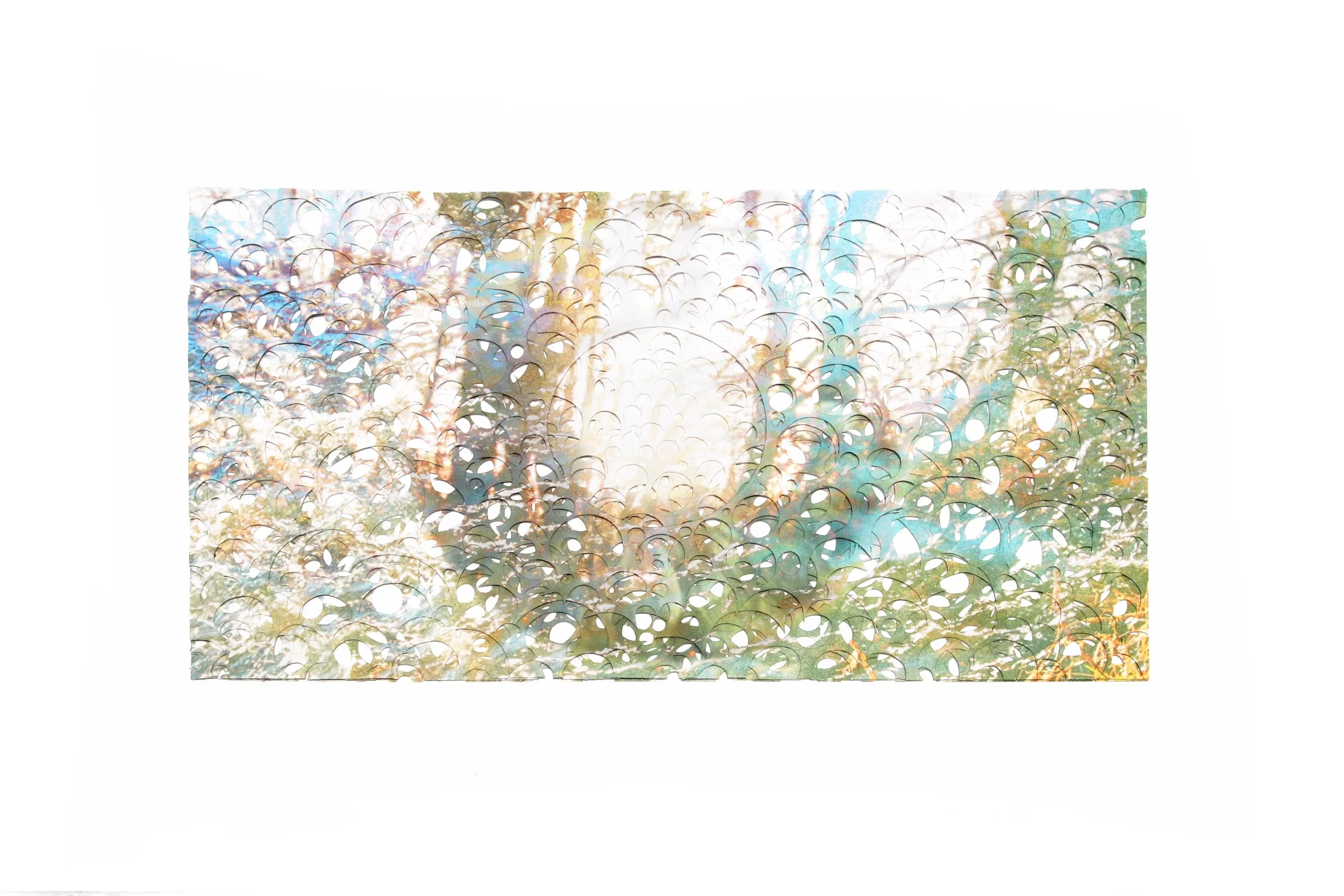
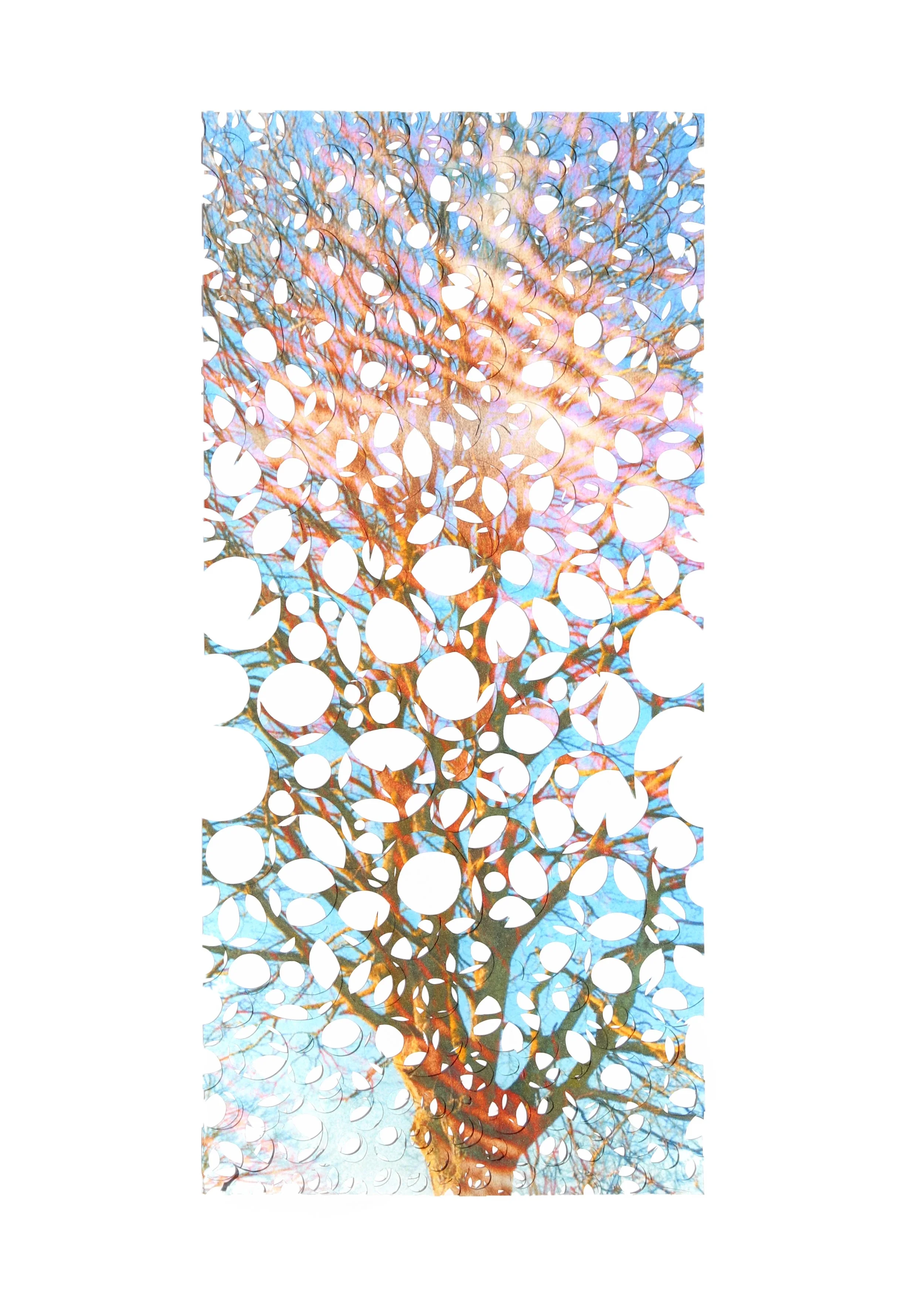
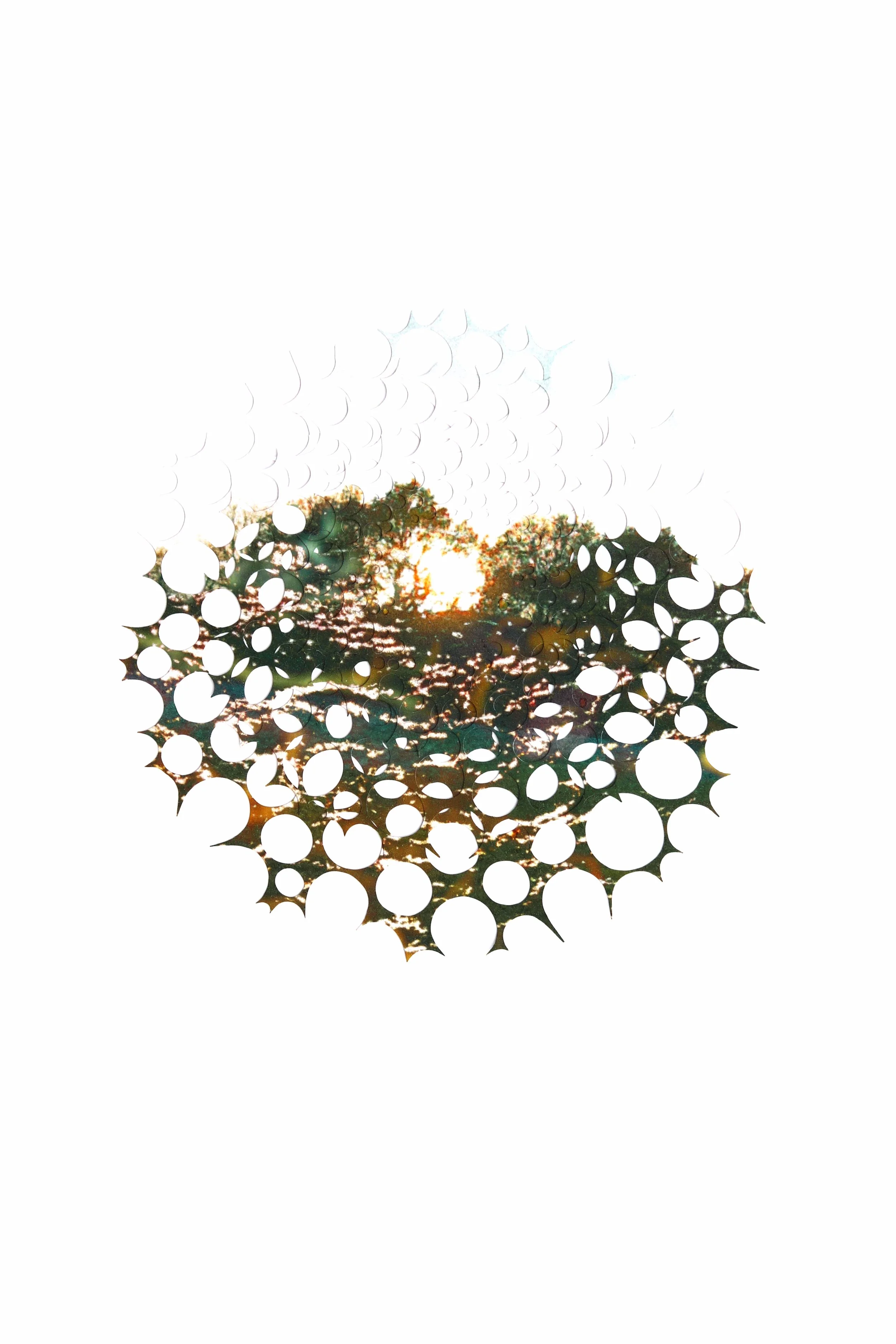
Hollows is a collage series exploring the concept of ecological loss through a extraction-rooted process.
Pieces consist of multiple layers of the same image printed on paper, which are then layered on top of one and other. As circular patterns are removed from the surface, the layers beneath are revealed. This extractive process results in an image that only becomes recognisable through the lens of its destruction. The scenes depicting the natural world are placed on a precarious, and liminal backdrop as they risk slipping away into the discarded circles, drawing attention to the threat that global warming, environmental crisis, and extreme weather poses to sites of natural beauty.
However, contrasting to what is removed, the remaining shapes are intended to resemble to lace lichen. Lichen is a composite, existing through the coming together of a fungi and a lichen in a symbiotic relationship. Each individual organism, when unable to thrive on its own, depends on each other to survive harsh conditions. the imagery of this hybrid acts as a reminder to maintain resistance, and that we can still thrive if we come together with the human and non-human world around us.
Exhibited with InVitro Gallery: Mycorrhizal (2025)
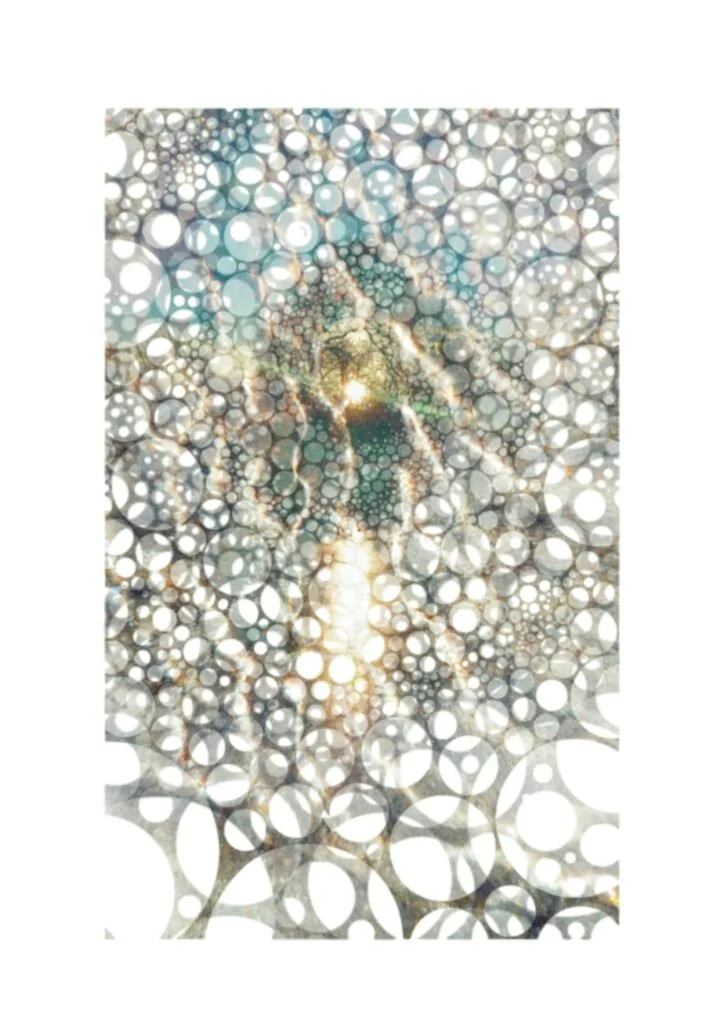
Published with Environmental Digest Magazine: In Constellation (2025)
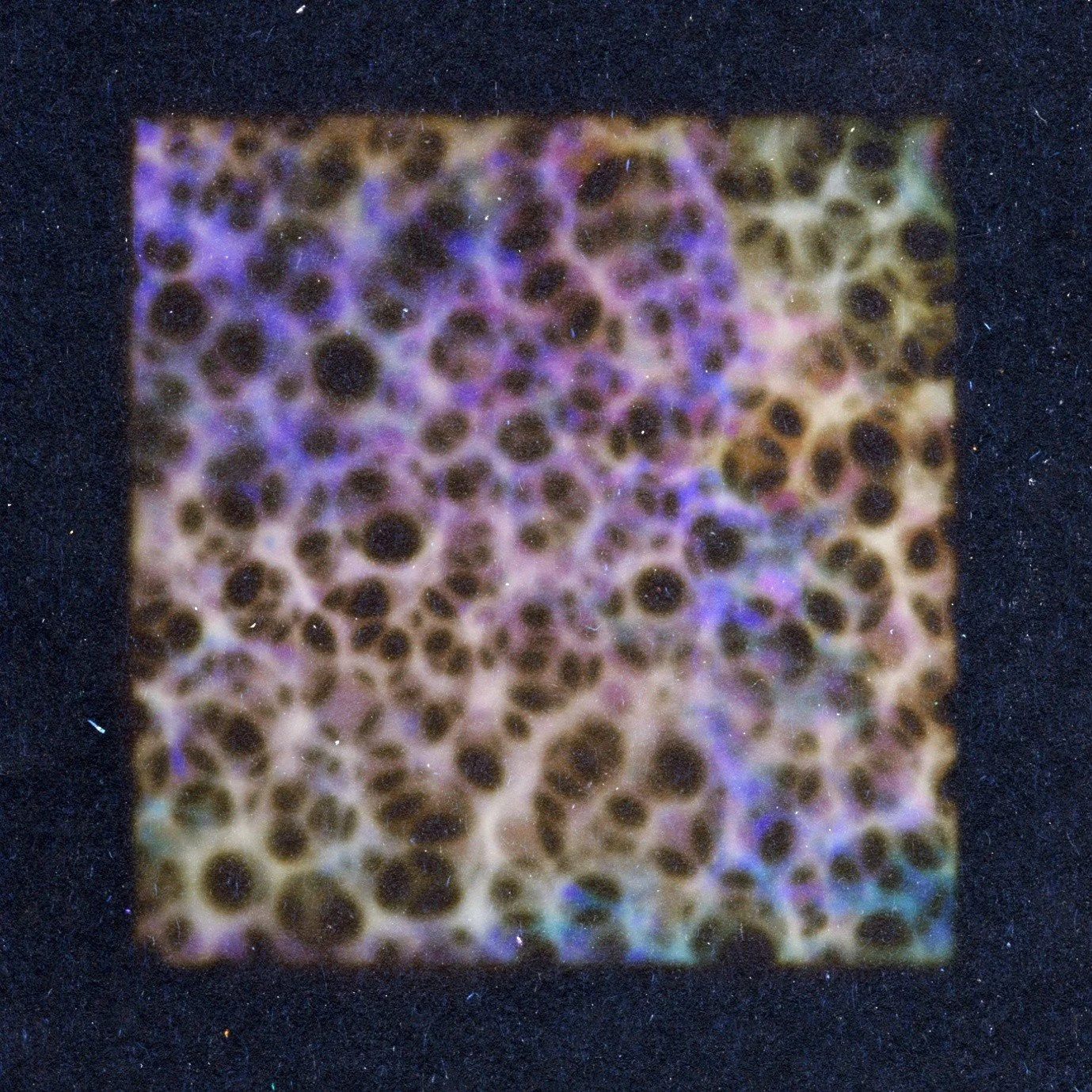
The human relationship with the natural world has become increasingly disconnected and strange. Ecological philosopher Timothy Morton states that there is a certain uncanny sense of weirdness that underlies much of contemporary life at the tipping point of a climate crisis. Climate change affects us all, but the large-scale presentation of disaster renders global catastrophe hard to comprehend and impossible to imagine. Further, as urbanisation progresses, green spaces become subject to planning, control, and domestication. We have become increasingly separated from the realities of the natural world.
This piece, titled Wyrdings, encapsulates the sense of increasing weirdness and estrangement from nature through the process of development. The image originates from a photograph of the forest floor, but through processes of collage, extraction, tracing paper printing, photography, and digital colour inversion, the world becomes unrecognisable and unfamiliar.
The title Wyrdings refers to the old English precursor to the word weird’.
Wyrd is defined as “to become”. Referring to a predestined fate, the piece takes on a secondary meaning, where the strange organic forms are positioned as our destiny, when we are called back to reacquaint ourselves with the world once more.
Pieces published with Artists Responding To… magazine: Issue 10, (2024).
Exhibited with Phantasmal Gallery: Surreal Sublime (2024)